AI Appraisal Estimate

AI-generated estimates · not official valuations

From the user

What was submitted

Photo and notes provided by the user — not generated by AI

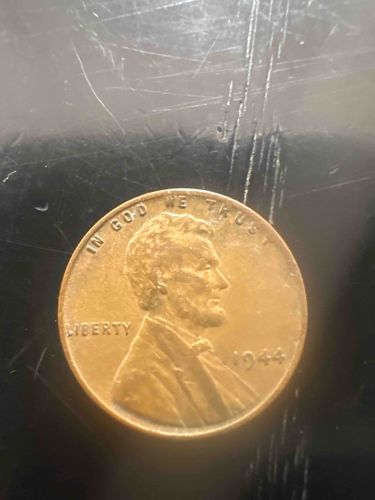
Submitted item photo
Submitted photo · May 28, 2026

User's notes

No additional notes provided.

AI analysis below

AI appraisal

AI analysis & estimate

AI-Generated · Verify before acting

Everything below is generated by AI for informational purposes only. AI can make mistakes — the AI may misidentify items or misattribute them (artist, maker, brand, designer, origin, era). This is not an official valuation and should not be used for insurance, sale, tax, estate, legal, or lending purposes — or any decision requiring a certified appraisal. It is not an authoritative claim about any person, brand, or rights holder — do not share or rely on it as a factual statement about a third party. Always consult qualified professionals before making financial decisions.

Read the full disclaimer

AI Identification

·Not independently authenticated·Verify before acting

1944 Lincoln Cent (Penny)

Coin

AI Estimated Value

·Not an official valuation·Verify before acting

$0.25 - $0.75

As of May 28, 2026

AI Item Analysis

·AI can make mistakes·Verify before acting
The item is a United States one-cent coin, commonly known as a penny. Specifically, it is a Lincoln cent, identifiable by the prominent bust of Abraham Lincoln facing right on the obverse side. The coin appears to be struck from a copper or copper-alloy material, exhibiting a typical reddish-brown patina consistent with aged copper coinage. The diameter seems standard for a U.S. cent, approximately 19 mm. Key inscriptions visible on the obverse include "IN GOD WE TRUST" arching over Lincoln's head, "LIBERTY" to his left, and the minting year "1944" to his right. There are no immediately discernible mint marks in the provided image, which would typically be located below the date. The surface shows signs of circulation and age, including some minor scratches and possible superficial dirt or residue, particularly noticeable on the field surrounding Lincoln's portrait and on the bust itself. The raised elements of Lincoln's profile and the lettering appear relatively sharp, suggesting it is not severely worn, but there is a clear absence of original mint luster. The overall condition could be described as 'fine' to 'very fine' based on the visible details, meaning some wear on the higher points but significant detail remaining. The specific year 1944 is notable as it falls within the period of World War II; however, this particular coin is not the steel cent issued in 1943, but rather a standard copper alloy cent, indicating it was likely struck during the years when copper was reintroduced for pennies or possibly a shell casing variant, though without a clearer view of the reverse it's hard to confirm the latter. The craftsmanship is typical of mass-produced treasury coinage.

AI Appraisal Report

·AI can make mistakes·Verify before acting
I have examined the provided image of the 1944 Lincoln Cent. Based on the visual evidence, the coin is indeed a standard copper-alloy cent from 1944, not the much rarer 1943 steel cent or the 1944 steel cent error. Authenticity appears solid from the image; the strike, lettering, and Lincoln's effigy align with known examples. However, definitive authentication, especially distinguishing it from potential counterfeits or identifying specific varieties (like those from recovered shell casings), would require in-person examination, including weight and magnetic testing. The coin exhibits moderate circulation wear, consistent with a 'Fine' to 'Very Fine' grade (F-12 to VF-20). Details on Lincoln's cheek and hair are visible but flattened, and the lines in his coat remain. The absence of original mint luster is expected for this grade. Minor scratches and surface residue are present but do not severely detract from the overall appeal. Market conditions for common-date Lincoln Cents from the 1940s are stable but generally low. Millions of these coins were minted. Demand is primarily from beginner collectors or those filling sets. Rarity is not a factor for a standard 1944 copper cent. The key factor impacting value is its commonality and condition. While an uncirculated example can fetch higher prices, circulated pieces like this are abundant. Therefore, its value is mainly numismatic rather than intrinsic. In-person inspection would allow for precise grading, verification of potential mint marks (though none are evident here), and detection of any alterations or subtle errors not visible in the image. Provenance documentation would be useful for specific historical examples but is not typically a factor for common cents.

Get your items appraised

Instant estimates of your treasures with AI-powered appraisals

Browse More Appraisals