Framed Chinese Ink Wash Shan Shui Landscape Painting
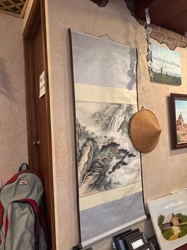
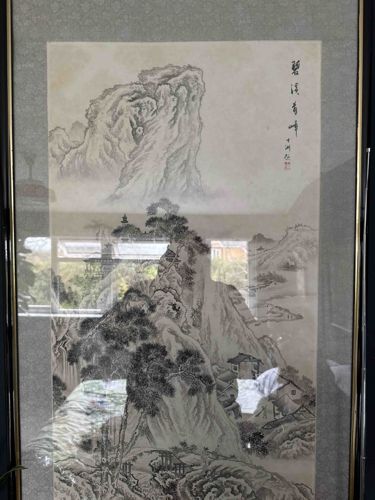
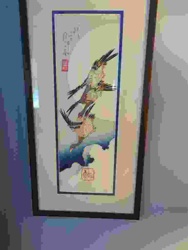
This item is a vertical landscape painting executed in the traditional Chinese ink wash (Shan Shui) style. The composition features towering, craggy mountain peaks rendered with light ink washes and dry-brush textural strokes known as 'cunfa'. The foreground and midground depict a rugged terrain with stylized pine trees, small pavilions or scholar's retreats, and a winding path, suggesting a harmonious relationship between nature and humanity. The topmost mountain peak is partially obscured by mist, creating a sense of depth and ethereal atmosphere typical of 20th-century iterations of classical styles. The piece includes vertical calligraphic inscriptions on the upper right side, accompanied by two visible red vermilion artist seals (hanko), which serve as maker's marks identifying the artist and providing a formal finish. The artwork is executed on a paper or silk substrate, which shows some visible foxing and light brownish discoloration (patina) consistent with age and exposure to light. It is mounted on a patterned light-grey silk border (brocade) and housed within a simple gold-toned metallic frame under glass. The craftsmanship displays confident brushwork and a balanced use of negative space. While the piece mimics Ming or Qing dynasty aesthetics, it is likely a mid-20th-century production, valued for its decorative appeal and adherence to traditional literati painting techniques.
AI-Generated Appraisal Disclaimer
Estimated Value
$450 - $700
Basic Information
Category
Fine Art - Asian Art
Appraised On
March 27, 2026
Estimated Value
$450 - $700
Item Description
This item is a vertical landscape painting executed in the traditional Chinese ink wash (Shan Shui) style. The composition features towering, craggy mountain peaks rendered with light ink washes and dry-brush textural strokes known as 'cunfa'. The foreground and midground depict a rugged terrain with stylized pine trees, small pavilions or scholar's retreats, and a winding path, suggesting a harmonious relationship between nature and humanity. The topmost mountain peak is partially obscured by mist, creating a sense of depth and ethereal atmosphere typical of 20th-century iterations of classical styles. The piece includes vertical calligraphic inscriptions on the upper right side, accompanied by two visible red vermilion artist seals (hanko), which serve as maker's marks identifying the artist and providing a formal finish. The artwork is executed on a paper or silk substrate, which shows some visible foxing and light brownish discoloration (patina) consistent with age and exposure to light. It is mounted on a patterned light-grey silk border (brocade) and housed within a simple gold-toned metallic frame under glass. The craftsmanship displays confident brushwork and a balanced use of negative space. While the piece mimics Ming or Qing dynasty aesthetics, it is likely a mid-20th-century production, valued for its decorative appeal and adherence to traditional literati painting techniques.
Get Your Items Appraised
Instant estimates of your treasures with AI-powered instant appraisals