AI Appraisal Estimate

AI-generated estimates · not official valuations

From the user

What was submitted

Photo and notes provided by the user — not generated by AI

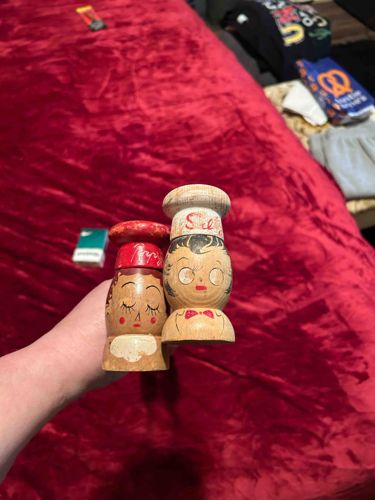
Submitted item photo
Submitted photo · June 3, 2026

User's notes

No additional notes provided.

AI analysis below

AI appraisal

AI analysis & estimate

AI-Generated · Verify before acting

Everything below is generated by AI for informational purposes only. AI can make mistakes — the AI may misidentify items or misattribute them (artist, maker, brand, designer, origin, era). This is not an official valuation and should not be used for insurance, sale, tax, estate, legal, or lending purposes — or any decision requiring a certified appraisal. It is not an authoritative claim about any person, brand, or rights holder — do not share or rely on it as a factual statement about a third party. Always consult qualified professionals before making financial decisions.

Read the full disclaimer

AI Identification

·Not independently authenticated·Verify before acting

Vintage Anthropomorphic Wood Chef Salt and Pepper Shakers

Vintage Kitchenware / Collectibles

AI Estimated Value

·Not an official valuation·Verify before acting

$25.00 - $45.00

As of June 3, 2026

AI Item Analysis

·AI can make mistakes·Verify before acting
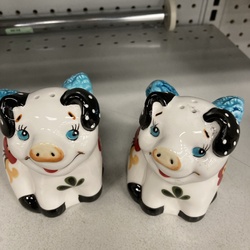
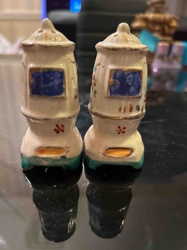
This pair of vintage salt and pepper shakers features a charming anthropomorphic chef design, likely dating from the mid-20th century, approximately the 1950s. The shakers are constructed from turned wood with a natural grain finish, each standing roughly 4 to 5 inches tall. Each shaker represents a stylized character: one features a light natural wood finish with 'Salt' handwritten in red cursive on the chef's hat, black painted hair, large circular eyes with long lashes, and a small red bowtie. The second shaker has a slightly darker honey-toned wood body, with 'Pepper' written on a red-painted section of the hat. This character is depicted with closed, sleeping eyes and rosy red cheeks. Both items show significant signs of age and use, including visible paint loss on the red hats, fading of the facial features, and general scuffing of the wood surface. The craftsmanship is characteristic of mid-century novelty kitchenware, often produced in Japan for the export market. There are no clearly visible maker's marks or stamps in the current view, but the style is consistent with companies such as Enesco or various generic imports from the era. The condition is fair to good, showing an honest patina that collectors of kitsch and vintage kitchenalia often find desirable.

AI Appraisal Report

·AI can make mistakes·Verify before acting
I have carefully examined the provided images of this pair of vintage anthropomorphic wood chef salt and pepper shakers. Based on the construction, typography, and stylistic elements, these are authentic examples of mid-century novelty kitchenware, likely produced in Japan during the 1950s. The 'Salt' and 'Pepper' shakers exhibit a charming kitsch aesthetic characterized by high-contrast paint and stylized facial features. Condition-wise, these shakers are in 'fair' condition. I note significant paint loss on the red hats and fading of the delicate facial features, particularly on the 'Pepper' shaker. The wood exhibits an honest patina with localized scuffing, which is typical for items of this utility and age. While the wear confirms their vintage origin, the deterioration of the cold-paint details prevents this set from reaching 'mint' collector values. The market for mid-century kitchenalia remains steady, driven by nostalgic decor trends. Comparable wooden sets from identified import brands like Enesco or Lefton generally sell within the $30-$60 range when in excellent condition. Due to the visible wear and the lack of a visible 'Made in Japan' foil sticker or stamp, these fall into the lower-to-mid range of that spectrum. Limitations: My assessment is based solely on high-resolution imagery. Without a physical inspection, I cannot confirm the integrity of the internal stoppers or detect any professional restoration or wood rot. To fully authenticate these pieces and identify a specific manufacturer, an in-person examination of the base for impressed stamps and a comparison of the wood grain density would be required. No scientific testing is recommended given the item's market value.

Get your items appraised

Instant estimates of your treasures with AI-powered appraisals

Browse More Appraisals