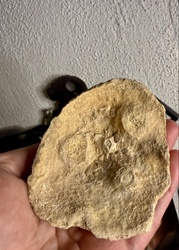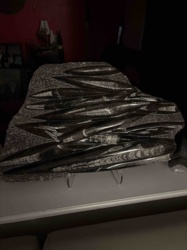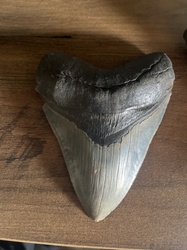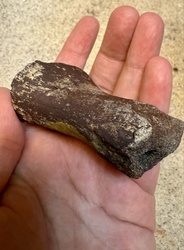
Belemnoidea Fossil (Belemite Rostrum)
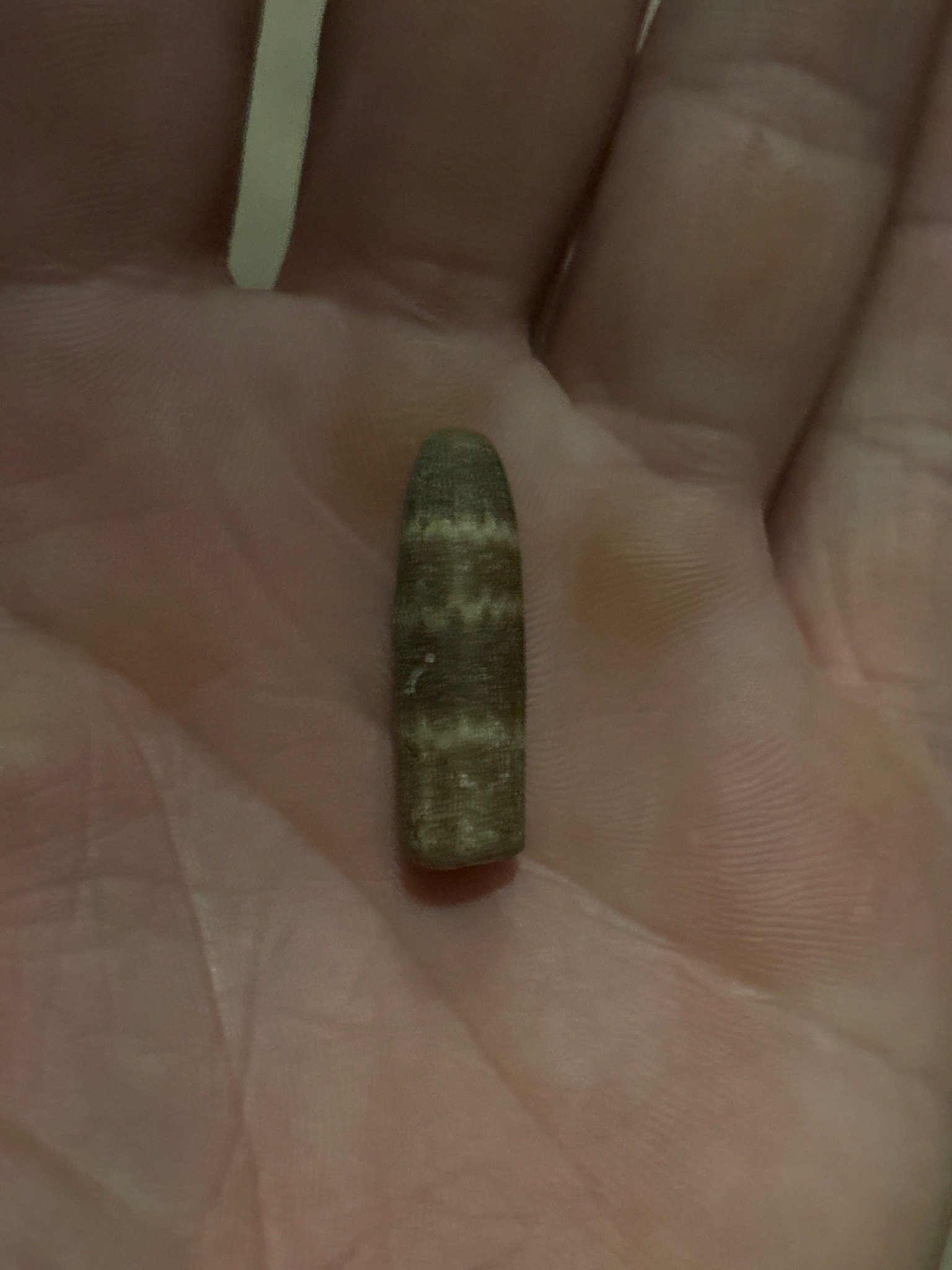
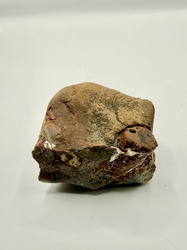
This specimen is a fossilized rostrum (guard) of a Belemite, an extinct order of squid-like cephalopods from the Mesozoic era. The item is bullet-shaped with a tapered, rounded apex and a cylindrical body, measuring approximately 2.5 to 3 centimeters in length. It displays a characteristic brownish-grey calcitic composition with visible translucent properties. A notable diagnostic feature is the presence of concentric growth rings and faint longitudinal striations along its length, along with two distinct lighter-colored horizontal bands that may indicate mineral replacement or localized variations in the fossilization process. The surface texture is somewhat smooth but exhibits small pits and minor abrasions consistent with geological wear and water-rolling. There is no evidence of a phragmocone at the broader end, which is typical for isolated rostrum finds. The specimen appears stable with no major fractures, though it shows surface dulling and a natural patina characteristic of calcified fossils found in sedimentary deposits. Given its morphology, it likely dates to the Jurassic or Cretaceous periods, roughly 66 to 200 million years old.
AI-Generated Appraisal Disclaimer
Estimated Value
$5 - $15
Basic Information
Category
Paleontology / Fossils
Appraised On
April 24, 2026
Estimated Value
$5 - $15
Item Description
This specimen is a fossilized rostrum (guard) of a Belemite, an extinct order of squid-like cephalopods from the Mesozoic era. The item is bullet-shaped with a tapered, rounded apex and a cylindrical body, measuring approximately 2.5 to 3 centimeters in length. It displays a characteristic brownish-grey calcitic composition with visible translucent properties. A notable diagnostic feature is the presence of concentric growth rings and faint longitudinal striations along its length, along with two distinct lighter-colored horizontal bands that may indicate mineral replacement or localized variations in the fossilization process. The surface texture is somewhat smooth but exhibits small pits and minor abrasions consistent with geological wear and water-rolling. There is no evidence of a phragmocone at the broader end, which is typical for isolated rostrum finds. The specimen appears stable with no major fractures, though it shows surface dulling and a natural patina characteristic of calcified fossils found in sedimentary deposits. Given its morphology, it likely dates to the Jurassic or Cretaceous periods, roughly 66 to 200 million years old.
Get Your Items Appraised
Instant estimates of your treasures with AI-powered instant appraisals