Paleo-American Portable Rock Art Fish Effigy
Archaeological Artifact / Portable Rock Art

Paleo-American Portable Rock Art Fish Effigy

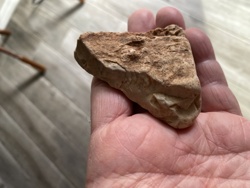
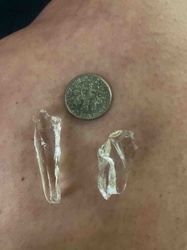
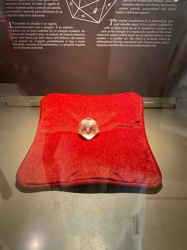
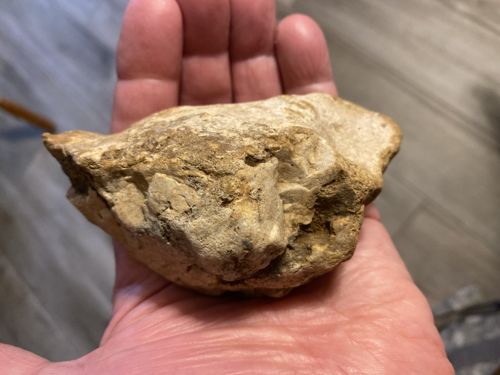
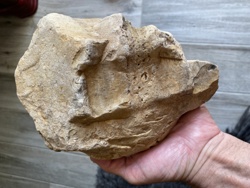
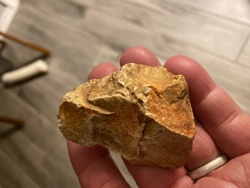
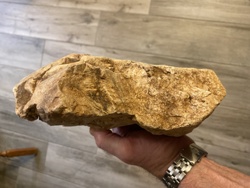
This item is a portable rock art specimen identified by the user as a fish effigy, originating from Guthrie, Oklahoma. Measuring approximately 4 inches in length by 2.5 inches in height, the stone displays a rough, calcified texture with a color palette consisting of tan, ochre, and light grey mineral deposits. The physical construction is a natural stone substrate that appears to have anthropomorphic or zoomorphic modifications; specifically, the tapered end suggests a tail structure while the broader, bulkier end represents the head of a fish. Notable features include what appears to be a pecked or carved indentation serving as an eye orbit and a horizontal fracture line that mimics a gill or mouth opening. The surface condition shows significant weathering, heavy mineral encrustation, and a natural patina consistent with long-term environmental exposure. There are no modern tool marks visible, suggesting that any modifications were made using primitive stone-on-stone percussion techniques. The stylistic period is attributed to the Paleo-American era, characterized by the use of found stones that were minimally enhanced to reveal a 'spirit' or animal form hidden within the geological shape. The craftsmanship is highly subjective, relying on pareidolia (the human tendency to see patterns in random shapes), which is a hallmark of this specific category of portable rock art. The overall quality of the specimen as an artifact is determined by the intentionality of the pits and grooves relative to the natural contours of the stone.
Estimated Value

$25 - $75

Basic Information

Category

Archaeological Artifact / Portable Rock Art

Appraised On

March 10, 2026

Estimated Value

$25 - $75

Additional Details Provided By Owner

User Provided Information

Paleo American rare portable rock art fish effigy found in Guthrie, OK measuring 4" x 2.5"

Item Description

This item is a portable rock art specimen identified by the user as a fish effigy, originating from Guthrie, Oklahoma. Measuring approximately 4 inches in length by 2.5 inches in height, the stone displays a rough, calcified texture with a color palette consisting of tan, ochre, and light grey mineral deposits. The physical construction is a natural stone substrate that appears to have anthropomorphic or zoomorphic modifications; specifically, the tapered end suggests a tail structure while the broader, bulkier end represents the head of a fish. Notable features include what appears to be a pecked or carved indentation serving as an eye orbit and a horizontal fracture line that mimics a gill or mouth opening. The surface condition shows significant weathering, heavy mineral encrustation, and a natural patina consistent with long-term environmental exposure. There are no modern tool marks visible, suggesting that any modifications were made using primitive stone-on-stone percussion techniques. The stylistic period is attributed to the Paleo-American era, characterized by the use of found stones that were minimally enhanced to reveal a 'spirit' or animal form hidden within the geological shape. The craftsmanship is highly subjective, relying on pareidolia (the human tendency to see patterns in random shapes), which is a hallmark of this specific category of portable rock art. The overall quality of the specimen as an artifact is determined by the intentionality of the pits and grooves relative to the natural contours of the stone.
Get Your Items Appraised

Instant estimates of your treasures with AI-powered instant appraisals

Browse More Appraisals