These notes were written by the person who submitted this item. Appraiser.AI has not verified them, and the AI's identification and estimate may rely on them.
AI Estimated Value
Not an official valuation
$40-$60
AI estimate as of October 12, 2025 · verify with a professional before acting
AI-Generated · Verify before acting
Everything on this page is generated by AI for informational purposes only. AI can make mistakes — the AI may misidentify items or misattribute them (artist, maker, brand, designer, origin, era). This is not an official valuation and should not be used for insurance, sale, tax, estate, legal, or lending purposes — or any decision requiring a certified appraisal. It is not an authoritative claim about any person, brand, or rights holder — do not share or rely on it as a factual statement about a third party. Always consult qualified professionals before making financial decisions.
This analysis also relies on unverified notes provided by the user, which may be incomplete or inaccurate and could affect the result.
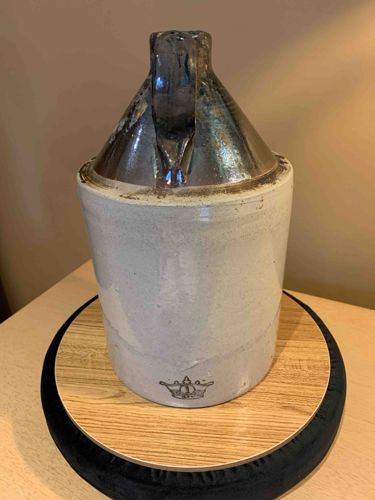
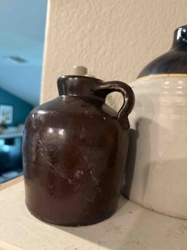
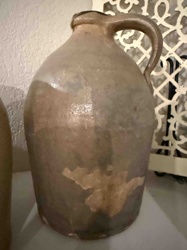
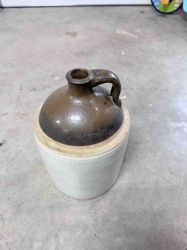
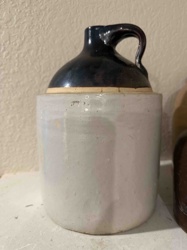
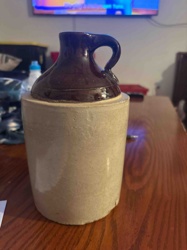
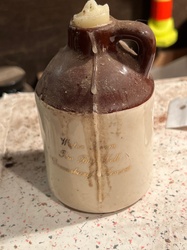
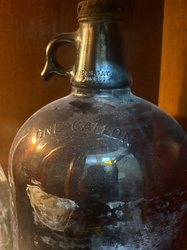
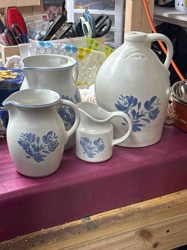
This item is a historical stoneware jug, likely used for storing liquids such as water, vinegar, or alcoholic beverages. The jug features a classic two-tone design, characteristic of early American stoneware. The lower body is composed of a light beige or off-white salt-glazed stoneware, exhibiting a slightly textured, matte finish. The upper portion, encompassing the sloped shoulder, narrow neck, and the applied 'strap' handle, is coated in a rich, dark brown or Albany slip glaze, which appears glossy and somewhat iridescent in certain lighting, indicative of a typical salt-glaze firing process. The transition between the two glazes is distinct but somewhat irregular, a common trait in this type of pottery, with some brown glaze drips visible on the lighter body. A notable distinguishing feature is the embossed or stamped crown logo near the base of the lighter-colored body. This mark is consistent with those used by Robinson-Ransbottom Pottery, a well-known American stoneware manufacturer. The handle is robustly constructed and integrated smoothly into the neck and shoulder. Visible condition issues include minor scuffs and surface irregularities consistent with age and use, but no significant cracks, chips, or repairs are immediately apparent, suggesting good preservation for its type and age. The inside of the jug is not visible, but typically stoneware of this era would be unglazed or similarly brown-glazed internally. Given the presence of the Robinson-Ransbottom mark, the estimated age for this piece would likely fall between the late 19th century and mid-20th century, a period when such utilitarian stoneware was widely produced. The craftsmanship is utilitarian yet robust, focusing on functionality and durability.
AI Appraisal Report
Upon examining the images of this two-tone stoneware jug, I have identified it as a piece produced by the Robinson-Ransbottom Pottery Company of Roseville, Ohio. The jug exhibits the characteristic Albany slip glaze on the top and a salt-glazed lower body, consistent with the company's production methods from the early to mid-20th century. The stamped crown logo is a known mark used by this manufacturer, lending credibility to its authenticity. Based on the visual information, the jug appears to be in good to very good condition, with minor scuffs and firing imperfections typical for utilitarian pottery of this era. There are no major visible cracks, chips, or repairs, which is a positive factor for its value.
The market for common Robinson-Ransbottom stoneware is generally stable but modest. These jugs were mass-produced and are not considered rare. Current market comparables for similar-sized Robinson-Ransbottom jugs in this condition typically sell in the $40 to $60 range at auction and in antique shops. The value is driven more by its decorative appeal as a rustic home decor item rather than its rarity or historical significance.
It is important to note the limitations of this appraisal, as it is based solely on digital images. A full authentication would require in-person examination to assess the jug's weight, inspect for hidden repairs or hairline cracks under specialized light, and confirm the texture and authenticity of the glaze and clay body. Without physical inspection, I cannot completely rule out the possibility of it being a reproduction or having undergone expert restoration.