AI Appraisal Estimate

AI-generated estimates · not official valuations

From the user

What was submitted

Photo and notes provided by the user — not generated by AI

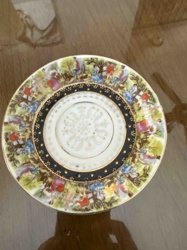
Submitted item photo
Submitted photo · May 19, 2026

User's notes

Myott

AI analysis below

AI appraisal

AI analysis & estimate

AI-Generated · Verify before acting

Everything below is generated by AI for informational purposes only. AI can make mistakes — the AI may misidentify items or misattribute them (artist, maker, brand, designer, origin, era). This is not an official valuation and should not be used for insurance, sale, tax, estate, legal, or lending purposes — or any decision requiring a certified appraisal. It is not an authoritative claim about any person, brand, or rights holder — do not share or rely on it as a factual statement about a third party. Always consult qualified professionals before making financial decisions.

Note

This analysis also relies on unverified notes provided by the user, which may be incomplete or inaccurate and could affect the result.

Read the full disclaimer

AI Identification

·Not independently authenticated·Verify before acting

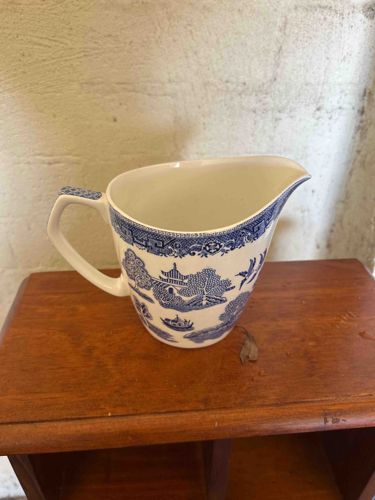
Myott Blue Willow Pattern Creamer / Milk Jug

Antique and Vintage Ceramics - Tableware

AI Estimated Value

·Not an official valuation·Verify before acting

$10 - $20

As of May 19, 2026

AI Item Analysis

·AI can make mistakes·Verify before acting
This is a classic ceramic creamer or milk jug manufactured by Myott (Staffordshire, England), featuring the iconic Blue Willow transferware pattern. The vessel is constructed from white fine earthenware or ironstone, typical of mid-20th-century British pottery. Its profile includes an angled, geometric handle with a decorative patterned thumb rest and a wide, gracefully curved pouring lip. The exterior is adorned with the traditional cobalt blue 'Willow' narrative scene, depicting a weeping willow tree, pagodas, a bridge with figures, a boat, and the symbolic pair of doves in flight. A geometric 'fretwork' border runs along the inner rim and handle. Based on the stylistic cues and handle shape, this piece likely dates from the 1930s to the 1950s. The glaze appears bright with high luster, though there is a visible small chip or debris adhered to the base area. Subtle crazing of the glaze may be present upon closer inspection, which is common for Myott pieces of this era. The craftsmanship represents high-quality mass-produced English transferware, known for its durability and crisp blue-on-white contrast.
AI Appraisal Report

·AI can make mistakes·Verify before acting
Having examined the images of this Myott Blue Willow creamer, I confirm it is a genuine example of English Staffordshire transferware, likely dating from the mid-20th century (circa 1930s-1950s). The piece features the classic 'Willow' pattern with crisp cobalt blue transfer lines against a white earthenware body. The geometric, angled handle is a distinctive stylistic marker of the Art Deco influence often seen in Myott's shapes during this period, distinguishing it from more rounded Victorian silhouettes. The condition appears generally good for its age, showcasing a bright glaze luster. However, value is significantly impacted by the visible imperfection near the base—described as a chip or adhered debris. If this is a chip, the value leans toward the lower end of the estimate; if it is merely kiln debris that can be removed, the piece remains more desirable. Common age-related crazing, typical for Myott wares, acts as a neutral factor rather than a detractor unless severe. Technically, Blue Willow is one of the most mass-produced patterns in history. Myott is a respected maker, but their standard Willow ware is abundant in the secondary market. Comparable sales for individual creamers of this specific maker and vintage routinely fall between $10 and $20, with pristine examples occasionally reaching slightly higher. While attractive, it lacks the rarity of 18th-century prototypes or limited runs. Please note that this appraisal is based solely on visual evidence; a physical inspection would be necessary to confirm the exact nature of the base flaw and to detect any invisible hairline cracks or restoration.

Get your items appraised

Instant estimates of your treasures with AI-powered appraisals

Browse More Appraisals