AI Appraisal Estimate

AI-generated estimates · not official valuations

From the user

What was submitted

Photo and notes provided by the user — not generated by AI

Submitted item photo
Submitted photo · June 13, 2026

User's notes

No additional notes provided.

AI analysis below

AI appraisal

AI analysis & estimate

AI-Generated · Verify before acting

Everything below is generated by AI for informational purposes only. AI can make mistakes — the AI may misidentify items or misattribute them (artist, maker, brand, designer, origin, era). This is not an official valuation and should not be used for insurance, sale, tax, estate, legal, or lending purposes — or any decision requiring a certified appraisal. It is not an authoritative claim about any person, brand, or rights holder — do not share or rely on it as a factual statement about a third party. Always consult qualified professionals before making financial decisions.

Read the full disclaimer

AI Identification

·Not independently authenticated·Verify before acting

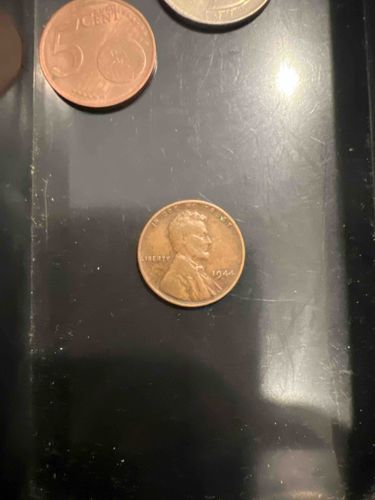
1944 Lincoln Wheat Cent

Coin

AI Estimated Value

·Not an official valuation·Verify before acting

$0.05 - $0.25

As of June 13, 2026

AI Item Analysis

·AI can make mistakes·Verify before acting
The item is a United States one-cent coin, commonly known as a penny, specifically identified as a Lincoln Wheat Cent, dated 1944. Its physical characteristics indicate it is a circular coin made of copper-alloy, displaying a reddish-brown color with some areas appearing darker due to toning or accumulated dirt. The obverse side clearly features the bust of Abraham Lincoln facing right, with the word "LIBERTY" inscribed to his left and the year "1944" to his right. The motto "IN GOD WE TRUST" is visible above his head, partially obscured by wear. The coin exhibits signs of moderate circulation, with a softening of details on Lincoln's profile and hair. There are no obvious deep scratches, dents, or significant corrosion visible from this angle, but the surface shows general wear consistent with its age and use. The edges appear intact, with no major dings or deformities. The overall condition suggests that it has been handled, but not severely damaged. Wheat cents from 1944 are generally composed of 95% copper and 5% zinc, although there is a rare steel variant that is not apparent here. The craftsmanship is typical of U.S. Mint coinage of the period. This specific coin does not appear to have any unique markings or obvious mint errors from the provided image.

AI Appraisal Report

·AI can make mistakes·Verify before acting
I have examined the provided image of this 1944 Lincoln Wheat Cent. Based on the visual evidence, it appears to be an authentic U.S. one-cent coin from 1944, consistent with typical copper-alloy composition for that year. The obverse shows Abraham Lincoln facing right, with 'LIBERTY' and '1944' visible. 'IN GOD WE TRUST' is partially obscured by wear, which aligns with my assessment of its condition as moderately circulated. Details on Lincoln's profile and hair are softened, but no severe damage, deep scratches, or significant corrosion are apparent. The reddish-brown color with darker toning is typical for a coin of this age and circulation. Market conditions for common date 1944 Lincoln Wheat Cents in circulated grades are generally low. Millions of these coins were produced, making them very common. Comparables in similar circulated condition typically trade for a few cents above face value. There is no indication from the image of special varieties (e.g., a rare DDO or the very scarce steel cent), which would significantly increase value. Demand is primarily from novice collectors or for bulk common-date sets. Key factors limiting the value of this specific coin are its common date and moderate circulated condition. Without clearer images of both sides and edges, it's impossible to identify a mint mark, which some collectors prefer. It is important to note that this appraisal is based solely on the provided image. A definitive assessment of authenticity, composition, and grade would require in-person examination to check for subtle details, luster, and potential alterations. Scientific testing (e.g., XRF analysis) would be needed to confirm metal composition with 100% certainty, particularly to rule out any anomalies not visible to the naked eye. Provenance documentation, while not usually applicable to common circulated cents, would further enhance certainty for rarer variants.

Get your items appraised

Instant estimates of your treasures with AI-powered appraisals

Browse More Appraisals