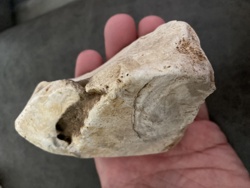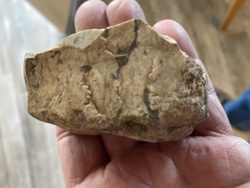
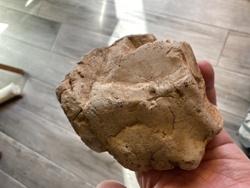
Chert Bifacial Projectile Point
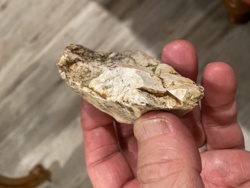
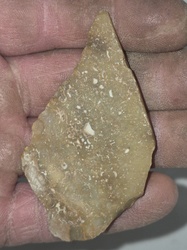
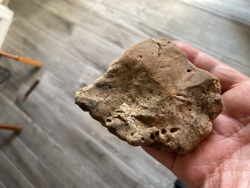
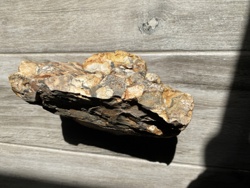
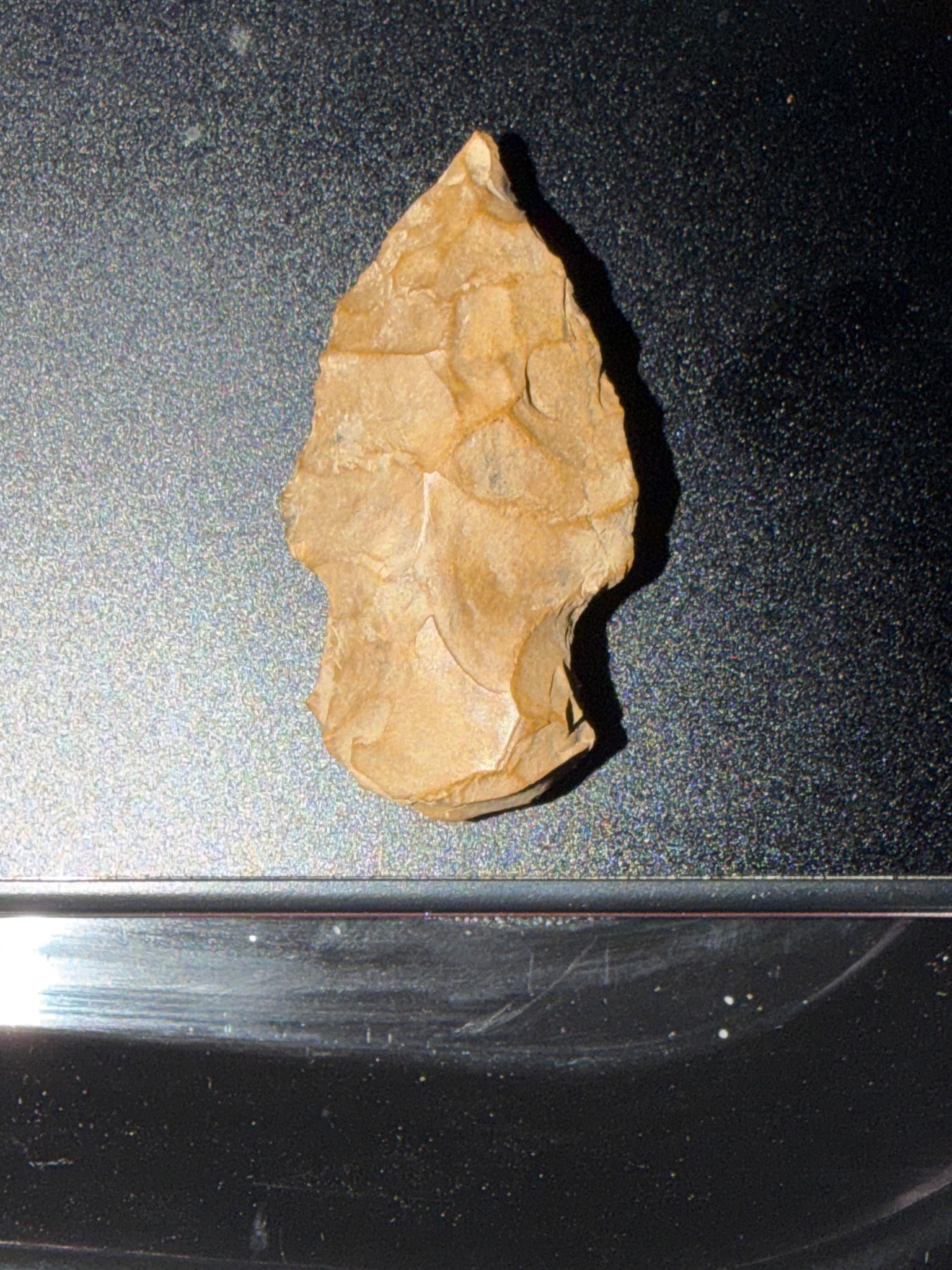
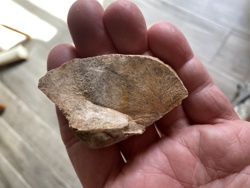
This artifact is a bifacial lithic projectile point, likely a spearhead or large dart point, hand-crafted through percussion and pressure flaking. The material appears to be a tan or ochre-colored chert or flint, displaying a matte finish with visible conchoidal fractures across both faces. Physically, the item features a lanceolate blade shape with a slightly asymmetrical outline and a robust, expanding stem base. The edges show evidence of secondary retouching, though they appear somewhat weathered and blunted, suggesting significant age or post-depositional wear. The color is a consistent earthy brown with subtle orange undertones, indicative of mineral staining from long-term burial in soil. There are no modern maker's marks, as this is a prehistoric tool. The condition reveals some minor step fractures and a slightly rounded tip, likely from impact or ancient use. Its craftsmanship reflects the Middle to Late Archaic period in North America (approximately 3,000 to 6,000 years ago), exhibiting a functional but utilitarian level of knapping. The thickness of the cross-section and the broad flake scars suggest a tool designed for durability during hunting or processing tasks.
AI-Generated Appraisal Disclaimer
Estimated Value
$150 - $250
Basic Information
Category
Archeological Artifacts - Prehistoric Tools
Appraised On
May 4, 2026
Estimated Value
$150 - $250
Item Description
This artifact is a bifacial lithic projectile point, likely a spearhead or large dart point, hand-crafted through percussion and pressure flaking. The material appears to be a tan or ochre-colored chert or flint, displaying a matte finish with visible conchoidal fractures across both faces. Physically, the item features a lanceolate blade shape with a slightly asymmetrical outline and a robust, expanding stem base. The edges show evidence of secondary retouching, though they appear somewhat weathered and blunted, suggesting significant age or post-depositional wear. The color is a consistent earthy brown with subtle orange undertones, indicative of mineral staining from long-term burial in soil. There are no modern maker's marks, as this is a prehistoric tool. The condition reveals some minor step fractures and a slightly rounded tip, likely from impact or ancient use. Its craftsmanship reflects the Middle to Late Archaic period in North America (approximately 3,000 to 6,000 years ago), exhibiting a functional but utilitarian level of knapping. The thickness of the cross-section and the broad flake scars suggest a tool designed for durability during hunting or processing tasks.
Related Tags
Get Your Items Appraised
Instant estimates of your treasures with AI-powered instant appraisals