AI Appraisal Estimate

AI-generated estimates · not official valuations

From the user

What was submitted

Photo and notes provided by the user — not generated by AI

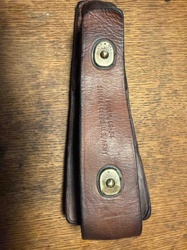
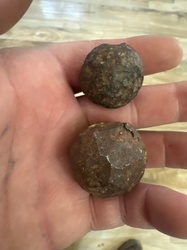
Submitted item photo
Submitted photo · June 17, 2026

User's notes

ww2

AI analysis below

AI appraisal

AI analysis & estimate

AI-Generated · Verify before acting

Everything below is generated by AI for informational purposes only. AI can make mistakes — the AI may misidentify items or misattribute them (artist, maker, brand, designer, origin, era). This is not an official valuation and should not be used for insurance, sale, tax, estate, legal, or lending purposes — or any decision requiring a certified appraisal. It is not an authoritative claim about any person, brand, or rights holder — do not share or rely on it as a factual statement about a third party. Always consult qualified professionals before making financial decisions.

Note

This analysis also relies on unverified notes provided by the user, which may be incomplete or inaccurate and could affect the result.

Read the full disclaimer

AI Identification

·Not independently authenticated·Verify before acting

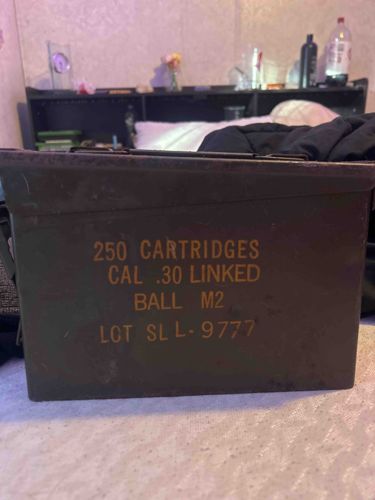
U.S. WWII M1 Ammunition Can for .30 Caliber Cartridges

Military Collectibles / Militaria

AI Estimated Value

·Not an official valuation·Verify before acting

$45.00-$75.00

As of June 17, 2026

AI Item Analysis

·AI can make mistakes·Verify before acting
This is a World War II-era U.S. Military M1 ammunition can, designed to hold 250 cartridges of .30 caliber linked ammunition. The item is constructed from heavy-gauge pressed steel with a rectangular body and a hinged, gasketed lid designed for watertight storage. It features its original olive drab (OD) paint finish, which serves as a base for the yellow stenciled text on the side. The text clearly identifies the contents as '250 CARTRIDGES CAL .30 LINKED BALL M2' followed by the lot number 'LOT SL L-9777'. The 'SL' prefix indicates production by the St. Louis Ordnance Plant. Physically, the can exhibits signs of significant age and field use, including surface oxidation (rust) appearing along the top seams and lid edges, numerous scuffs, and minor pitting in the metal. The rubber seal inside the lid, crucial for its original waterproof function, likely shows hardening or degradation given the era. The hardware includes a side-latching mechanism and a top carrying handle. This specific marking style and construction are characteristic of mid-to-late WWII American military equipment, making it a staple piece of field gear from that period.
AI Appraisal Report

·AI can make mistakes·Verify before acting
Based on my examination of this U.S. WWII M1 Ammunition Can, I have assessed it as a genuine mid-to-late war artifact. The construction of the heavy-gauge pressed steel and the specific yellow stencil format, including the 'SL' St. Louis Ordnance Plant markings, are consistent with authentic military production. The olive drab finish shows a natural 'patina' of oxidation and surface pitting that aligns with eighth-decade aging rather than artificial distressing. The market for WWII field gear remains stable, with M1 cans being foundational pieces for collectors. While these were produced in the millions, examples with clear, legible lot numbers like 'LOT SL L-9777' command a premium over generic or repainted units. The value is currently tempered by the visible rust along the lid seams and the likely degradation of the internal gasket, which affects the 'grade-state' for high-end investors. Comparables for St. Louis-marked cans in similar field-used condition typically hammer between forty-five and seventy-five dollars. Limitations of this virtual appraisal include the inability to test the integrity of the latching mechanism or verify the scent and flexibility of the rubber seal, which can indicate storage history. A physical inspection would be required to confirm the absence of pinhole rust-through under the base. For absolute authentication, provenance regarding the specific theater of operation or a chemical analysis of the paint's lead content could be pursued, though the cost of such testing would exceed the item's market value.

Get your items appraised

Instant estimates of your treasures with AI-powered appraisals

Browse More Appraisals