AI estimate as of October 24, 2025 · verify with a professional before acting
AI-Generated · Verify before acting
Everything on this page is generated by AI for informational purposes only. AI can make mistakes — the AI may misidentify items or misattribute them (artist, maker, brand, designer, origin, era). This is not an official valuation and should not be used for insurance, sale, tax, estate, legal, or lending purposes — or any decision requiring a certified appraisal. It is not an authoritative claim about any person, brand, or rights holder — do not share or rely on it as a factual statement about a third party. Always consult qualified professionals before making financial decisions.
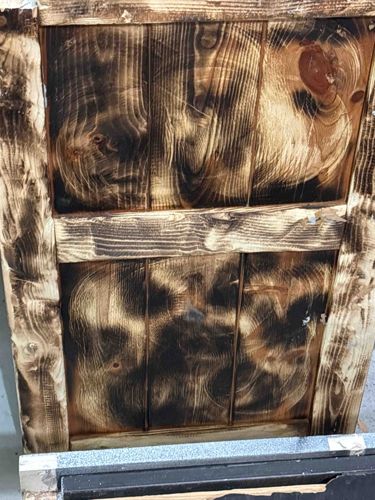
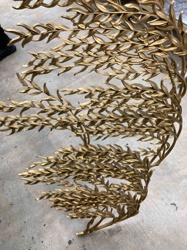
This item appears to be a section of a larger wooden structure, possibly a door, cabinet panel, or part of a piece of furniture. It is constructed from multiple planks of light-colored wood, likely pine or a similar softwood, joined together vertically within a perimeter frame. The most striking feature is the heavily distressed, 'shou sugi ban' style finish, where the wood has been intentionally charred and then possibly brushed, creating a distinct contrast between the dark, burnt areas and the lighter, raised grain. Within the two main vertical panels, the charring is particularly intense, forming abstract, almost swirling patterns that emphasize the natural wood grain and knots. The framing elements show less severe charring, with more of the light wood visible, indicating a varying application of the burning process. The overall color palette ranges from deep charcoal black to warm reddish-browns and pale, unburnt wood tones. Visible condition issues include significant darkening from the charring process, some potential splintering or rough edges, especially on the framing elements, consistent with a rustic or reclaimed aesthetic. The construction appears to be mortise and tenon or a similar joint for the frame, with the vertical panels likely set into grooves. There are no visible maker's marks or signatures. The stylistic approach suggests a rustic, industrial, or possibly modern farmhouse aesthetic, and the item's age is difficult to determine without further context, but the finish itself is intentionally aged. The craftsmanship, while appearing robust for its intended style, leans towards a utilitarian rather than fine furniture standard.
AI Appraisal Report
Upon visual examination of the image provided, I assess this Weathered Wood Panel Section. Its condition is intentionally distressed, featuring a 'shou sugi ban' style charring technique. This finish creates a striking contrast between dark, burnt areas and lighter, raised grain, particularly within the two main vertical panels. The framing elements show less severe charring. The overall aesthetic is rustic, industrial, or modern farmhouse, making its rough edges and significant charring part of its intended design rather than defects. Authenticity of the 'shou sugi ban' technique appears genuine based on the visual evidence of charring and brushed texture; however, without physical inspection, I cannot confirm the exact methods or materials used.
Market conditions for architectural salvage and unique furniture components vary widely. Comparable items would include reclaimed wood panels, custom-made wainscoting sections, or decorative wall art. Given its size and aesthetic, demand would likely come from interior designers, DIY enthusiasts, or those looking to add a unique, textured element to a space. It is not particularly rare, as 'shou sugi ban' is a contemporary and accessible finishing technique. Factors significantly impacting value include its condition, the quality and artistry of the charring, and its potential applications. Without physical inspection, I cannot verify the type of wood beyond an assumption of softwood, nor confirm the structural integrity of the joints (e.g., mortise and tenon vs. simpler joinery).
Limitations in authenticity verification from images alone are significant. To fully authenticate, an in-person examination would be required to assess the wood species, confirm the charring depth and brushing technique, inspect the joinery for craftsmanship and stability, and rule out any structural weaknesses. Provenance documentation or scientific testing (e.g., wood dating) would be needed to determine its true age if presented as antique or historical salvage, which it is not, as the finish is intentionally aged. Based on its likely use as a decorative or component item, I estimate its appraisal value to be in the range of $150-250.