AI Appraisal Estimate

AI-generated estimates · not official valuations

From the user

What was submitted

Photo and notes provided by the user — not generated by AI

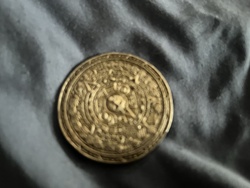
Submitted item photo
Submitted photo · June 28, 2026

User's notes

No additional notes provided.

AI analysis below

AI appraisal

AI analysis & estimate

AI-Generated · Verify before acting

Everything below is generated by AI for informational purposes only. AI can make mistakes — the AI may misidentify items or misattribute them (artist, maker, brand, designer, origin, era). This is not an official valuation and should not be used for insurance, sale, tax, estate, legal, or lending purposes — or any decision requiring a certified appraisal. It is not an authoritative claim about any person, brand, or rights holder — do not share or rely on it as a factual statement about a third party. Always consult qualified professionals before making financial decisions.

Read the full disclaimer

AI Identification

·Not independently authenticated·Verify before acting

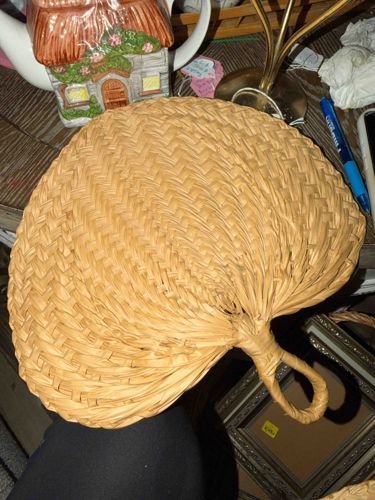
Traditional Woven Palm Leaf Hand Fan

Decorative Arts / Cultural Artifacts

AI Estimated Value

·Not an official valuation·Verify before acting

$45 - $85

As of June 28, 2026

AI Item Analysis

·AI can make mistakes·Verify before acting
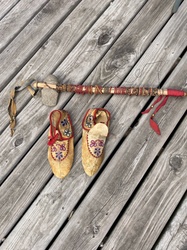
This item is a traditional fixed-leaf hand fan, meticulously constructed from natural, dried palm leaves or similar woven plant fibers. It features a broad, heart-shaped or spade-shaped leaf body created using a tight, diagonal twill weaving pattern. The material displays a uniform golden-brown or tan patina consistent with aged, organic fibers. The handle is integrated directly into the fan's structure, created by bunching and tightly wrapping the basal fibers with a matching strip of the same material to form a circular loop at the bottom for an ergonomic grip. The construction demonstrates artisanal folk-craft techniques, where the ribbing is formed by the natural thickness and overlapping of the woven strips. In terms of condition, the fan appears to be in good vintage state, though some slight fraying and minor breakage of the fiber edges are visible along the perimeter, which is common for this type of organic material. There are no visible maker's marks or signatures, suggesting it is a handcrafted utilitarian or decorative object, likely originating from Southeast Asia or the Pacific Islands during the mid-to-late 20th century. The quality is indicated by the consistency of the weave and the secure integration of the looped handle.
AI Appraisal Report

·AI can make mistakes·Verify before acting
I have carefully examined the provided images of this traditional fixed-leaf hand fan. The item exhibits a high degree of artisanal skill through its diagonal twill weaving and integrated loop-handle construction. The material—likely dried Pandanus or Palm fiber—has developed a desirable golden-tan patina, indicating a vintage origin, likely mid-to-late 20th century from the Philippines or similar Pacific Island traditions. Condition is graded as 'Good/Vintage'; the structural integrity of the weave remains sound, though minor marginal fraying and oxidative brittleness are present, which is expected for organic materials of this age. Market demand for such items is currently driven by the 'Global Folk Art' and 'Boho-Chic' interior design sectors. Comparables for unsigned, utilitarian palm fans typically range from $20 for modern mass-produced versions to $125 for well-preserved mid-century examples with specific provenance. The lack of a maker’s mark or documented cultural lineage places this in the category of decorative folk craft rather than a high-end ethnographic artifact. Limitations of this appraisal: This assessment is based solely on digital images. A definitive valuation is hampered by the inability to physically test the fiber's moisture content or tensile strength. In-person examination is required to verify the absence of pesticide residues often found in older imports and to rule out contemporary 'faux-aged' reproductions. To increase its market value, one would need provenance documentation linking it to a specific artisan or a documented historical collection. Scientific fiber analysis could definitively confirm the botanical species, further narrowing the geographic origin.

Get your items appraised

Instant estimates of your treasures with AI-powered appraisals

Browse More Appraisals