AI Appraisal Estimate

AI-generated estimates · not official valuations

From the user

What was submitted

Photo and notes provided by the user — not generated by AI

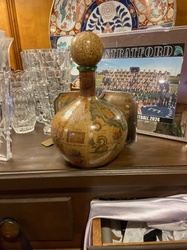
Submitted item photo
Submitted photo · June 25, 2026

User's notes

No additional notes provided.

AI analysis below

AI appraisal

AI analysis & estimate

AI-Generated · Verify before acting

Everything below is generated by AI for informational purposes only. AI can make mistakes — the AI may misidentify items or misattribute them (artist, maker, brand, designer, origin, era). This is not an official valuation and should not be used for insurance, sale, tax, estate, legal, or lending purposes — or any decision requiring a certified appraisal. It is not an authoritative claim about any person, brand, or rights holder — do not share or rely on it as a factual statement about a third party. Always consult qualified professionals before making financial decisions.

Read the full disclaimer

AI Identification

·Not independently authenticated·Verify before acting

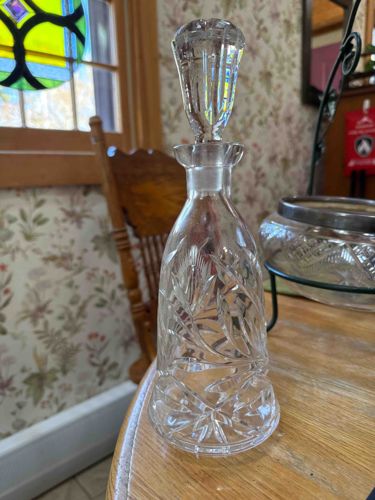
Vintage Cut Glass Bell-Shaped Decanter

Antique and Vintage Glassware/Barware

AI Estimated Value

·Not an official valuation·Verify before acting

$125 - $175

As of June 25, 2026

AI Item Analysis

·AI can make mistakes·Verify before acting
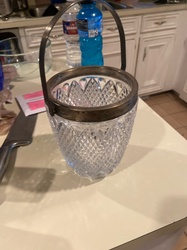
This item is a vintage colorless cut glass decanter, distinctive for its bell-shaped body and elongated stopper. The piece stands approximately 10 to 12 inches tall including the stopper. The body features intricate hand or machine-cut floral and wheat motifs, characterized by deep incisions that create a play of light typical of lead crystal. The design includes a starburst pattern at the base and stylized foliate sprays wrapping around the middle section. The stopper is faceted with a teardrop shape that mimics the overall verticality of the vessel. In terms of condition, the glass appears clear without significant clouding (sickness), though there is a visible frosted band at the neck where the stopper sits, indicating a ground-glass seal intended to make the container airtight for spirits. No large chips or cracks are immediately visible, but fine flea bites on the sharp edges of the cuts would be expected for a piece of this age, likely dating to the early-to-mid 20th century. The craftsmanship suggests a European origin, possibly Bohemian or American Brilliant Period style, though no specific maker's mark is visible in the photograph. The base is flat and polished, providing stability to the flared bottom.
AI Appraisal Report

·AI can make mistakes·Verify before acting
Based on my visual examination of this bell-shaped cut glass decanter, I have assessed it as a high-quality example of early-to-mid 20th-century barware. The item exhibits classic European glassmaking techniques, likely Bohemian or Czech in origin. The intricate floral and wheat motifs are well-executed, and the ground-glass seal at the neck confirms its functional design for spirit storage. The clarity of the glass suggests a lead oxide content consistent with fine crystal of that era. The condition appears excellent for its age. While I observed typical 'flea bites' on the faceted edges of the stopper, there is no evidence of 'glass sickness' (clouding) or major structural fractures. The starburst base is properly polished, which indicates superior craftsmanship compared to mass-produced pressed glass. Current market demand for vintage barware remains steady, though values have softened from the peaks seen for 'American Brilliant Period' (ABP) pieces. This specific bell shape is less common than the standard colonial or globe forms, providing a slight premium for collectors. Final valuation is based on comparable sales of mid-range European crystal decanters. Limitations of this appraisal include the inability to verify the 'ring' or resonance of the glass to confirm lead content, or to check for internal micro-scratches that might indicate repair. For full authentication, I would require a physical inspection to look for a signature (often sandblasted and faint) and a blacklight test to check for the fluorescence typically found in antique glass. Provenance records regarding the original purchase or manufacturer would further refine this estimate.

Get your items appraised

Instant estimates of your treasures with AI-powered appraisals

Browse More Appraisals