Paleolithic Chert Hand Scraper/Knife Tool
Archaeological Artifact / Lithic Tool

Paleolithic Chert Hand Scraper/Knife Tool

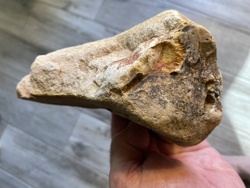
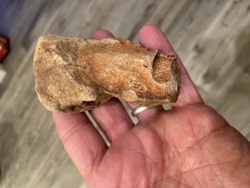
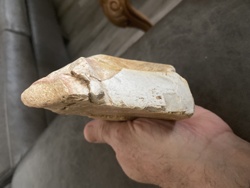
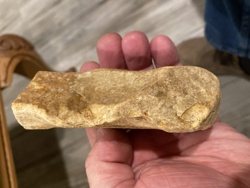
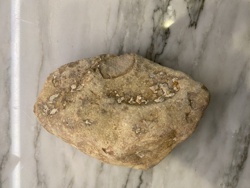
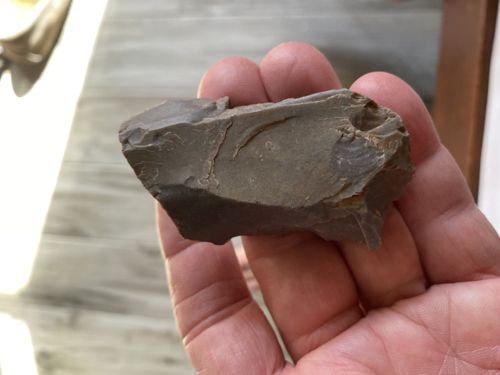
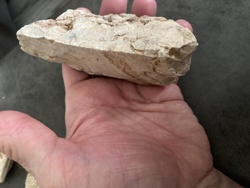
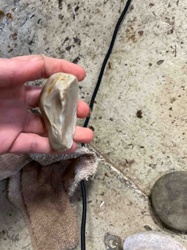
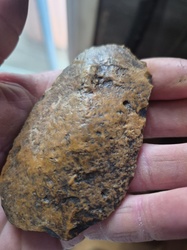
This artifact is a lithic tool measuring approximately 2 inches in length by 1.25 inches in width, crafted from a dense, opaque chert with a matte olive-drab to brownish-grey hue. The specimen displays characteristic conchoidal fracturing indicative of deliberate flintknapping. Its primary functional edge shows evidence of unifacial or marginal retouching, creating a steep, durable bevel suitable for scraping hides or processing plant materials. The dorsal surface exhibits several flake scars that suggest the removal of the original cortex, though some natural stone texture remains. The tool's overall morphology is ergonomic, designed to be held between the thumb and forefinger for precision work. In terms of condition, the artifact displays a significant aged patina and smoothed edges likely caused by thousands of years of sediment exposure and water action rather than modern mechanical wear. There are small incidental chips along the distal end which may be 'use-wear' or post-depositional damage. Given its discovery in Guthrie, OK, this tool represents the prehistoric lithic technologies prevalent in the Southern Plains, potentially dating to the Paleoindian or Early Archaic periods. The craftsmanship reveals a skilled understanding of lithic reduction, utilizing the local chert's natural fracture properties to create a sharp, functional edge from a raw nodule.
Estimated Value

$45 - $85

Basic Information

Category

Archaeological Artifact / Lithic Tool

Appraised On

February 19, 2026

Estimated Value

$45 - $85

Additional Details Provided By Owner

User Provided Information

Paleolithic Chert hand scraper knife tool found in Guthrie OK measuring 2" x 1.25"

Item Description

This artifact is a lithic tool measuring approximately 2 inches in length by 1.25 inches in width, crafted from a dense, opaque chert with a matte olive-drab to brownish-grey hue. The specimen displays characteristic conchoidal fracturing indicative of deliberate flintknapping. Its primary functional edge shows evidence of unifacial or marginal retouching, creating a steep, durable bevel suitable for scraping hides or processing plant materials. The dorsal surface exhibits several flake scars that suggest the removal of the original cortex, though some natural stone texture remains. The tool's overall morphology is ergonomic, designed to be held between the thumb and forefinger for precision work. In terms of condition, the artifact displays a significant aged patina and smoothed edges likely caused by thousands of years of sediment exposure and water action rather than modern mechanical wear. There are small incidental chips along the distal end which may be 'use-wear' or post-depositional damage. Given its discovery in Guthrie, OK, this tool represents the prehistoric lithic technologies prevalent in the Southern Plains, potentially dating to the Paleoindian or Early Archaic periods. The craftsmanship reveals a skilled understanding of lithic reduction, utilizing the local chert's natural fracture properties to create a sharp, functional edge from a raw nodule.
Get Your Items Appraised

Instant estimates of your treasures with AI-powered instant appraisals

Browse More Appraisals