Prehistoric Lithic Hand Tool (Hand Axe/Scraper)
Prehistoric Native American Artifacts

Prehistoric Lithic Hand Tool (Hand Axe/Scraper)

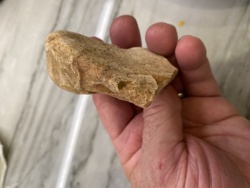
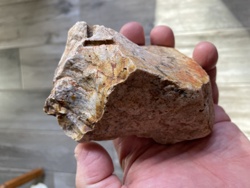
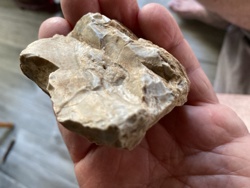
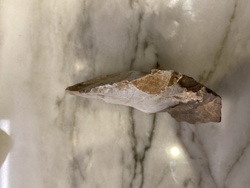
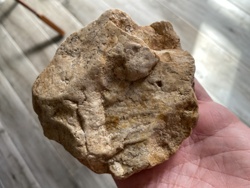
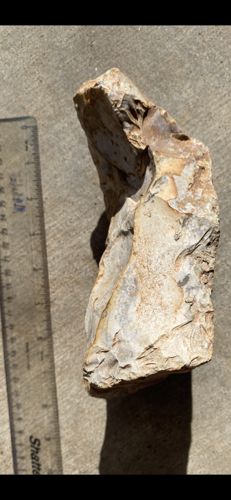
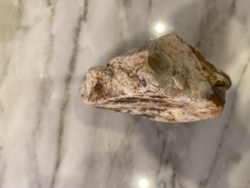
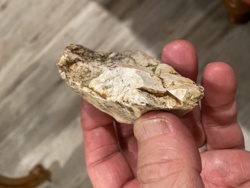
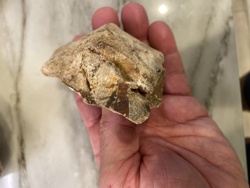
This is a large lithic artifact, identified as a multi-purpose hand tool, potentially used as a hand axe, chopper, or scraper. Based on the provided ruler, the piece measure approximately 6 to 7 inches in length. It is constructed from a cryptocrystalline silicate material, likely a local variety of chert or flint, exhibiting a varied color palette of earthy tans, creams, and gray-blue tones. The item shows clear evidence of conchoidal fracturing across its surface, characteristic of intentional lithic reduction and knapping. Large, deep flake scars are visible, suggesting a percussion-flaking manufacturing technique. The construction features a thick, cortex-covered butt or 'grip' end for ergonomic handling, transitioning into a sharper, worked edge. The condition of the piece shows significant 'desert varnish' or patination consistent with long-term exposure to the elements in Oklahoma's soil. No modern tool marks or fresh breaks are visible, indicating an ancient origin. While there are no maker's marks, as typical for prehistoric stone tools, the craftsmanship indicates a skilled individual making efficient use of the stone's natural geometry. The style is consistent with Archaic or Paleolithic period tools found in the Southern Plains of the United States.
Estimated Value

$150 - $350

Basic Information

Category

Prehistoric Native American Artifacts

Appraised On

February 17, 2026

Estimated Value

$150 - $350

Additional Details Provided By Owner

User Provided Information

Prehistoric stone hand axe multi tool found in Guthrie, OK on our property.

Item Description

This is a large lithic artifact, identified as a multi-purpose hand tool, potentially used as a hand axe, chopper, or scraper. Based on the provided ruler, the piece measure approximately 6 to 7 inches in length. It is constructed from a cryptocrystalline silicate material, likely a local variety of chert or flint, exhibiting a varied color palette of earthy tans, creams, and gray-blue tones. The item shows clear evidence of conchoidal fracturing across its surface, characteristic of intentional lithic reduction and knapping. Large, deep flake scars are visible, suggesting a percussion-flaking manufacturing technique. The construction features a thick, cortex-covered butt or 'grip' end for ergonomic handling, transitioning into a sharper, worked edge. The condition of the piece shows significant 'desert varnish' or patination consistent with long-term exposure to the elements in Oklahoma's soil. No modern tool marks or fresh breaks are visible, indicating an ancient origin. While there are no maker's marks, as typical for prehistoric stone tools, the craftsmanship indicates a skilled individual making efficient use of the stone's natural geometry. The style is consistent with Archaic or Paleolithic period tools found in the Southern Plains of the United States.
Get Your Items Appraised

Instant estimates of your treasures with AI-powered instant appraisals

Browse More Appraisals