Fenton Glass Avocado Green Hobnail Crest Bowl
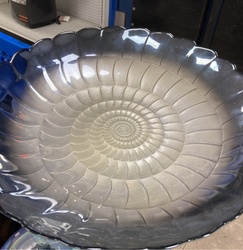
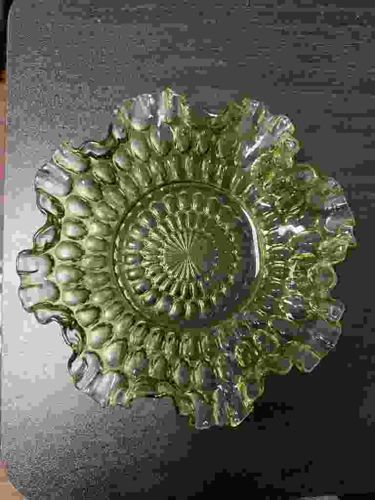
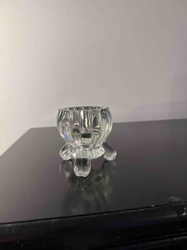
This is a vintage piece of pressed glassware, specifically a shallow bowl or 'nappy' produced in the iconic Avocado (or Colonial) Green characteristic of the mid-20th century. The piece features a prominent hobnail pattern, which consists of raised, rounded bumps covering the underside and exterior walls. A central sunburst or starburst ray pattern is visible in the base, radiating from the center point. The most distinguishing feature is the deeply ruffled or crimped edge (often called a 'crested' edge), which adds a dynamic and decorative silhouette. This specific style of glass was highly popular in the 1960s and 1970s, often manufactured by companies like Fenton Art Glass or L.E. Smith. The glass displays a consistent, earthy green transparency. Condition-wise, the piece appears well-preserved with no major chips or cracks visible in the photo; however, minor surface scratches (shelf wear) or tiny 'flea bites' common to pressed glass edges might be present upon closer inspection. The quality of the crimping suggests skilled craftsmanship typical of American glass houses of the era. The bowl possesses a significant weight and light-refractive properties due to the thickness and the texture of the hobnails.
AI-Generated Appraisal Disclaimer
Estimated Value
$25.00 - $45.00
Basic Information
Category
Vintage Glassware / Decorative Collectibles
Appraised On
April 6, 2026
Estimated Value
$25.00 - $45.00
Additional Details Provided By Owner
User Provided Information
glass is colonial or avocado green in coloe.
Item Description
This is a vintage piece of pressed glassware, specifically a shallow bowl or 'nappy' produced in the iconic Avocado (or Colonial) Green characteristic of the mid-20th century. The piece features a prominent hobnail pattern, which consists of raised, rounded bumps covering the underside and exterior walls. A central sunburst or starburst ray pattern is visible in the base, radiating from the center point. The most distinguishing feature is the deeply ruffled or crimped edge (often called a 'crested' edge), which adds a dynamic and decorative silhouette. This specific style of glass was highly popular in the 1960s and 1970s, often manufactured by companies like Fenton Art Glass or L.E. Smith. The glass displays a consistent, earthy green transparency. Condition-wise, the piece appears well-preserved with no major chips or cracks visible in the photo; however, minor surface scratches (shelf wear) or tiny 'flea bites' common to pressed glass edges might be present upon closer inspection. The quality of the crimping suggests skilled craftsmanship typical of American glass houses of the era. The bowl possesses a significant weight and light-refractive properties due to the thickness and the texture of the hobnails.
Get Your Items Appraised
Instant estimates of your treasures with AI-powered instant appraisals