Bifacial Lithic Core / Occasional Hand Axe
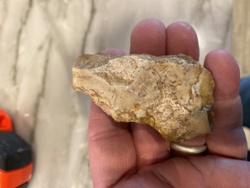
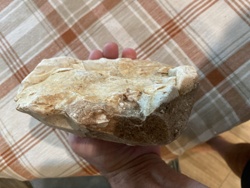
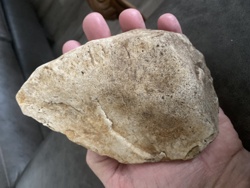
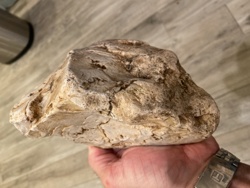
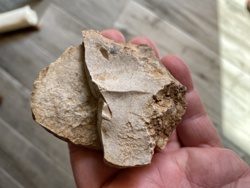
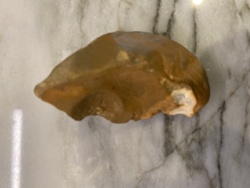
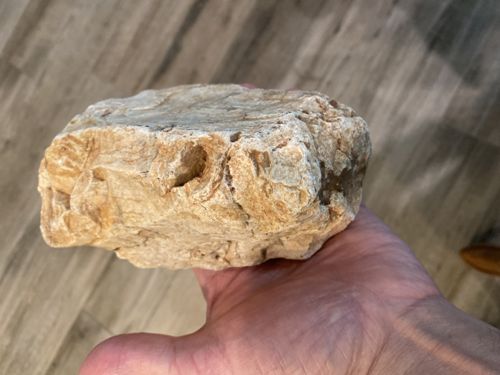
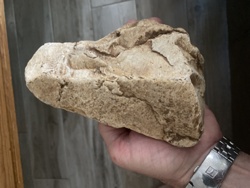
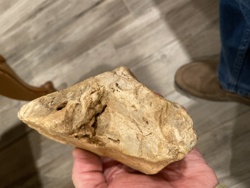
This item is a 5-inch by 2-inch bifacially worked lithic core, identified as being sourced from Guthrie, Oklahoma. The artifact is composed of a dense, sedimentary or metamorphic stone material, displaying a range of earthy tones including tan, cream, and ochre-brown. Its construction shows clear evidence of percussion flaking, with visible flake scars, ridges, and pits where material was intentionally removed from both sides (bifacial) to create a workable edge or to reduce the mass. The shape is somewhat ovate and robust, designed to fit within the palm of the hand, which is consistent with early stone tool precursors or multi-purpose core tools. Regarding condition, the piece shows significant weathering and a developed patina, suggesting substantial geological age. The edges appear somewhat blunted by natural erosion or use-wear over time. There are no modern maker's marks or signatures, as it is a prehistoric lithic remain. The craftsmanship reflects a utilitarian approach to stone reduction rather than fine pressure-flaking found in later projectile points. This piece serves as a primary example of pre-form technology, used either as a heavy scraping tool or as a source of raw material for smaller flakes. The surface shows some geological mineralization and micro-pitting, which are characteristic of items found in Oklahoma's specific soil chemistry.
AI-Generated Appraisal Disclaimer
Estimated Value
$45 - $85
Basic Information
Category
Prehistoric Artifact / Lithic Tool
Appraised On
February 17, 2026
Estimated Value
$45 - $85
Additional Details Provided By Owner
User Provided Information
Prospect 5" x 2" Bi face hand axe lithic core found in Guthrie OK
Item Description
This item is a 5-inch by 2-inch bifacially worked lithic core, identified as being sourced from Guthrie, Oklahoma. The artifact is composed of a dense, sedimentary or metamorphic stone material, displaying a range of earthy tones including tan, cream, and ochre-brown. Its construction shows clear evidence of percussion flaking, with visible flake scars, ridges, and pits where material was intentionally removed from both sides (bifacial) to create a workable edge or to reduce the mass. The shape is somewhat ovate and robust, designed to fit within the palm of the hand, which is consistent with early stone tool precursors or multi-purpose core tools. Regarding condition, the piece shows significant weathering and a developed patina, suggesting substantial geological age. The edges appear somewhat blunted by natural erosion or use-wear over time. There are no modern maker's marks or signatures, as it is a prehistoric lithic remain. The craftsmanship reflects a utilitarian approach to stone reduction rather than fine pressure-flaking found in later projectile points. This piece serves as a primary example of pre-form technology, used either as a heavy scraping tool or as a source of raw material for smaller flakes. The surface shows some geological mineralization and micro-pitting, which are characteristic of items found in Oklahoma's specific soil chemistry.
Related Tags
Explore similar items and categories:
Get Your Items Appraised
Instant estimates of your treasures with AI-powered instant appraisals