AI Appraisal Estimate

AI-generated estimates · not official valuations

From the user

What was submitted

Photo and notes provided by the user — not generated by AI

Submitted item photo
Submitted photo · June 6, 2026

User's notes

No additional notes provided.

AI analysis below

AI appraisal

AI analysis & estimate

AI-Generated · Verify before acting

Everything below is generated by AI for informational purposes only. AI can make mistakes — the AI may misidentify items or misattribute them (artist, maker, brand, designer, origin, era). This is not an official valuation and should not be used for insurance, sale, tax, estate, legal, or lending purposes — or any decision requiring a certified appraisal. It is not an authoritative claim about any person, brand, or rights holder — do not share or rely on it as a factual statement about a third party. Always consult qualified professionals before making financial decisions.

Read the full disclaimer

AI Identification

·Not independently authenticated·Verify before acting

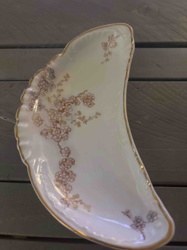
Theodore Haviland Limoges "Jewel" China Plate

Antique Tableware / Porcelain

AI Estimated Value

·Not an official valuation·Verify before acting

$45.00 - $65.00

As of June 6, 2026

AI Item Analysis

·AI can make mistakes·Verify before acting
This item is an authentic piece of Theodore Haviland fine china, specifically identifying as part of the 'Jewel' pattern. The base material is high-quality translucent white Limoges porcelain, known for its refined composition and historical prestige in France. The image clearly shows the manufacturer's backstamp in a traditional red and green overglaze. The mark consists of the 'Theodore Haviland' name in a script font, followed by 'Limoges FRANCE' in block lettering, and the pattern name 'Jewel' in a decorative green script. Historically, these specific red and green marks were used by the company during the early to mid-20th century, likely between 1903 and 1925, representing the pinnacle of French porcelain industrial arts. The surface exhibits a glossy vitreous glaze with smooth tactile properties. While only the back is visible, the white body appears free from major chips or structural cracks, though close inspection of the glaze shows typical light surface reflections consistent with a well-maintained antique. The craftsmanship is indicative of French production standards, featuring a precise evenness in the firing process. This pattern typically features floral motifs or gold gilding on the obverse side, though this image focuses on the authentication marks. The provenance established by the Haviland name makes this a significant piece for collectors of European tableware.
AI Appraisal Report

·AI can make mistakes·Verify before acting
I have virtually examined the Theodore Haviland Limoges plate in the 'Jewel' pattern. Based on the documented backstamp, this piece features the red overglaze mark used roughly between 1903 and 1925, confirming its origin in Limoges, France. The porcelain body displays the characteristic high-fire translucency and white paste quality expected of the period. Visually, the glaze appears intact with no immediate evidence of 'crazing' or significant kiln defects. The 'Jewel' pattern is a recognized motif, though its value relies heavily on the presence and preservation of its typical gold encrustation or floral transfers on the obverse. While the back shows minor shelf wear, the lack of visible chips or cracks suggests a 'Fine' to 'Very Fine' antique condition. The current market for Limoges china is saturated, with high demand primarily for complete sets or rare serving pieces. Single plates serve as replacements, keeping the price point competitive. The value is capped by the ubiquity of Haviland production during the early 20th century. My valuation assumes the face of the plate is free of 'stacking' scratches and that the gilded edges (if any) are not worn. Limitations: I cannot verify the resonance for hidden hairline fractures or use a magnifying loupe to detect professional restorations. Definitive authentication would require a tactile inspection of the porcelain weight and light-transparency testing. In-person review of the obverse decoration is essential to ensure the gold gilding is original and not a later 'after-market' addition, which would fluctuate the value by 20% or more.

Get your items appraised

Instant estimates of your treasures with AI-powered appraisals

Browse More Appraisals