Japanese Aritayaki Yunomi Teacup
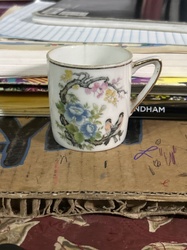
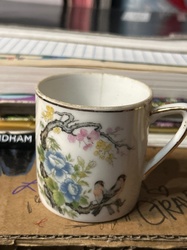
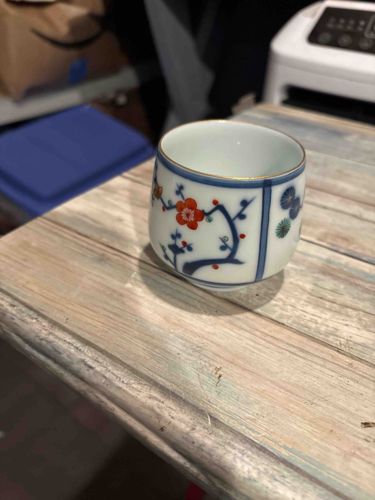
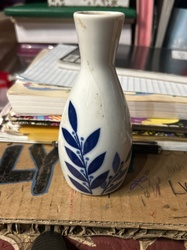
This is a fine Japanese porcelain teacup, specifically a handleless 'yunomi' style used for daily tea consumption. The vessel is constructed from white porcelain with a slightly tapered, rounded body and a footed base. The exterior features traditional underglaze cobalt blue (sometsuke) combined with overglaze polychrome enamels (aka-e). The primary motif includes red plum blossoms (ume) on a gnarled blue branch, a symbol of resilience, and stylized floral medallions or kiku (chrysanthemum) patterns in blue and green. A fine gold-gilt band accents the rim, indicating a higher level of craftsmanship. The glaze is smooth and reflective with a translucent quality characteristic of Arita or Imari ware. In terms of condition, the piece appears well-preserved with no visible chips or cracks. There is very minor wear to the gold gilding on the rim, consistent with age and occasional use. Based on the style and glaze application, this piece likely dates from the late Showa to early Heisei period (late 20th century). The integration of traditional Shochikubai-style motifs with modern precision suggests it was produced by a quality manufacturer in the Saga Prefecture region.
AI-Generated Appraisal Disclaimer
Estimated Value
$125.00 - $175.00
Basic Information
Category
Asian Ceramics and Pottery
Appraised On
February 3, 2026
Estimated Value
$125.00 - $175.00
Item Description
This is a fine Japanese porcelain teacup, specifically a handleless 'yunomi' style used for daily tea consumption. The vessel is constructed from white porcelain with a slightly tapered, rounded body and a footed base. The exterior features traditional underglaze cobalt blue (sometsuke) combined with overglaze polychrome enamels (aka-e). The primary motif includes red plum blossoms (ume) on a gnarled blue branch, a symbol of resilience, and stylized floral medallions or kiku (chrysanthemum) patterns in blue and green. A fine gold-gilt band accents the rim, indicating a higher level of craftsmanship. The glaze is smooth and reflective with a translucent quality characteristic of Arita or Imari ware. In terms of condition, the piece appears well-preserved with no visible chips or cracks. There is very minor wear to the gold gilding on the rim, consistent with age and occasional use. Based on the style and glaze application, this piece likely dates from the late Showa to early Heisei period (late 20th century). The integration of traditional Shochikubai-style motifs with modern precision suggests it was produced by a quality manufacturer in the Saga Prefecture region.
Related Tags
Get Your Items Appraised
Instant estimates of your treasures with AI-powered instant appraisals