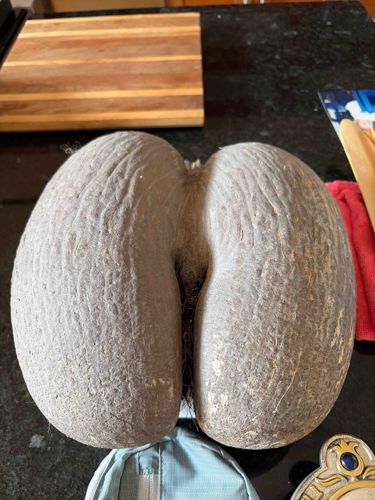
Coco de Mer (Lodoicea maldivica) Nut
Natural History / Botanicals

Coco de Mer (Lodoicea maldivica) Nut

This specimen is a large, mature nut from the Coco de Mer palm, endemic to the Seychelles. Physically, it displays the characteristic bilobed, heart-shaped form often likened to a human pelvis or buttocks. The exterior husk has been removed, revealing a hard, woody shell with a dense, fibrous texture. The color is a muted, earthy grayish-brown with subtle tonal variations and light-colored striations across the surface. The shell exhibits a naturally weathered patina consistent with age. Notable features include the deep central cleft and remnant tufts of dark, coarse fibers located within the sinus of the lobes. Regarding condition, the surface shows minor abrasions, small white surface markings (likely mineral deposits or superficial scuffs), and some inherent natural cracking typical of dried botanical specimens. There are no visible maker's marks, as this is a natural object, though these are often polished for decorative use; this particular example retains a more naturalistic, raw matte finish. Given its appearance, it likely dates from the mid-to-late 20th century. The Coco de Mer is the world's largest seed and is highly regulated under CITES, making documented specimens rare and desirable to collectors of natural history and 'Curiosities.' Its craftsmanship is entirely biological, defined by the symmetrical growth of the double-nut structure.
Estimated Value

$450 - $700

Basic Information

Category

Natural History / Botanicals

Appraised On

March 15, 2026

Estimated Value

$450 - $700

Additional Details Provided By Owner

User Provided Information

Coco de mer

Item Description

This specimen is a large, mature nut from the Coco de Mer palm, endemic to the Seychelles. Physically, it displays the characteristic bilobed, heart-shaped form often likened to a human pelvis or buttocks. The exterior husk has been removed, revealing a hard, woody shell with a dense, fibrous texture. The color is a muted, earthy grayish-brown with subtle tonal variations and light-colored striations across the surface. The shell exhibits a naturally weathered patina consistent with age. Notable features include the deep central cleft and remnant tufts of dark, coarse fibers located within the sinus of the lobes. Regarding condition, the surface shows minor abrasions, small white surface markings (likely mineral deposits or superficial scuffs), and some inherent natural cracking typical of dried botanical specimens. There are no visible maker's marks, as this is a natural object, though these are often polished for decorative use; this particular example retains a more naturalistic, raw matte finish. Given its appearance, it likely dates from the mid-to-late 20th century. The Coco de Mer is the world's largest seed and is highly regulated under CITES, making documented specimens rare and desirable to collectors of natural history and 'Curiosities.' Its craftsmanship is entirely biological, defined by the symmetrical growth of the double-nut structure.

Get Your Items Appraised

Instant estimates of your treasures with AI-powered instant appraisals

Browse More Appraisals