Prehistoric Lithic Scraper or Point Preform
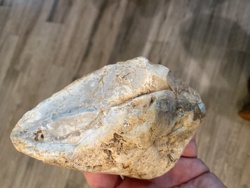
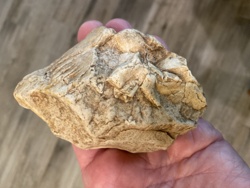
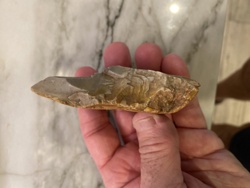
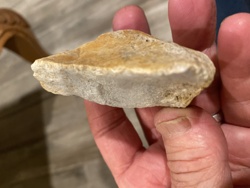
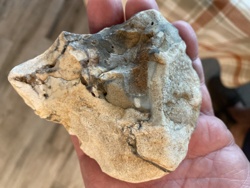
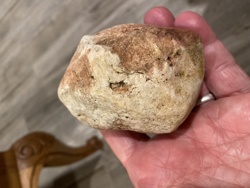
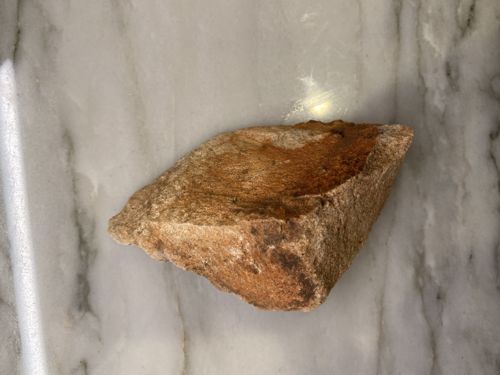
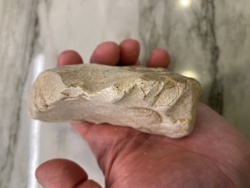
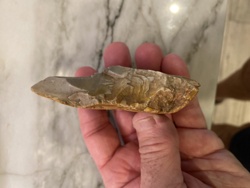
This prehistoric lithic artifact, measuring approximately 3.25 inches by 2.25 inches, was reportedly recovered from Guthrie, Oklahoma. The item is composed of a coarse-grained lithic material, appearing to be a local sandstone or quartz-rich chert with significant ferruginous (iron-oxide) staining, giving it a distinct earthy brown and reddish-orange coloration. This patina is consistent with long-term burial in the iron-rich soils of the Oklahoma region. The object's construction shows evidence of percussion flaking, resulting in an asymmetrical, sub-triangular or wedge-like geometry. One edge appears intentionally worked to create a sharp margin suitable for scraping hides, wood, or fibrous plants. The presence of a prominent bulb of percussion or a prepared striking platform is difficult to definitively confirm from the single orientation, but the overall morphology implies a 'preform' or a multi-purpose expedient tool. The condition shows heavy weathering and edge-rounding consistent with thousands of years of environmental exposure. There are no modern saw marks or machine polish, suggesting ancient manufacture. The craftsmanship is functional rather than ceremonial, typical of archaic period toolkits where raw material availability dictated final form. No maker's marks or signatures are present, as is characteristic of prehistoric North American artifacts.
AI-Generated Appraisal Disclaimer
Estimated Value
$45–$85
Basic Information
Category
Archaeological Artifacts / Native American Lithics
Appraised On
February 18, 2026
Estimated Value
$45–$85
Additional Details Provided By Owner
User Provided Information
Prehistoric stone point scraper found in Guthrie OK 3.25" x 2.25
Item Description
This prehistoric lithic artifact, measuring approximately 3.25 inches by 2.25 inches, was reportedly recovered from Guthrie, Oklahoma. The item is composed of a coarse-grained lithic material, appearing to be a local sandstone or quartz-rich chert with significant ferruginous (iron-oxide) staining, giving it a distinct earthy brown and reddish-orange coloration. This patina is consistent with long-term burial in the iron-rich soils of the Oklahoma region. The object's construction shows evidence of percussion flaking, resulting in an asymmetrical, sub-triangular or wedge-like geometry. One edge appears intentionally worked to create a sharp margin suitable for scraping hides, wood, or fibrous plants. The presence of a prominent bulb of percussion or a prepared striking platform is difficult to definitively confirm from the single orientation, but the overall morphology implies a 'preform' or a multi-purpose expedient tool. The condition shows heavy weathering and edge-rounding consistent with thousands of years of environmental exposure. There are no modern saw marks or machine polish, suggesting ancient manufacture. The craftsmanship is functional rather than ceremonial, typical of archaic period toolkits where raw material availability dictated final form. No maker's marks or signatures are present, as is characteristic of prehistoric North American artifacts.
Get Your Items Appraised
Instant estimates of your treasures with AI-powered instant appraisals