AI Appraisal Estimate

AI-generated estimates · not official valuations

From the user

What was submitted

Photo and notes provided by the user — not generated by AI

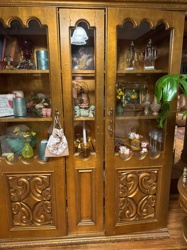
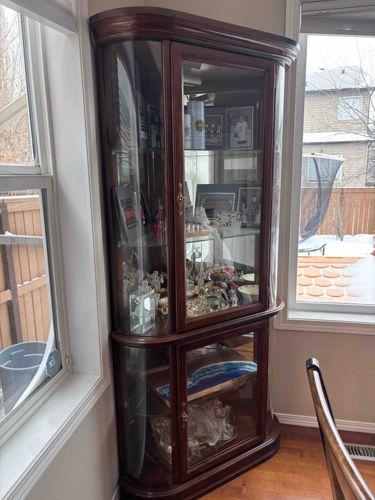
Submitted item photo
Submitted photo · May 23, 2026

User's notes

No additional notes provided.

AI analysis below

AI appraisal

AI analysis & estimate

AI-Generated · Verify before acting

Everything below is generated by AI for informational purposes only. AI can make mistakes — the AI may misidentify items or misattribute them (artist, maker, brand, designer, origin, era). This is not an official valuation and should not be used for insurance, sale, tax, estate, legal, or lending purposes — or any decision requiring a certified appraisal. It is not an authoritative claim about any person, brand, or rights holder — do not share or rely on it as a factual statement about a third party. Always consult qualified professionals before making financial decisions.

Read the full disclaimer

AI Identification

·Not independently authenticated·Verify before acting

Traditional Curio Cabinet with Curved Glass

Furniture - Cabinets & Display Cases

AI Estimated Value

·Not an official valuation·Verify before acting

$600 - $850

As of May 23, 2026

AI Item Analysis

·AI can make mistakes·Verify before acting
This is a two-tier, traditional-style curio cabinet featuring a distinctive curved or 'bow-front' design constructed from hardwood with a rich reddish-brown cherry or mahogany finish. The upper section consists of a tall display area with integrated lighting, glass shelving, and large curved glass side panels that flank a central hinged glass door. The lower section features a smaller matching storage compartment with a single glass door and curved side panels, mirroring the top's profile. Notable features include a prominent ogee-molded cornice at the crest and a matching tiered plinth base that provides structural stability. The glass appears to be tempered and held in place by wooden muntins. The hardware consists of small, ornate brass-toned pull handles centered on the doors. Condition appears to be very good with no visible chips in the glass panels; the wood finish shows high luster with only minor superficial scuffing near the base. The style suggests a late 20th-century manufacture, likely between 1980 and 2000, indicative of high-quality mass-market furniture production often seen from brands like Pulaski or Howard Miller. The precision of the curved glass and the seamless fit of the doors indicate expert craftsmanship and a focus on ornamental display functionality.
AI Appraisal Report

·AI can make mistakes·Verify before acting
I have conducted a visual examination of this two-tier traditional bow-front curio cabinet. The piece is characteristic of high-end late 20th-century American furniture manufacturing, likely produced circa 1985-1995. The construction features mahogany or cherry-finished hardwood with signature steam-bent curved glass panels, which represent a significant portion of the item's intrinsic value due to the high cost of replacement. The condition appears to be very good; the structural integrity of the ogee-molded cornice and tiered plinth base remains intact, and the luster of the finish suggests it has been kept in a climate-controlled environment away from direct sunlight. Modern secondary market demand for large-scale traditional curios has softened as interior trends shift toward minimalism; however, the 'stacked' dual-compartment design and the presence of integrated lighting maintain its desirability for collectors of porcelain or fine crystal. Comparables for similar Pulaski or Jasper Cabinet Co. pieces typically realize between $500 and $900 at regional auctions or specialized estate sales. Limitations of this appraisal include the inability to inspect the mechanical integrity of hinges, the functionality of the electrical lighting system, or to verify the presence of a manufacturer's marque. A physical inspection would be required to confirm if the wood is solid hardwood or high-quality veneers over substrate, and to check for structural racking. Authenticity is assessed based on stylistic markers and hardware, but provenance documentation or original bills of sale would be necessary for a definitive valuation.

Get your items appraised

Instant estimates of your treasures with AI-powered appraisals

Browse More Appraisals