AI Appraisal Estimate

AI-generated estimates · not official valuations

From the user

What was submitted

Photo and notes provided by the user — not generated by AI

Submitted item photo
Submitted photo · June 26, 2026

User's notes

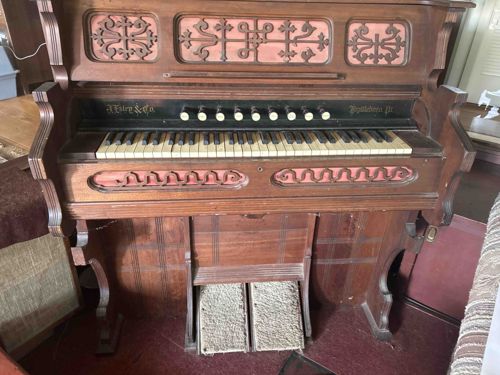
Estey & Co. Brattleboro Vt

AI analysis below

AI appraisal

AI analysis & estimate

AI-Generated · Verify before acting

Everything below is generated by AI for informational purposes only. AI can make mistakes — the AI may misidentify items or misattribute them (artist, maker, brand, designer, origin, era). This is not an official valuation and should not be used for insurance, sale, tax, estate, legal, or lending purposes — or any decision requiring a certified appraisal. It is not an authoritative claim about any person, brand, or rights holder — do not share or rely on it as a factual statement about a third party. Always consult qualified professionals before making financial decisions.

Note

This analysis also relies on unverified notes provided by the user, which may be incomplete or inaccurate and could affect the result.

Read the full disclaimer

AI Identification

·Not independently authenticated·Verify before acting

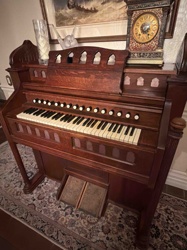
Estey & Co. Walnut Pump Organ (Harmonium)

Antique Musical Instruments

AI Estimated Value

·Not an official valuation·Verify before acting

$400 - $700

As of June 26, 2026

AI Item Analysis

·AI can make mistakes·Verify before acting
This is a Victorian-era Estey & Co. pump organ, also known as a reed organ or harmonium, manufactured in Brattleboro, Vermont. The instrument is constructed from solid walnut and walnut veneers with an ornate Gothic Revival influence. It features elaborate fretwork on the front panels, backed by a faded red or pink decorative fabric. The nameplate above the keyboard clearly displays 'Estey & Co.' on the left and 'Brattleboro Vt.' on the right in gilded Gothic script. There are eleven pull-stops located above the single manual keyboard, which consists of ivory and ebony keys showing significant yellowing and some surface dirt consistent with age. Below the keyboard are two knee swells and two carpeted foot pedals used for pumping the bellows. The casework exhibits typical wear for an antique of this age, including scratches, wood chips, and a consistent patina across the finish. Notable are the curved side supports and the recessed paneling on the lower portion of the cabinet. Dating likely to the late 19th century (circa 1870-1890), this organ represents a high level of American craftsmanship from one of the world's once-largest organ manufacturers. The intricate scrollwork and structural integrity suggest it was a mid-to-high tier domestic model intended for home or small chapel use.
AI Appraisal Report

·AI can make mistakes·Verify before acting
I have conducted a visual analysis of the Estey & Co. Walnut Pump Organ. Based on the provided imagery, the instrument appears to be an authentic example of late 19th-century Vermont craftsmanship. The gothic revival detailing, particularly the scroll-sawn fretwork and original gilded stencil nameplate, remains in fair to good aesthetic condition. The solid walnut casing shows a consistent patina; however, the yellowing of the keyboard and surface wear suggest the instrument may require internal mechanical restoration. In the current market, the value of Victorian reed organs is heavily dictated by functional condition rather than mere aesthetic appeal. While Estey was a premier manufacturer, the high volume of production means these units are not exceedingly rare. Comparables for non-serviced units typically fall in the $300-$500 range, while those in verified playable condition with restored bellows can reach $1,000. Limitations of this appraisal include the inability to test the airtightness of the bellows, the integrity of the reeds, or the action of the pull-stops. I cannot verify from images alone if the ivory keys are intact or if there is structural pest damage. A full authentication would require an in-person inspection of the internal serial numbers (usually stamped on the back or inside the bellows frame) and a mechanical evaluation of the wind-chest. Provenance regarding previous professional tunings or restoration work would also significantly enhance the valuation.

Get your items appraised

Instant estimates of your treasures with AI-powered appraisals

Browse More Appraisals