AI Appraisal Estimate

AI-generated estimates · not official valuations

From the user

What was submitted

Photo and notes provided by the user — not generated by AI

Submitted item photo
Submitted photo · May 24, 2026

User's notes

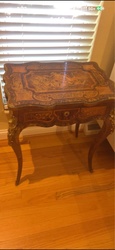
Antique night stand

AI analysis below

AI appraisal

AI analysis & estimate

AI-Generated · Verify before acting

Everything below is generated by AI for informational purposes only. AI can make mistakes — the AI may misidentify items or misattribute them (artist, maker, brand, designer, origin, era). This is not an official valuation and should not be used for insurance, sale, tax, estate, legal, or lending purposes — or any decision requiring a certified appraisal. It is not an authoritative claim about any person, brand, or rights holder — do not share or rely on it as a factual statement about a third party. Always consult qualified professionals before making financial decisions.

Note

This analysis also relies on unverified notes provided by the user, which may be incomplete or inaccurate and could affect the result.

Read the full disclaimer

AI Identification

·Not independently authenticated·Verify before acting

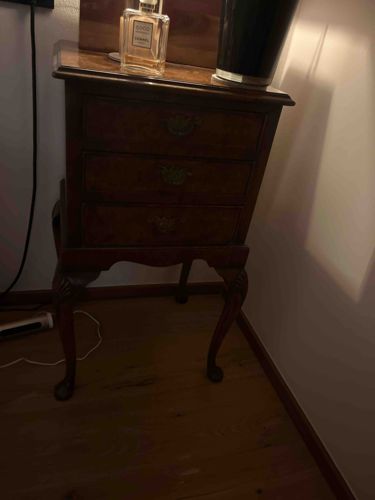
George II Style Mahogany Burl Wood Three-Drawer Commode Nightstand

Antique Furniture

AI Estimated Value

·Not an official valuation·Verify before acting

$1,200 - $1,800

As of May 24, 2026

AI Item Analysis

·AI can make mistakes·Verify before acting
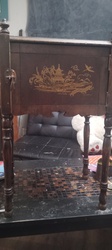
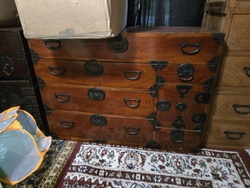
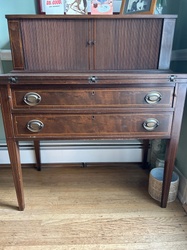
This is a fine mahogany nightstand or bedside commode executed in the elegant George II revival style, likely dating from the early to mid-20th century. The piece features three vertically stacked drawers, each showcasing stunning book-matched burl wood veneers that provide a rich, swirling grain contrast against the darker mahogany frame. The drawers are accented with brass-toned willow-style or batwing pulls, which are characteristic of 18th-century English furniture. The top surface is finished with a molded edge, adding to its refined silhouette. The most distinguishing feature is the set of four tall, slender cabriole legs. These legs are expertly carved with shell motifs at the knees and terminate in classic ball-and-claw feet, indicating a high level of craftsmanship. The scalloped apron connects the legs and provides a decorative transition to the drawer chest. Regarding condition, the piece shows a well-preserved original finish with a warm, deep patina. There is some minor surface wear and small abrasions consistent with age and typical residential use, particularly around the feet and drawer edges. The construction appears solid, with no visible structural repairs or significant loss to the fragile burl veneers. The quality of the carving and the choice of premium veneers suggest it was produced by a high-end furniture manufacturer specializing in historical reproductions.
AI Appraisal Report

·AI can make mistakes·Verify before acting
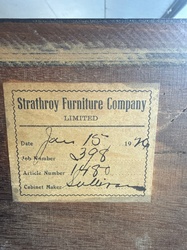
I have carefully examined the provided images and descriptions of this George II Style Mahogany and Burl Wood Chest. This piece is a high-quality mid-20th-century revival work rather than a period 18th-century antique. The use of book-matched burl veneers and the precision of the shell-carved cabriole legs suggest it was produced by a premium cabinetmaker, such as Baker or Kittinger, known for faithful historical reproductions. The condition is remarkably well-preserved; the warm patina and minor abrasions are consistent with gentle residential use and actually enhance its character. Market demand for fine English revival furniture remains steady among collectors seeking 'brown furniture' with functional utility as bedside commodes. Current trends favor pieces with high-contrast veneers like the ones seen here, supporting a strong secondary market value. While this piece possesses excellent decorative appeal, value is capped by its status as a reproduction rather than an authentic 1740s original. It is important to note that a definitive appraisal from digital images has limitations. To fully authenticate the piece and potentially increase the valuation, an in-person inspection of the drawer joinery (specifically looking for hand-cut dovetails versus machine-cut), an examination of the secondary woods used for the drawer linings, and a review of any manufacturer stamps or brand marks would be required. Proving a specific high-end maker's provenance through original sales receipts or labels would likely push the value toward the higher end of the estimated range.

Get your items appraised

Instant estimates of your treasures with AI-powered appraisals

Browse More Appraisals