Vintage Blacksmith Anvil
Antique Tools & Blacksmithing Equipment

Vintage Blacksmith Anvil

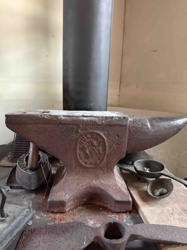
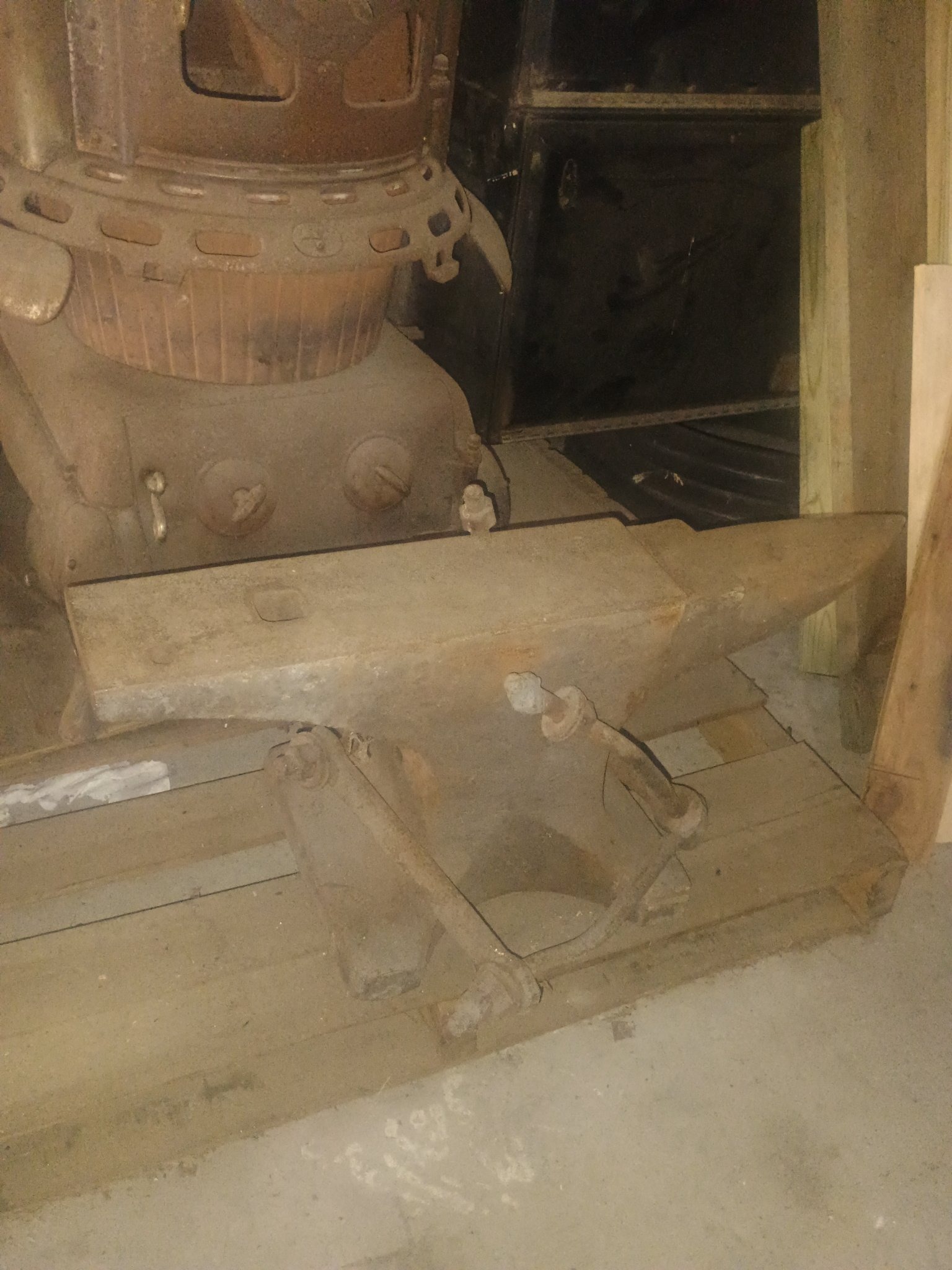
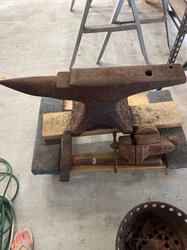
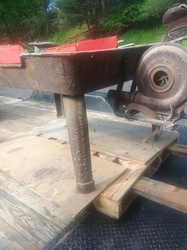
This is a heavy, solid-body blacksmith anvil, likely forged or cast from steel or wrought iron with a hardened steel face. It features a London pattern design, characterized by a flat face with a square hardy hole for tools, a step, and a tapered conical horn (bick) for curve work. The item appears to weigh between 100 to 150 pounds and is currently mounted on a improvised wooden pallet base with heavy metal lag bolts or security bars clamped across the waist to secure it. The surface displays a significant amount of oxidation and a dusty, dark-brown patina consistent with long-term storage in an unconditioned environment. The face of the anvil shows signs of usage but maintains relatively sharp edges, which is a indicator of quality craftsmanship and durability. There are no clearly visible maker's marks or stamps from this angle, but the robust construction suggests a late 19th to early 20th-century American or English manufacturer. The condition is fair, needing descaling and oiling to prevent further surface corrosion, but it remains a functional tool or high-value industrial collectible.
Estimated Value

$450 - $700

Basic Information

Category

Antique Tools & Blacksmithing Equipment

Appraised On

May 8, 2026

Estimated Value

$450 - $700

Item Description

This is a heavy, solid-body blacksmith anvil, likely forged or cast from steel or wrought iron with a hardened steel face. It features a London pattern design, characterized by a flat face with a square hardy hole for tools, a step, and a tapered conical horn (bick) for curve work. The item appears to weigh between 100 to 150 pounds and is currently mounted on a improvised wooden pallet base with heavy metal lag bolts or security bars clamped across the waist to secure it. The surface displays a significant amount of oxidation and a dusty, dark-brown patina consistent with long-term storage in an unconditioned environment. The face of the anvil shows signs of usage but maintains relatively sharp edges, which is a indicator of quality craftsmanship and durability. There are no clearly visible maker's marks or stamps from this angle, but the robust construction suggests a late 19th to early 20th-century American or English manufacturer. The condition is fair, needing descaling and oiling to prevent further surface corrosion, but it remains a functional tool or high-value industrial collectible.
Get Your Items Appraised

Instant estimates of your treasures with AI-powered instant appraisals

Browse More Appraisals