AI Appraisal Estimate

AI-generated estimates · not official valuations

From the user

What was submitted

Photo and notes provided by the user — not generated by AI

Submitted item photo
Submitted photo · June 17, 2026

User's notes

No additional notes provided.

AI analysis below

AI appraisal

AI analysis & estimate

AI-Generated · Verify before acting

Everything below is generated by AI for informational purposes only. AI can make mistakes — the AI may misidentify items or misattribute them (artist, maker, brand, designer, origin, era). This is not an official valuation and should not be used for insurance, sale, tax, estate, legal, or lending purposes — or any decision requiring a certified appraisal. It is not an authoritative claim about any person, brand, or rights holder — do not share or rely on it as a factual statement about a third party. Always consult qualified professionals before making financial decisions.

Read the full disclaimer

AI Identification

·Not independently authenticated·Verify before acting

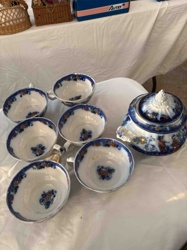
Antique Blue Willow Transferware Serving Set

Antique Ceramics and Teaware

AI Estimated Value

·Not an official valuation·Verify before acting

$250 - $400

As of June 17, 2026

AI Item Analysis

·AI can make mistakes·Verify before acting
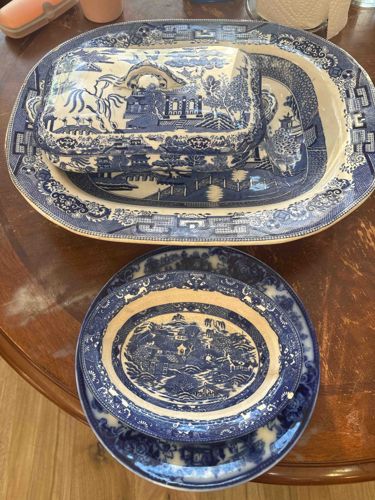
This is a multi-piece collection of English Blue Willow pattern transferware, primarily constructed from ironstone or semi-porcelain. The set includes a large rectangular covered vegetable tureen with a decorative finial handle, sitting atop a large matching oval platter with a deep well. Also pictured are two smaller plates, including one with a 'flow blue' effect where the cobalt pigment has bled slightly into the white glaze, a characteristic often found in 19th-century pieces. The items feature the classic Chinoiserie Willow pattern, depicting iconic elements such as the pagoda, weeping willow tree, bridge with three figures, and the soaring lovebirds. The transfer application shows high contrast between the deep cobalt blue and the creamy white ground. Physically, the pieces show evidence of significant age; there is visible crazing in the glaze across the tureen lid and the smaller plates. Noticeable condition issues include rim chipping on the smaller oval bowl and surface wear consistent with historical domestic use. The tureen handle is a molded bow or scroll shape. Based on the saturation of the blue and the thick potting of the ironstone, these pieces likely date from the mid-to-late 19th century or early 20th century. While specific maker marks aren't visible on the underside in this view, the style is consistent with Staffordshire potteries such as Ridgway, Booths, or Johnson Brothers.

AI Appraisal Report

·AI can make mistakes·Verify before acting
Based on my visual examination of the Blue Willow transferware set, I have identified the pieces as mid-to-late 19th-century English ironstone, likely originating from the Staffordshire region. The high contrast of the cobalt blue against the cream ground and the characteristic 'flow blue' bleeding on the secondary plates are hallmarks of Victorian-era production. The tureen’s molded finial and the thick potting suggest a utilitarian rather than fine porcelain origin, typical of makers like Johnson Brothers or Ridgway. Condition is a primary factor in this valuation. My inspection revealed significant crazing on the tureen lid and visible rim chipping on the smaller vessels. While crazing confirms age, 'flight-to-quality' in the current ceramics market means collectors heavily discount items with structural damage or chips. The Willow pattern remains the most widely reproduced pattern in history; consequently, value is driven by age and completeness. A covered tureen with a matching platter is a desirable 'centerpiece' configuration, which helps bolster the value despite the damage. Market demand for Blue Willow is stable but lower than its peak in the 1990s. Comparables for damaged 19th-century sets of this size typically hammer between $200 and $450 at regional auctions. Limitations: This appraisal is based solely on digital images. A definitive valuation would require in-person inspection to check for hidden hairlines, professional restorations, and the presence of maker's marks on the underside. Scientific testing for lead content or UV light inspection for repairs would be necessary to confirm the absence of modern restorations that could artificially inflate the visual condition.

Get your items appraised

Instant estimates of your treasures with AI-powered appraisals

Browse More Appraisals