Fossilized Dinosaur Bone Fragment
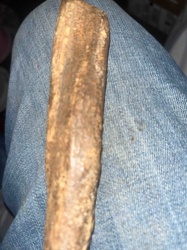
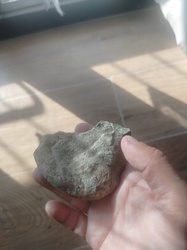
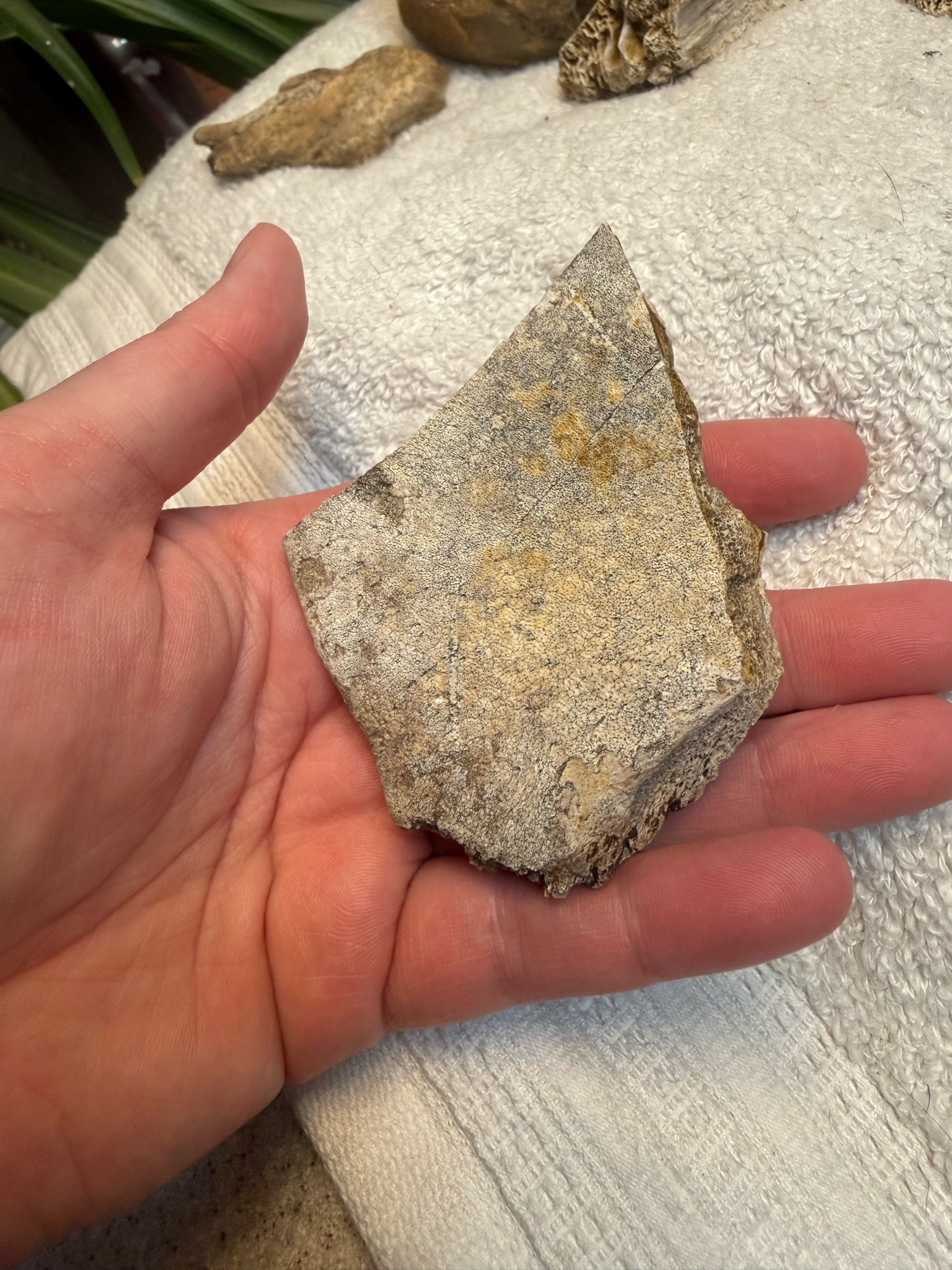
This specimen is a significant fragment of fossilized dinosaur bone, specifically sourced from the Morrison Formation, dating to the Late Jurassic period (approximately 150 million years ago). The piece measures roughly 3 to 4 inches across and displays a characteristic sub-triangular, tabular shape. The surface exhibits a distinct 'honeycomb' or porous texture, which is the permineralized cancellous (spongy) bone structure. Coloration is a mottled combination of creamy whites, light grays, and yellowish-tan mineral staining, likely due to iron or silica replacement during the fossilization process. One edge shows a smoother, denser cortical bone layer, while the broken faces reveal the internal vascular architecture. There are visible stress fractures and minor chipping along the periphery, consistent with natural weathering and excavation. The specimen lacks specific diagnostic features to identify a genus, but the size and density suggest a large vertebrate, potentially a sauropod or large theropod common to the Morrison strata. The craftsmanship of nature is evident in the preservation of the microscopic pore spaces, indicating high-quality permineralization.
AI-Generated Appraisal Disclaimer
Estimated Value
$125-$225
Basic Information
Category
Paleontological Specimens
Appraised On
May 13, 2026
Estimated Value
$125-$225
Additional Details Provided By Owner
User Provided Information
Fossil from Morrison formation
Item Description
This specimen is a significant fragment of fossilized dinosaur bone, specifically sourced from the Morrison Formation, dating to the Late Jurassic period (approximately 150 million years ago). The piece measures roughly 3 to 4 inches across and displays a characteristic sub-triangular, tabular shape. The surface exhibits a distinct 'honeycomb' or porous texture, which is the permineralized cancellous (spongy) bone structure. Coloration is a mottled combination of creamy whites, light grays, and yellowish-tan mineral staining, likely due to iron or silica replacement during the fossilization process. One edge shows a smoother, denser cortical bone layer, while the broken faces reveal the internal vascular architecture. There are visible stress fractures and minor chipping along the periphery, consistent with natural weathering and excavation. The specimen lacks specific diagnostic features to identify a genus, but the size and density suggest a large vertebrate, potentially a sauropod or large theropod common to the Morrison strata. The craftsmanship of nature is evident in the preservation of the microscopic pore spaces, indicating high-quality permineralization.
Related Tags
Get Your Items Appraised
Instant estimates of your treasures with AI-powered instant appraisals