AI estimate as of September 18, 2025 · verify with a professional before acting
AI-Generated · Verify before acting
Everything on this page is generated by AI for informational purposes only. AI can make mistakes — the AI may misidentify items or misattribute them (artist, maker, brand, designer, origin, era). This is not an official valuation and should not be used for insurance, sale, tax, estate, legal, or lending purposes — or any decision requiring a certified appraisal. It is not an authoritative claim about any person, brand, or rights holder — do not share or rely on it as a factual statement about a third party. Always consult qualified professionals before making financial decisions.
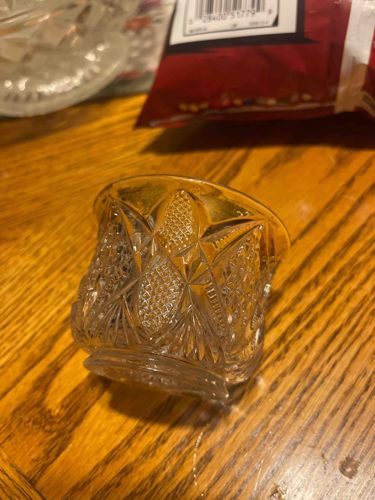
This item is a small, clear glass dish, likely a jelly compote or relish dish, displaying characteristics of pressed glass manufacturing, possibly from the late 19th to early 20th century. Its physical characteristics include a round form with a slightly flared rim, supported by a small, integrated circular foot. The glass is clear and colorless, though the lighting suggests a subtle amber hue in some reflections, which might be an optical effect rather than an intentional tint. The most striking features are the intricate geometric patterns cut into the exterior surface. These patterns consist of prominent, multi-faceted star motifs interspersed with areas of hobnail or cross-hatch texture, forming a complex diamond and star design around the body of the dish. The craftsmanship suggests a pressed glass technique, where molten glass is pressed into a mold, allowing for such detailed relief patterns at a lower cost than cut glass. The edges of the patterns appear relatively sharp, indicative of a good quality mold. Visible condition issues are minimal from the provided image; no obvious chips, cracks, or significant abrasions are immediately apparent, though closer inspection would be required to confirm. The glass appears clean with a good reflective quality. There are no discernible maker's marks or signatures visible from the angle shown. The style period aligns with the American Brilliant Period or motifs inspired by it, which were popular for pressed glass during that era. The small size and decorative nature suggest it was used for serving condiments, jellies, or small individual desserts. The quality of the pressed patterns indicates fine craftsmanship for its type.
AI Appraisal Report
Based on my visual examination of the provided image, I assess this clear pressed glass jelly compote or relish dish. The condition appears to be very good; I observe no obvious chips, cracks, or significant abrasions, and the glass maintains a good reflective quality. This suggests careful previous ownership. Authenticity as a pressed glass item from the late 19th to early 20th century, likely influenced by the American Brilliant Period, is strongly supported by the intricate geometric patterns, including prominent star motifs and hobnail texture, which are characteristic of this manufacturing technique and era. The sharpness of the pattern details indicates a well-maintained mold during its production. While the lighting suggests a subtle amber hue in some reflections, I believe this is an optical effect rather than intentional tinting, making it a clear, colorless piece. Market conditions for common pressed glass items of this type are generally stable but not experiencing significant appreciation. Comparables found in online marketplaces and antique shops typically range in this value. Demand for such pieces is moderate, driven by collectors of pressed glass, Americana, or those seeking decorative, functional vintage items. Rarity is low; while attractive, similar patterns and forms were produced in large quantities. Factors significantly impacting value include its excellent condition and decorative appeal. However, the lack of a discernible maker's mark limits its specific attribution, and the commonality of pressed glass designs prevents a higher valuation. It is important to note that without a physical inspection, I cannot definitively confirm authenticity, rule out minute flaws like fleabites or internal fractures, or verify the exact glass composition. An in-person examination would allow for tactile assessment, detailed scrutiny for hidden damage, and potential identification of specific pattern manufacturers if any subtle mold lines or marks become apparent under direct light.