Silver-Plated Shell-Handle Measuring Cup
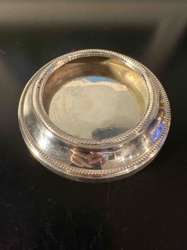
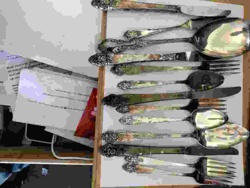
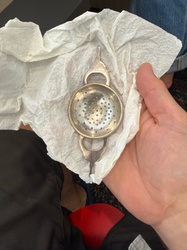
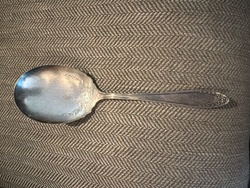
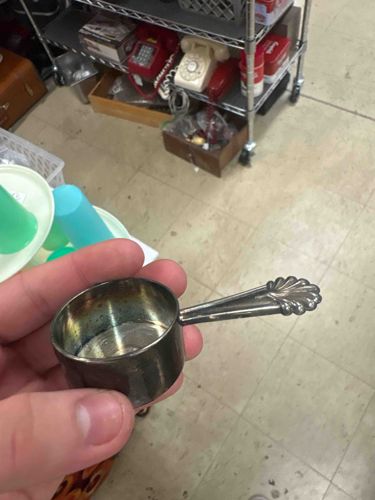
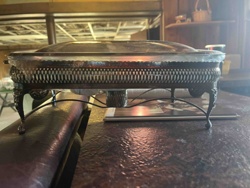
This item is a small, single-handed vessel designed as a decorative measuring cup or salt cellar, likely a mid-20th-century novelty kitchenware item. It is constructed from silver-plated metal, displaying a deep, cylindrical bowl with straight sides and a flat base. The most distinguishing feature is the handle, which terminates in an ornate 'King-style' or 'Queen's-style' scallop shell motif, a classic design element in traditional silverware. The handle is narrower at the point of attachment to the bowl and flares toward the shell finial. In terms of condition, the piece shows significant atmospheric tarnishing (oxidization), particularly inside the bowl and along the handle edges, manifesting as dark grey to iridescent blue-gold hues. There is visible surface wear through the plating in some areas, revealing the base metal beneath. The craftsmanship is utilitarian yet decorative, following neoclassical revival styles popular in 1940s-1960s American and European silver-plate production. No specific maker's mark is visible from this angle, though such items were commonly produced by firms like Sheridan or Leonard Silver.
AI-Generated Appraisal Disclaimer
Estimated Value
$15.00 - $25.00
Basic Information
Category
Kitchenware & Silver Plate
Appraised On
January 20, 2026
Estimated Value
$15.00 - $25.00
Additional Details Provided By Owner
User Provided Information
Silver plate
Item Description
This item is a small, single-handed vessel designed as a decorative measuring cup or salt cellar, likely a mid-20th-century novelty kitchenware item. It is constructed from silver-plated metal, displaying a deep, cylindrical bowl with straight sides and a flat base. The most distinguishing feature is the handle, which terminates in an ornate 'King-style' or 'Queen's-style' scallop shell motif, a classic design element in traditional silverware. The handle is narrower at the point of attachment to the bowl and flares toward the shell finial. In terms of condition, the piece shows significant atmospheric tarnishing (oxidization), particularly inside the bowl and along the handle edges, manifesting as dark grey to iridescent blue-gold hues. There is visible surface wear through the plating in some areas, revealing the base metal beneath. The craftsmanship is utilitarian yet decorative, following neoclassical revival styles popular in 1940s-1960s American and European silver-plate production. No specific maker's mark is visible from this angle, though such items were commonly produced by firms like Sheridan or Leonard Silver.
Get Your Items Appraised
Instant estimates of your treasures with AI-powered instant appraisals