Mississippian Period Stone Celt Fragment or Preform
Native American Archaeological Artifacts

Mississippian Period Stone Celt Fragment or Preform

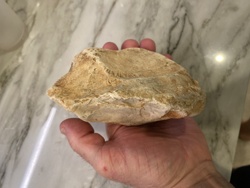
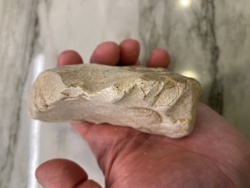
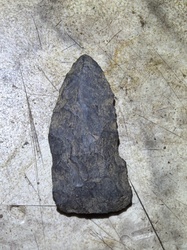
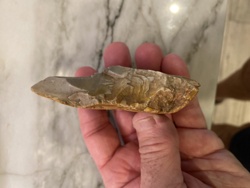
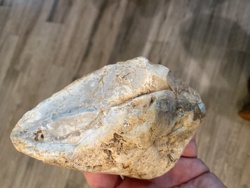
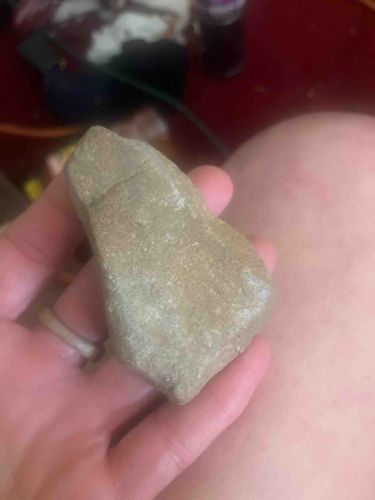
This object is a worked lithic archaeological specimen, likely an unfinished celt (ungrooved axe head) or a fragment of a larger tool, consistent with Mississippian culture (approx. 800 - 1600 CE). The item exhibits a wedge or petaloid shape, common in lithic woodworking tools of the American Southeast. It is composed of a dense, fine-grained igneous or metamorphic stone, such as greenstone, diorite, or basalt, which were preferred for their durability under impact. The color is a muted earthy grey-green with visible crystalline inclusions and a granular surface texture. While several surfaces show evidence of purposeful shaping through pecking and grinding, the item lacks the high-polish finish often found on completed Mississippian ceremonial or prestige celts. Notable condition issues include significant percussion scars on the broader end, indicating either heavy use-wear or a fracture that occurred during the manufacturing process. The edges appear somewhat weathered and blunted, suggesting it may have been discarded or lost as a 'preform' before final sharpening. There are no discerning maker's marks, as is typical for indigenous lithic tools of this period. Its association with a Mississippian site provides strong temporal and cultural context for its use as a manual tool for felling timber or shaping wood.
Estimated Value

$40–$75

Basic Information

Category

Native American Archaeological Artifacts

Appraised On

March 24, 2026

Estimated Value

$40–$75

Additional Details Provided By Owner

User Provided Information

Found on site with mississippian artifacts

Item Description

This object is a worked lithic archaeological specimen, likely an unfinished celt (ungrooved axe head) or a fragment of a larger tool, consistent with Mississippian culture (approx. 800 - 1600 CE). The item exhibits a wedge or petaloid shape, common in lithic woodworking tools of the American Southeast. It is composed of a dense, fine-grained igneous or metamorphic stone, such as greenstone, diorite, or basalt, which were preferred for their durability under impact. The color is a muted earthy grey-green with visible crystalline inclusions and a granular surface texture. While several surfaces show evidence of purposeful shaping through pecking and grinding, the item lacks the high-polish finish often found on completed Mississippian ceremonial or prestige celts. Notable condition issues include significant percussion scars on the broader end, indicating either heavy use-wear or a fracture that occurred during the manufacturing process. The edges appear somewhat weathered and blunted, suggesting it may have been discarded or lost as a 'preform' before final sharpening. There are no discerning maker's marks, as is typical for indigenous lithic tools of this period. Its association with a Mississippian site provides strong temporal and cultural context for its use as a manual tool for felling timber or shaping wood.

Get Your Items Appraised

Instant estimates of your treasures with AI-powered instant appraisals

Browse More Appraisals