Southwestern Native American Polychrome Pottery Seed Jar
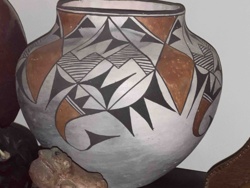
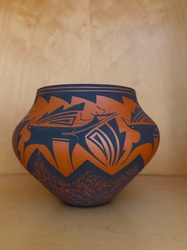
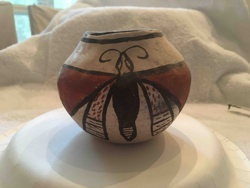
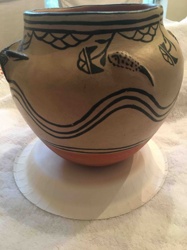
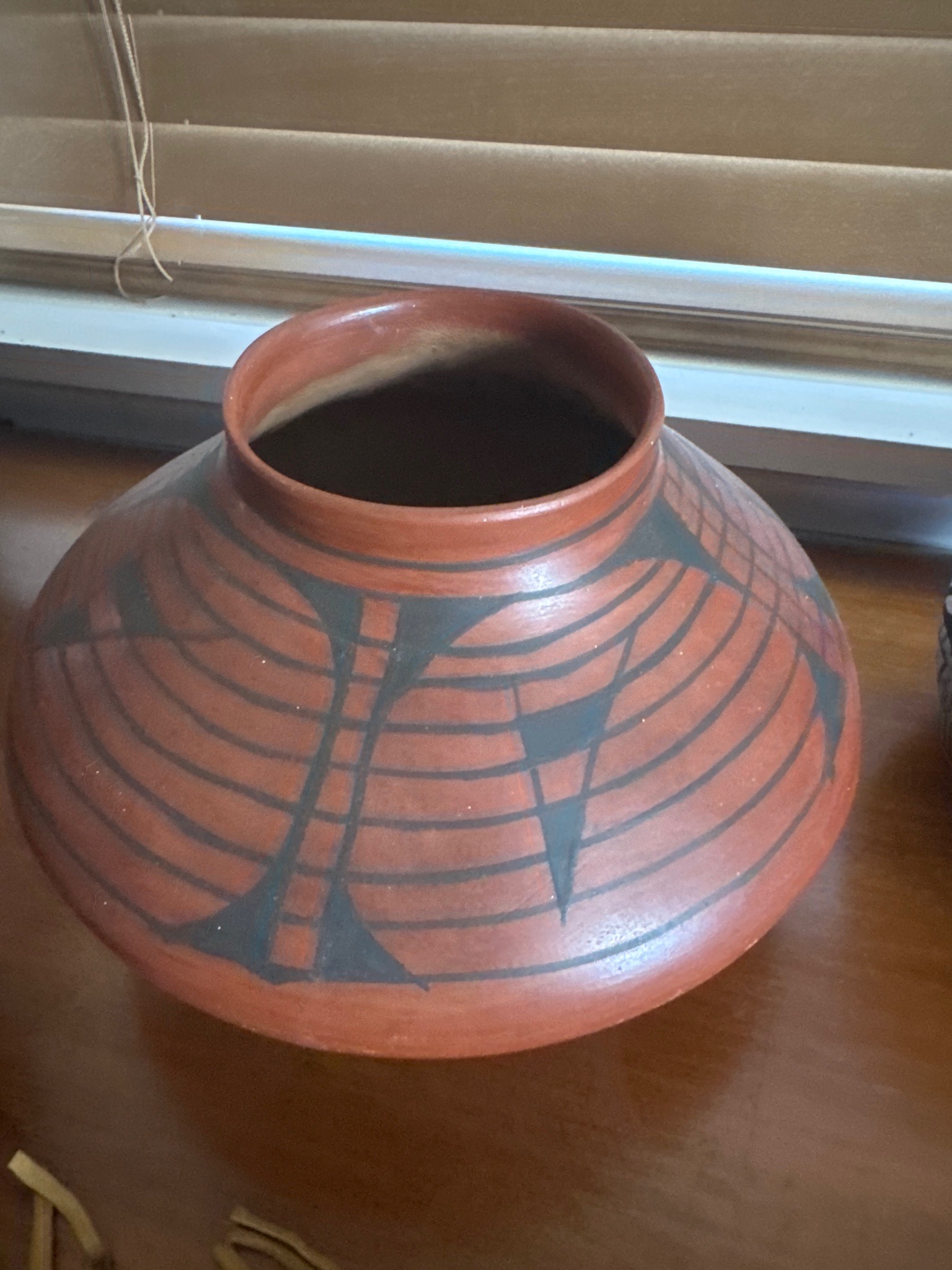
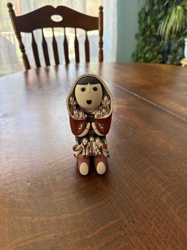
This item is a hand-coiled, earthenware pottery seed jar, reflecting traditional Southwestern Native American craftsmanship, specifically associated with Hopi or Acoma Pueblo styles. The vessel features a wide, compressed globular body with a narrow neck and a rounded, slightly flared rim. It is finished in a warm reddish-orange slip, over which black mineral paint has been applied. The decorative program consists of a repetitive geometric pattern of horizontal banding intersected by stylized, hourglass-shaped motifs and triangular accents, possibly representing eagle feathers or lightning. The piece exhibits a smooth, hand-burnished surface texture characteristic of pit-fired ceramics. In terms of condition, the vessel appears well-preserved with some minor surface scuffing and light scratches consistent with age and handling. There are no immediate signs of significant cracks or structural repairs visible in the provided image. The interior shows the natural, unglazed texture of the fired clay. While no maker's mark is visible on the base in this view, the uniformity of the line work suggests the hand of a skilled artisan. Based on the style and patina, it likely dates from the late 20th century to the present day.
AI-Generated Appraisal Disclaimer
Estimated Value
$600 - $900
Basic Information
Category
Native American Art / Ceramics
Appraised On
May 12, 2026
Estimated Value
$600 - $900
Item Description
This item is a hand-coiled, earthenware pottery seed jar, reflecting traditional Southwestern Native American craftsmanship, specifically associated with Hopi or Acoma Pueblo styles. The vessel features a wide, compressed globular body with a narrow neck and a rounded, slightly flared rim. It is finished in a warm reddish-orange slip, over which black mineral paint has been applied. The decorative program consists of a repetitive geometric pattern of horizontal banding intersected by stylized, hourglass-shaped motifs and triangular accents, possibly representing eagle feathers or lightning. The piece exhibits a smooth, hand-burnished surface texture characteristic of pit-fired ceramics. In terms of condition, the vessel appears well-preserved with some minor surface scuffing and light scratches consistent with age and handling. There are no immediate signs of significant cracks or structural repairs visible in the provided image. The interior shows the natural, unglazed texture of the fired clay. While no maker's mark is visible on the base in this view, the uniformity of the line work suggests the hand of a skilled artisan. Based on the style and patina, it likely dates from the late 20th century to the present day.
Get Your Items Appraised
Instant estimates of your treasures with AI-powered instant appraisals