Lower Paleolithic Chert Biface Hand Axe / Scraper Tool
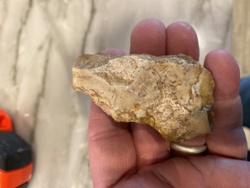
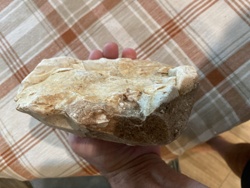
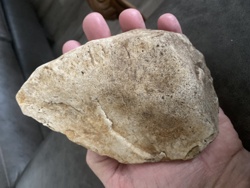
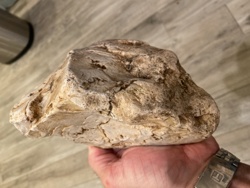
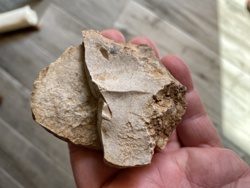
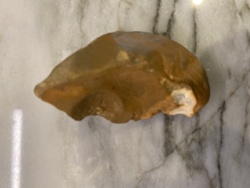
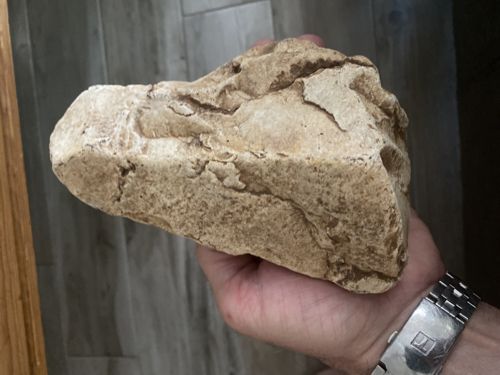
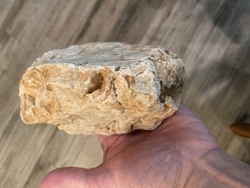
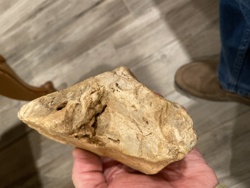
This is a substantial prehistoric lithic implement, identified as a bifacial hand axe and scraper tool, measuring approximately 9.5 inches in length by 3.5 inches in width. The item is manufactured from a dense, tan-colored chert or high-quality flint. Physically, the tool exhibits a triangular or sub-ovoid form with a thick, heavy base (butt) meant for gripping and a tapered working edge. The construction shows evidence of primary flaking and percussion bulb scars, indicating it was shaped through deliberate flint knapping techniques to create a functional multi-tool. The color is a mottled beige-tan with visible mineral staining and a distinct desert varnish or patina consistent with long-term environmental exposure. There are visible fractures and step-fractures along the edges, some of which appear to be ancient utilitarian wear and others that may be natural weathering. The overall condition shows significant percussion marks and a textured surface typical of Acheulean-style tools. Found in Guthrie, Oklahoma, this specimen represents a significant example of early human or hominid tool-making technology, likely dating to the Lower Paleolithic era (though North American context may imply a later archaic period depending on specific site stratigraphy). The craftsmanship reflects a 'hard hammer' percussion technique, resulting in a robust, heavy-duty tool suitable for butchering or woodworking tasks.
AI-Generated Appraisal Disclaimer
Estimated Value
$400 - $650
Basic Information
Category
Prehistoric Artifact / Lithic Tool
Appraised On
February 19, 2026
Estimated Value
$400 - $650
Additional Details Provided By Owner
User Provided Information
Lower Paleolithic chert bi face hand axe scraper tool found in Guthrie OK measuring 9.5" x 3.5"
Item Description
This is a substantial prehistoric lithic implement, identified as a bifacial hand axe and scraper tool, measuring approximately 9.5 inches in length by 3.5 inches in width. The item is manufactured from a dense, tan-colored chert or high-quality flint. Physically, the tool exhibits a triangular or sub-ovoid form with a thick, heavy base (butt) meant for gripping and a tapered working edge. The construction shows evidence of primary flaking and percussion bulb scars, indicating it was shaped through deliberate flint knapping techniques to create a functional multi-tool. The color is a mottled beige-tan with visible mineral staining and a distinct desert varnish or patina consistent with long-term environmental exposure. There are visible fractures and step-fractures along the edges, some of which appear to be ancient utilitarian wear and others that may be natural weathering. The overall condition shows significant percussion marks and a textured surface typical of Acheulean-style tools. Found in Guthrie, Oklahoma, this specimen represents a significant example of early human or hominid tool-making technology, likely dating to the Lower Paleolithic era (though North American context may imply a later archaic period depending on specific site stratigraphy). The craftsmanship reflects a 'hard hammer' percussion technique, resulting in a robust, heavy-duty tool suitable for butchering or woodworking tasks.
Related Tags
Explore similar items and categories:
Get Your Items Appraised
Instant estimates of your treasures with AI-powered instant appraisals