AI Appraisal Estimate

AI-generated estimates · not official valuations

From the user

What was submitted

Photo and notes provided by the user — not generated by AI

Submitted item photo
Submitted photo · May 27, 2026

User's notes

Vase

AI analysis below

AI appraisal

AI analysis & estimate

AI-Generated · Verify before acting

Everything below is generated by AI for informational purposes only. AI can make mistakes — the AI may misidentify items or misattribute them (artist, maker, brand, designer, origin, era). This is not an official valuation and should not be used for insurance, sale, tax, estate, legal, or lending purposes — or any decision requiring a certified appraisal. It is not an authoritative claim about any person, brand, or rights holder — do not share or rely on it as a factual statement about a third party. Always consult qualified professionals before making financial decisions.

Note

This analysis also relies on unverified notes provided by the user, which may be incomplete or inaccurate and could affect the result.

Read the full disclaimer

AI Identification

·Not independently authenticated·Verify before acting

Chinese Porcelain Lotus Motif Vase

Ceramic Art

AI Estimated Value

·Not an official valuation·Verify before acting

$600 - $900

As of May 27, 2026

AI Item Analysis

·AI can make mistakes·Verify before acting
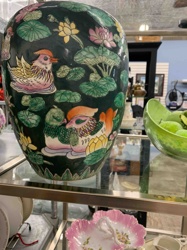
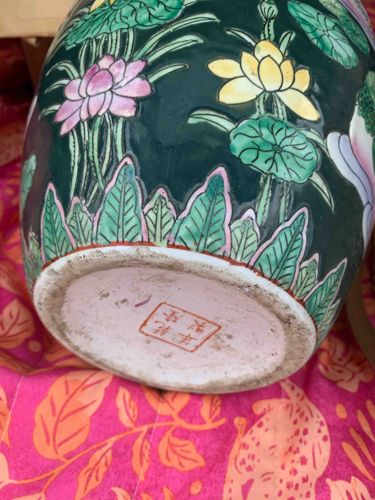
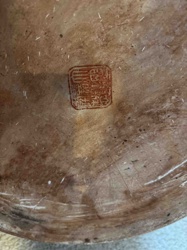
This appears to be a Chinese porcelain vase, likely of baluster or ovoid form, decorated with a vibrant enamel floral motif. The primary background color is a deep, rich dark green, possibly representing a pond or dark foliage. The decoration features an array of lotus flowers and lily pads. The lotus flowers are depicted in two distinct colors: a delicate pale pink and a bright yellow, each with visible petals and intricate detailing of their centers. The lily pads and other aquatic greenery are rendered in various shades of green, with some outlines in black and subtle pink accents along the edges of certain leaves. The craftsmanship indicates hand-painting, as evidenced by the organic lines and slight variations in color application. The visible base of the vase is unglazed, showing the natural light beige or off-white color of the ceramic body. There are discernible signs of age and use on the footrim, including dirt accumulation and some minor scuffing, consistent with typical wear for a piece of its kind. A prominent feature on the base is a rectangular, red (cinnabar or iron red) seal mark, which appears to contain Chinese characters. While not perfectly clear, the characters suggest a reign mark or a maker's mark, which would be crucial for determining the precise age and origin. Based on the style of decoration and visible glaze, it is likely a Qing Dynasty (late 19th to early 20th century) or early Republic Period piece, possibly Famille Verte or Famille Rose enamels. The quality of the enamel work seems relatively good, with distinct color separation and fine brushwork, indicating a certain level of artistry. The overall condition appears to be good with expected signs of age, but no apparent major chips, cracks, or repairs are visible in this view.
AI Appraisal Report

·AI can make mistakes·Verify before acting
Upon examining the provided images of this Chinese porcelain vase, my assessment is that it is a decorative piece, likely from the late Qing Dynasty or early Republic period, circa the late 19th to early 20th century. The piece features a striking dark green ground adorned with a hand-painted lotus motif in Famille Rose style enamels, including vibrant pinks and yellows. The overall condition appears good, with no visible major cracks or repairs, though there is expected wear on the unglazed footrim, consistent with its age. A key factor in its valuation is the red four-character seal mark on the base. While the characters are not entirely clear, they appear to be an honorific or maker's mark rather than a definitive imperial reign mark. The market for Chinese ceramics is highly selective. While pieces with imperial provenance command very high prices, well-executed decorative wares from this period have a steady market. The quality of the enamel painting is good, but does not reach the level of the finest imperial wares. The primary factor limiting a higher valuation is the uncertain nature of the mark and the lack of a known prestigious kiln association. For definitive authentication, an in-person examination would be essential to assess the paste, glaze quality, and enamel texture, alongside translation of the seal mark and ideally, Thermoluminescence (TL) testing to confirm its age.

Get your items appraised

Instant estimates of your treasures with AI-powered appraisals

Browse More Appraisals