AI Appraisal Estimate

AI-generated estimates · not official valuations

From the user

What was submitted

Photo and notes provided by the user — not generated by AI

Submitted item photo
Submitted photo · June 30, 2026

User's notes

1940 made in China

AI analysis below

AI appraisal

AI analysis & estimate

AI-Generated · Verify before acting

Everything below is generated by AI for informational purposes only. AI can make mistakes — the AI may misidentify items or misattribute them (artist, maker, brand, designer, origin, era). This is not an official valuation and should not be used for insurance, sale, tax, estate, legal, or lending purposes — or any decision requiring a certified appraisal. It is not an authoritative claim about any person, brand, or rights holder — do not share or rely on it as a factual statement about a third party. Always consult qualified professionals before making financial decisions.

Note

This analysis also relies on unverified notes provided by the user, which may be incomplete or inaccurate and could affect the result.

Read the full disclaimer

AI Identification

·Not independently authenticated·Verify before acting

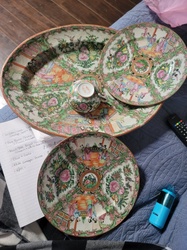
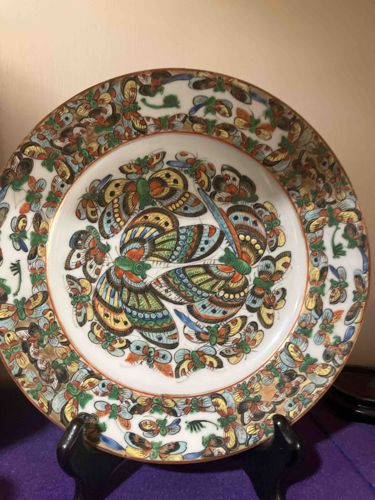
Chinese Republic Period Famille Rose 'Hundred Butterflies' Porcelain Plate

Antique Chinese Porcelain

AI Estimated Value

·Not an official valuation·Verify before acting

$450 - $700

As of June 30, 2026

AI Item Analysis

·AI can make mistakes·Verify before acting
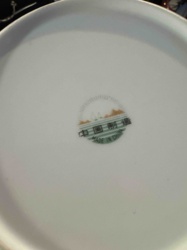
This is a circular porcelain plate featuring a decorative 'Hundred Butterflies' (Bai Die) motif, a symbol of longevity and marital happiness in Chinese culture. The plate is constructed from white porcelain with overglaze polychrome enamel decoration. The central well depicts a cluster of three large, stylized butterflies surrounded by several smaller ones, while the wide rim is densely packed with a continuous border of various butterflies in flight. The color palette includes vibrant shades of iron red, green, blue, yellow, and black, accented with gilding on the wing highlights and the outer rim. The style is characteristic of the Famille Rose (Fencai) palette applied during the Republic Period. Physically, the enameling appears textured and raised, particularly the black outlines and the 'millefleurs-style' arrangement of the insects. Notable features include the variety of butterfly wing patterns and the use of gold paint, which shows some minor rubbing consistent with age. There is visible wear on the gilded rim and slight surface abrasions on the main plate body. The context provided suggests a manufacturing date of approximately 1940, placing it in the late Republic period. The craftsmanship shows typical production standards for export ware of this era, with busy, energetic patterns designed to appeal to both domestic and international markets. No specific maker's marks are visible on the front, but the underside likely contains either a studio mark or a 'Made in China' stamp in red ink, consistent with the user's provided context.
AI Appraisal Report

·AI can make mistakes·Verify before acting
Based on my visual examination of this Republic Period (circa 1940) Famille Rose porcelain plate, I find it to be a representative example of late 'Hundred Butterflies' (Bai Die) export-quality ware. The polychrome enamel application is consistent with the mid-20th-century aesthetic, characterized by a vibrant but slightly more opaque palette than late Qing predecessors. The density of the motif and the specific use of iron red and gilding suggest it was produced in a Jingdezhen studio targeting the international market. Condition-wise, the plate shows expected shelf wear, with visible rubbing to the gilded rim and slight surface abrasions consistent with its age and utilitarian history. Authenticity as a Republic-era piece appears certain based on the enamel texture and stylistic rendering of the butterflies. Market demand for Republic porcelain remains stable, though 'Hundred Butterfly' patterns are generally more common than the 'Millefleurs' or 'Twelve Flowers' patterns of the same era, which slightly caps the rarity premium. Factors impacting value include the integrity of the enamel (no significant flaking) and the lack of visible hairline fractures or rim chips. However, my valuation remains an estimate based on digital inspection. Without a physical examination, I cannot perform a 'ping test' to verify internal structural integrity or use UV light to detect professional restorations that are invisible to the naked eye. To finalize a certificate of authenticity, I would require a physical inspection of the foot rim and base mark, as well as any provided provenance—such as original sales receipts or family history—to differentiate this from high-quality late-20th-century reproductions.

Get your items appraised

Instant estimates of your treasures with AI-powered appraisals

Browse More Appraisals