Prehistoric Lithic Scraper / Bifacial Tool
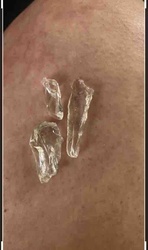
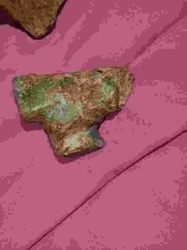
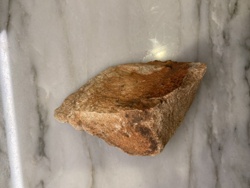
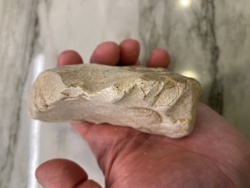
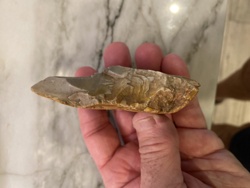
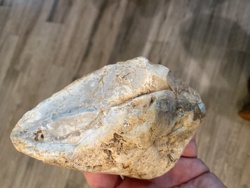
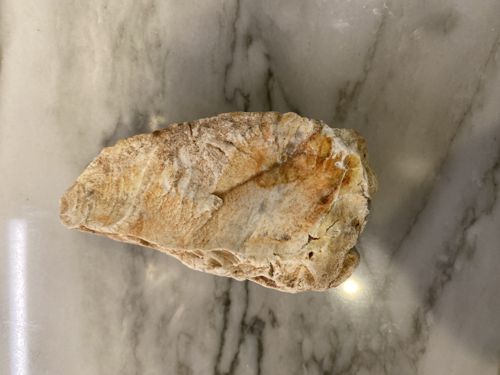
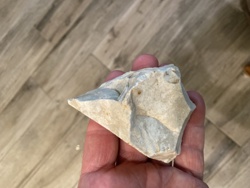
This is a prehistoric lithic artifact, specifically a bifacial scraper or knife, measuring approximately 3 inches in length and 1 inch in width. The item is crafted from a high-silica stone, likely chert or flint, originating from the Guthrie, Oklahoma region. It exhibits a distinct semi-ovate or teardrop shape with a tapered end and a broader, rounded base. The color profile is varied, showing a range of creamy whites, tan, and earthy ochre or rust-colored staining, which may result from mineral absorption during long-term burial in the soil. The surface displays clear evidence of percussion and pressure flaking along the margins to create a sharp, functional edge. Visible 'hinge' fractures and conchoidal ripples indicate deliberate human modification rather than natural weathering. There is a noticeable patina over the flake scars, suggesting significant age, likely dating back hundreds or thousands of years to North American First Nations' craftsmanship. The condition appears stable with expected edge wear and micro-flaking from use-wear, though it lacks modern mechanical damage. Its ergonomic shape suggests it was designed to be handheld for skinning, scraping hides, or processing organic materials, showcasing a high degree of lithic technology and skilled craftsmanship for the period.
AI-Generated Appraisal Disclaimer
Estimated Value
$45.00 - $75.00
Basic Information
Category
Archaeological Artifacts / North American Lithics
Appraised On
February 18, 2026
Estimated Value
$45.00 - $75.00
Additional Details Provided By Owner
User Provided Information
Prospect stone age knife/scraper found in Guthrie OK 3" x 1"
Item Description
This is a prehistoric lithic artifact, specifically a bifacial scraper or knife, measuring approximately 3 inches in length and 1 inch in width. The item is crafted from a high-silica stone, likely chert or flint, originating from the Guthrie, Oklahoma region. It exhibits a distinct semi-ovate or teardrop shape with a tapered end and a broader, rounded base. The color profile is varied, showing a range of creamy whites, tan, and earthy ochre or rust-colored staining, which may result from mineral absorption during long-term burial in the soil. The surface displays clear evidence of percussion and pressure flaking along the margins to create a sharp, functional edge. Visible 'hinge' fractures and conchoidal ripples indicate deliberate human modification rather than natural weathering. There is a noticeable patina over the flake scars, suggesting significant age, likely dating back hundreds or thousands of years to North American First Nations' craftsmanship. The condition appears stable with expected edge wear and micro-flaking from use-wear, though it lacks modern mechanical damage. Its ergonomic shape suggests it was designed to be handheld for skinning, scraping hides, or processing organic materials, showcasing a high degree of lithic technology and skilled craftsmanship for the period.
Related Tags
Explore similar items and categories:
Get Your Items Appraised
Instant estimates of your treasures with AI-powered instant appraisals