Lake Superior Agate
Geological Specimens / Semi-precious Gemstones

Lake Superior Agate

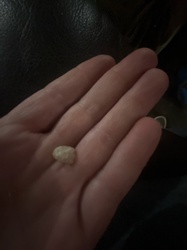
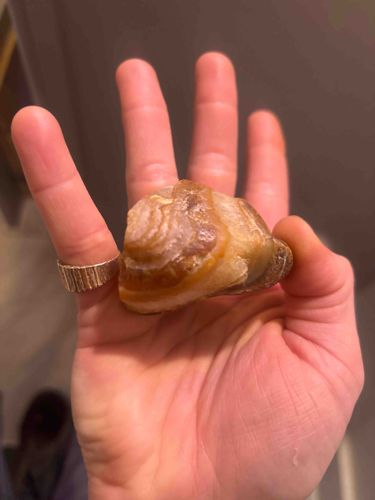
This specimen is a raw, unpolished Lake Superior Agate, likely of the 'peeled' or 'banded' variety. Based on its scale relative to the person's hand, it is approximately 1.5 to 2 inches in width. The specimen displays the characteristic iron-stained quartz banding that defines this variety, featuring a rich palette of translucent honey-gold, ochre, and creamy white layers. The banding is concentric and displays a distinct 'iris' or 'eye' pattern on the primary face. Its exterior texture is typical of glacial drift specimens, showing a waxy luster and a slightly pitted or 'chattered' surface caused by environmental exposure over millions of years. The specimen appears largely structural intact but features natural fractures and a rough-hewn crust on the terminal end. These stones are billions of years old, formed during the Midcontinent Rift System, and were later distributed by glacial movements during the last Ice Age. Its value is determined by the clarity of the bands, the intensity of the iron-red and yellow hues, and its overall translucency when backlit. The specimen lacks artificial polishing, which preserves its natural geological history and appeal to mineral collectors.
Estimated Value

$45.00 - $65.00

Basic Information

Category

Geological Specimens / Semi-precious Gemstones

Appraised On

March 16, 2026

Estimated Value

$45.00 - $65.00

Item Description

This specimen is a raw, unpolished Lake Superior Agate, likely of the 'peeled' or 'banded' variety. Based on its scale relative to the person's hand, it is approximately 1.5 to 2 inches in width. The specimen displays the characteristic iron-stained quartz banding that defines this variety, featuring a rich palette of translucent honey-gold, ochre, and creamy white layers. The banding is concentric and displays a distinct 'iris' or 'eye' pattern on the primary face. Its exterior texture is typical of glacial drift specimens, showing a waxy luster and a slightly pitted or 'chattered' surface caused by environmental exposure over millions of years. The specimen appears largely structural intact but features natural fractures and a rough-hewn crust on the terminal end. These stones are billions of years old, formed during the Midcontinent Rift System, and were later distributed by glacial movements during the last Ice Age. Its value is determined by the clarity of the bands, the intensity of the iron-red and yellow hues, and its overall translucency when backlit. The specimen lacks artificial polishing, which preserves its natural geological history and appeal to mineral collectors.
Get Your Items Appraised

Instant estimates of your treasures with AI-powered instant appraisals

Browse More Appraisals