AI Appraisal Estimate

AI-generated estimates · not official valuations

From the user

What was submitted

Photo and notes provided by the user — not generated by AI

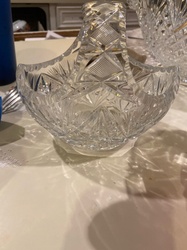
Submitted item photo
Submitted photo · June 8, 2026

User's notes

No additional notes provided.

AI analysis below

AI appraisal

AI analysis & estimate

AI-Generated · Verify before acting

Everything below is generated by AI for informational purposes only. AI can make mistakes — the AI may misidentify items or misattribute them (artist, maker, brand, designer, origin, era). This is not an official valuation and should not be used for insurance, sale, tax, estate, legal, or lending purposes — or any decision requiring a certified appraisal. It is not an authoritative claim about any person, brand, or rights holder — do not share or rely on it as a factual statement about a third party. Always consult qualified professionals before making financial decisions.

Read the full disclaimer

AI Identification

·Not independently authenticated·Verify before acting

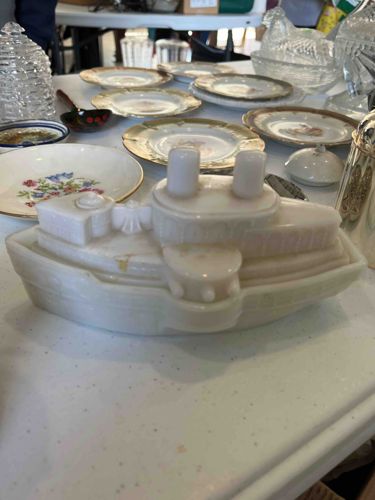
Vallerysthal Milk Glass Ocean Liner Covered Dish

Antique Glassware / Decorative Collectibles

AI Estimated Value

·Not an official valuation·Verify before acting

$250 - $400

As of June 8, 2026

AI Item Analysis

·AI can make mistakes·Verify before acting
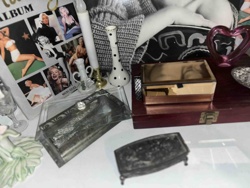
This item is a vintage white milk glass covered dish meticulously modeled in the shape of a steamship or ocean liner. The piece exhibits an opalescent or 'fiery' quality typical of high-quality French pressed glass. It features complex molded details, including two prominent smokestacks (funnels), a tiered deck structure, lifeboats along the sides, and porthole indentations. The base of the dish forms the hull of the ship, while the lid comprises the upper decks and superstructure. The construction shows the heavy, opaque pressed glass style popular in the late 19th to early 20th century, likely produced by the French glassmaker Vallerysthal circa 1890-1910. The condition appears fair to good for its age, though visible yellowing or surface grime is present near the mid-section, suggesting a need for gentle cleaning. There are no immediate signs of large chips or cracks visible from this angle, though milk glass of this era often exhibits minor mold roughness or tiny 'flea bites' along the inner rims where the lid meets the base. The craftsmanship reflects the Victorian era's penchant for whimsical, figural tableware and remains a highly sought-after collectible for glass enthusiasts.
AI Appraisal Report

·AI can make mistakes·Verify before acting
I have conducted a visual inspection of this white opalescent milk glass covered dish, which is a well-documented figural 'Ocean Liner' produced by Vallerysthal Glassworks in France, circa 1890-1910. The piece displays the characteristic 'fiery' opalescence on the edges of the funnels and deck, which is a hallmark of authentic Portieux/Vallerysthal glass from this period. The molding is crisp, detailing the lifeboats and portholes with the precision expected of late 19th-century French presses. In the current market, figural milk glass—specifically maritime themes—maintains a loyal following among 'Glassies' and transport memorabilia collectors. Recent auction results for this specific model range from $200 for specimens with minor damage to over $450 for pristine examples. The current item's value is slightly suppressed by a visible yellowish discoloration at the seam, possibly organic residue or old adhesive, which requires professional conservation to ensure it isn't masking a structural hairline crack. The presence of 'flea bites' on the inner flange is expected and generally accepted by the market. However, a physical inspection is required to check for the 'Vallerysthal' embossed mark often found on the interior base, which significantly aids in distinguishing it from later Westmoreland or Imperial reproductions. My valuation assumes the piece is free of major chips or structural repairs. For full authentication, I recommend a black-light test to examine the glow of the glass (indicating specific mineral content of the era) and a tactile inspection of the rim to differentiate between mold roughness and post-factory damage.

Get your items appraised

Instant estimates of your treasures with AI-powered appraisals

Browse More Appraisals