Acoma Pueblo Polychrome Pottery Seed Jar
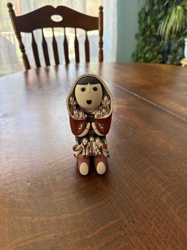
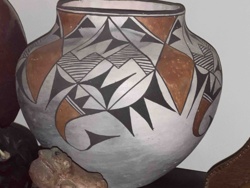
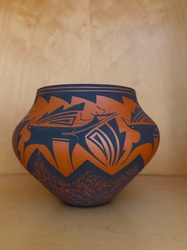
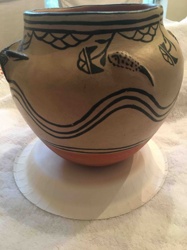
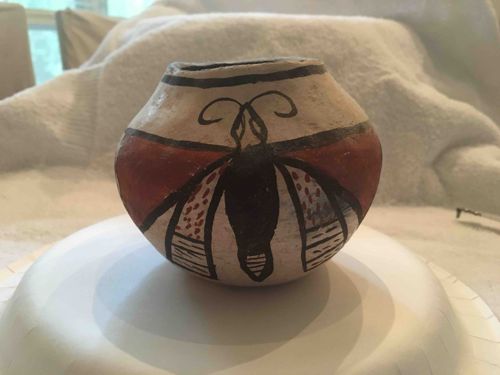
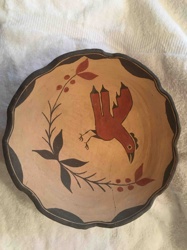
This is a small, hand-coiled ceramic vessel, commonly known as a seed jar, featuring traditional Acoma Pueblo polychrome motifs. The piece is constructed from local earthenware clay and is finished with a white slip background. It displays a bulbous body with a small, circular opening at the top typical of the seed jar form. The decorative scheme consists of organic and geometric patterns rendered in black carbon-based paint and a reddish-brown hematite slip. Centrally featured is a stylized butterfly or insect motif with delicate, curved antennae and patterned wings containing stippling and line-work. A broad horizontal band of reddish-brown wraps around the equatorial circumference, bordered by thin black lines. The texture of the clay appears somewhat coarse and uneven, suggesting a hand-built and pit-fired process rather than commercial manufacture. Condition-wise, the jar shows significant surface wear, including extensive scuffing, minor pitting, and areas where the white slip and paint have thinned or flaked away, indicating it likely dates from the early to mid-20th century. There are no visible maker's marks or signatures on the upper portion of the vessel shown. The craftsmanship reflects the traditional 'storyteller' aesthetic of Southwest Native American art, though the execution shows a rustic, folk-art quality rather than high-polish contemporary studio pottery.
AI-Generated Appraisal Disclaimer
Estimated Value
$400 - $650
Basic Information
Category
Native American Art & Ceramics
Appraised On
March 21, 2026
Estimated Value
$400 - $650
Item Description
This is a small, hand-coiled ceramic vessel, commonly known as a seed jar, featuring traditional Acoma Pueblo polychrome motifs. The piece is constructed from local earthenware clay and is finished with a white slip background. It displays a bulbous body with a small, circular opening at the top typical of the seed jar form. The decorative scheme consists of organic and geometric patterns rendered in black carbon-based paint and a reddish-brown hematite slip. Centrally featured is a stylized butterfly or insect motif with delicate, curved antennae and patterned wings containing stippling and line-work. A broad horizontal band of reddish-brown wraps around the equatorial circumference, bordered by thin black lines. The texture of the clay appears somewhat coarse and uneven, suggesting a hand-built and pit-fired process rather than commercial manufacture. Condition-wise, the jar shows significant surface wear, including extensive scuffing, minor pitting, and areas where the white slip and paint have thinned or flaked away, indicating it likely dates from the early to mid-20th century. There are no visible maker's marks or signatures on the upper portion of the vessel shown. The craftsmanship reflects the traditional 'storyteller' aesthetic of Southwest Native American art, though the execution shows a rustic, folk-art quality rather than high-polish contemporary studio pottery.
Get Your Items Appraised
Instant estimates of your treasures with AI-powered instant appraisals