AI Appraisal Estimate

AI-generated estimates · not official valuations

From the user

What was submitted

Photo and notes provided by the user — not generated by AI

Submitted item photo
Submitted photo · June 13, 2026

User's notes

No additional notes provided.

AI analysis below

AI appraisal

AI analysis & estimate

AI-Generated · Verify before acting

Everything below is generated by AI for informational purposes only. AI can make mistakes — the AI may misidentify items or misattribute them (artist, maker, brand, designer, origin, era). This is not an official valuation and should not be used for insurance, sale, tax, estate, legal, or lending purposes — or any decision requiring a certified appraisal. It is not an authoritative claim about any person, brand, or rights holder — do not share or rely on it as a factual statement about a third party. Always consult qualified professionals before making financial decisions.

Read the full disclaimer

AI Identification

·Not independently authenticated·Verify before acting

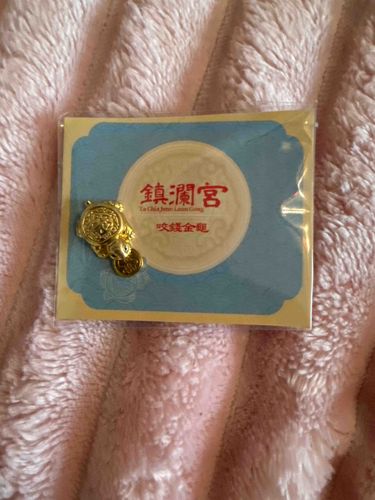
Dajia Jenn Lann Temple Gold Money Toad Charm

Religious and Cultural Artifacts / Numismatic Charms

AI Estimated Value

·Not an official valuation·Verify before acting

$15.00 - $35.00

As of June 13, 2026

AI Item Analysis

·AI can make mistakes·Verify before acting
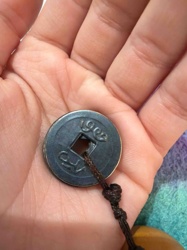
This item is a miniature decorative charm or token featuring a three-legged 'Money Toad' (Jin Chan), a popular symbol of wealth and prosperity in Chinese culture. The charm is finished in a bright gold tone and is mounted on a light blue and white card within a protective clear plastic sleeve. The toad is depicted holding a traditional Chinese coin in its mouth, which is a classic motif representing the summoning of riches. The backing card features red and black Chinese characters identifying it with the 'Dajia Jenn Lann Temple' (Ta Chia Jenn Lann Gong), one of the most famous Mazu temples in Taiwan. Below the temple name, the specific text '咬錢金龜' suggests its role as a wealth-biting charm. The item appears to be made of a gold-plated base metal or plastic, showing high-reflectivity and a smooth cast finish. The craftmanship is typical of contemporary religious or cultural souvenirs, with defined relief details on the toad's back and the coin. The condition is excellent and appears to be in its original packaging, showing no signs of tarnish, wear, or physical damage. This style of charm is often used as a 'mother money' (qianmu) token, intended to be kept in a wallet or placed in a business to attract luck. It likely dates from the contemporary period (last 10-15 years) and is a mass-produced but culturally significant devotional object.
AI Appraisal Report

·AI can make mistakes·Verify before acting
I have conducted a visual examination of the Dajia Jenn Lann Temple Gold Money Toad charm. The item presents in Mint/Uncirculated condition, sealed in its original protective sleeve, which is vital for retaining its status as a 'blessed' object. The gold-tone finish displays high luster with no evidence of oxidation or handling wear. Authenticity is supported by the specific typography and branding of the Dajia Jenn Lann Temple, a major religious landmark in Taiwan. The market for such items is driven primarily by cultural and spiritual utility rather than precious metal content. As a mass-produced contemporary devotional object (Qianmu), rarity is low; however, its provenance from this specific temple adds a layer of 'spiritual value' for practitioners. Comparable tokens sold at temple gift shops or via online secondary markets typically command modest prices. The primary value drivers are the intact packaging and the temple's reputation for prosperity rituals. Significant limitations exist with image-only appraisal. I cannot definitively verify the base material (likely a zinc alloy or plastic) or the gold purity, if any, without a scratch test or XRF analysis. Furthermore, while the packaging appears authentic, I cannot verify the item was officially consecrated/blessed by temple clergy without provenance documentation or a receipt from the temple’s administrative office. A physical inspection would be required to confirm weight, density, and the absence of casting flaws hidden by the sleeve.

Get your items appraised

Instant estimates of your treasures with AI-powered appraisals

Browse More Appraisals