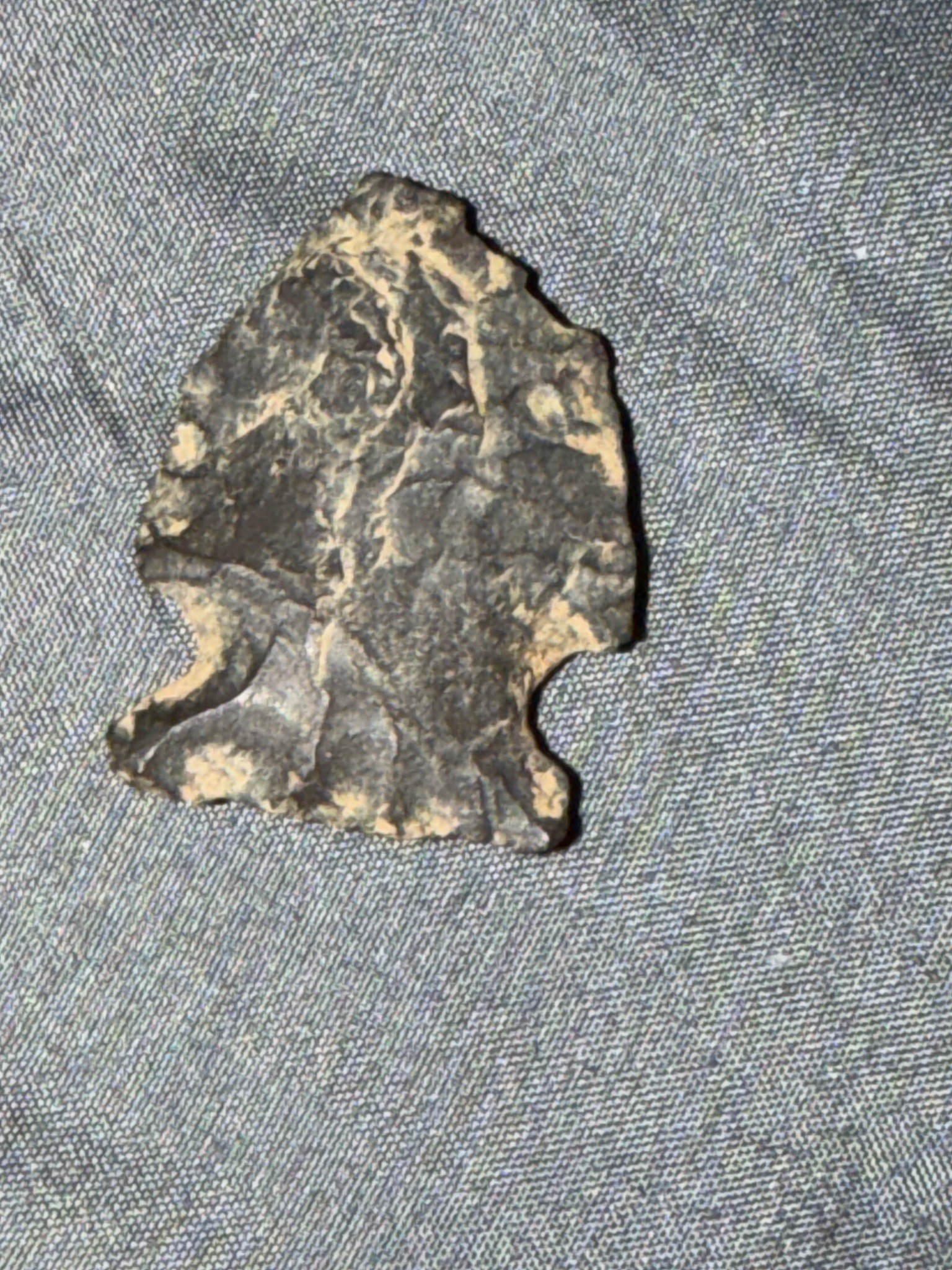
Corner-Notched Projectile Point
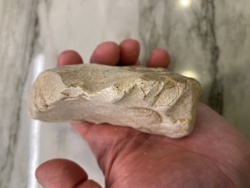
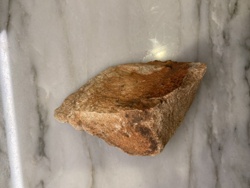
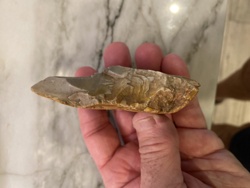
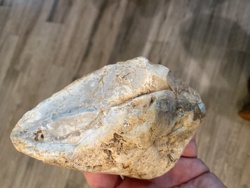
A stone projectile point, commonly referred to as an arrowhead, featuring a distinct corner-notched base and an ovate or triangular blade. Found in Beach Haven, Pennsylvania, this artifact appears to be crafted from a dark, fine-grained lithic material such as chert or rhyolite, which are common to the Susquehanna River Valley. The item exhibits bifacial reduction with visible percussion and pressure flaking scars across its surface. The tip shows some degree of rounding or possible impact fracture, while the edges display minor serration or wear consistent with use as a cutting tool or projectile. The base is relatively flat to slightly concave, with defined notches that would have facilitated hafting to a shaft. The surface is obscured by significant calcification, mineral deposits, or adhering soil, giving it a light-tan mottled appearance over the dark stone. Based on the morphology and regional context of Northeastern Pennsylvania, this point likely dates to the Archaic period, potentially within the Brewerton or similar corner-notched traditions ranging from 3,000 to 5,000 years old. The craftsmanship shows a high level of prehistoric lithic technology, despite the weathering and surface patina.
AI-Generated Appraisal Disclaimer
Estimated Value
$35-$65
Basic Information
Category
Native American Artifacts / Archaeological Lithics
Appraised On
May 4, 2026
Estimated Value
$35-$65
Additional Details Provided By Owner
User Provided Information
Arrowhead found in Beach Haven, Pennsylvania
Item Description
A stone projectile point, commonly referred to as an arrowhead, featuring a distinct corner-notched base and an ovate or triangular blade. Found in Beach Haven, Pennsylvania, this artifact appears to be crafted from a dark, fine-grained lithic material such as chert or rhyolite, which are common to the Susquehanna River Valley. The item exhibits bifacial reduction with visible percussion and pressure flaking scars across its surface. The tip shows some degree of rounding or possible impact fracture, while the edges display minor serration or wear consistent with use as a cutting tool or projectile. The base is relatively flat to slightly concave, with defined notches that would have facilitated hafting to a shaft. The surface is obscured by significant calcification, mineral deposits, or adhering soil, giving it a light-tan mottled appearance over the dark stone. Based on the morphology and regional context of Northeastern Pennsylvania, this point likely dates to the Archaic period, potentially within the Brewerton or similar corner-notched traditions ranging from 3,000 to 5,000 years old. The craftsmanship shows a high level of prehistoric lithic technology, despite the weathering and surface patina.
Get Your Items Appraised
Instant estimates of your treasures with AI-powered instant appraisals