These notes were written by the person who submitted this item. Appraiser.AI has not verified them, and the AI's identification and estimate may rely on them.
AI Estimated Value
Not an official valuation
$25-50
AI estimate as of November 24, 2025 · verify with a professional before acting
AI-Generated · Verify before acting
Everything on this page is generated by AI for informational purposes only. AI can make mistakes — the AI may misidentify items or misattribute them (artist, maker, brand, designer, origin, era). This is not an official valuation and should not be used for insurance, sale, tax, estate, legal, or lending purposes — or any decision requiring a certified appraisal. It is not an authoritative claim about any person, brand, or rights holder — do not share or rely on it as a factual statement about a third party. Always consult qualified professionals before making financial decisions.
This analysis also relies on unverified notes provided by the user, which may be incomplete or inaccurate and could affect the result.
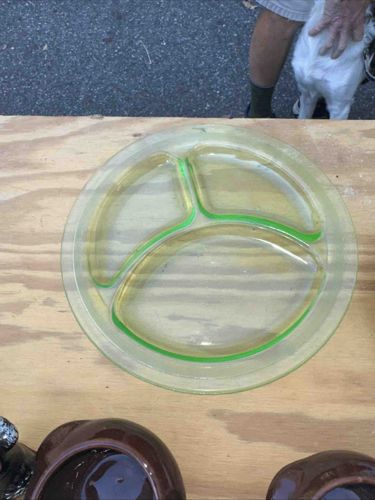
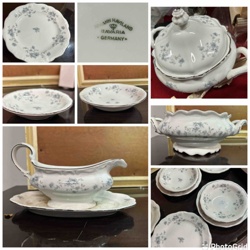
This is a round, three-compartment divided plate crafted from what appears to be uranium glass, also known as Vaseline glass, given its distinctive pale yellowish-green hue. The glass exhibits a subtle glow or fluorescence, particularly noticeable along the raised dividers which are more intensely colored in a brighter, almost neon green. The plate features three distinct sections, suitable for serving different food items without them mixing, a common design for relish dishes or children's plates from the mid-20th century. The glass is transparent, allowing light to pass through. Its construction seems to be molded glass, indicating mass production. There are no clear maker's marks or signatures visible in the provided image. The edges appear smooth and rounded, suggesting a comfortable handling experience. The overall condition appears good with no obvious chips, cracks, or significant abrasions from the visual information available, though closer inspection would be required to confirm this. The style and material strongly suggest it belongs to the Depression Era (roughly 1929-1939) or slightly later, when uranium glass was popular for its affordability and unique color. This type of glassware is prized by collectors for its historical significance and its characteristic glow under UV light. The craftsmanship, though mass-produced, represents typical quality for utilitarian glass items of that period.
AI Appraisal Report
I have carefully examined the provided image of this Vintage Uranium Glass Divided Plate, which appears to be a classic Depression Era piece. The pale yellowish-green hue and the subtle glow, particularly noticeable along the raised dividers in a brighter green, are highly indicative of uranium (Vaseline) glass. Authenticity as uranium glass is strongly suggested by these visual cues, but would require a UV light test for definitive confirmation, as similar colored glass exists without uranium content. From the image, the plate appears to be in good condition, with no visible chips, cracks, or significant abrasions, which is a positive factor for its value. However, a hands-on inspection would be essential to confirm the absence of subtle flaws, surface scratches, or internal stress fractures.
Market conditions for Depression Era uranium glass, while stable, are not typically in high demand for utilitarian items like divided plates. While there's a dedicated collector base for uranium glass, common pieces like this, especially without a distinct pattern or maker's mark, do not command premium prices. Rarity is low; these items were mass-produced. Factors significantly impacting value include its good apparent condition and its identity as uranium glass. Conversely, the lack of a known manufacturer, common form, and the absence of unique decorative elements limit its upper value. Without physical inspection, I cannot verify the exact composition or ensure there are no hidden damages. Provenance documentation, though unlikely for such an item, would also add to its historical value. Based on my visual assessment and current market trends, I estimate the appraisal value to be in the range of $25-50.