Carved Jade Archaistic C-Shaped Zhulong (Pig Dragon) Pendant
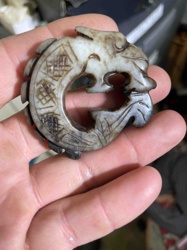
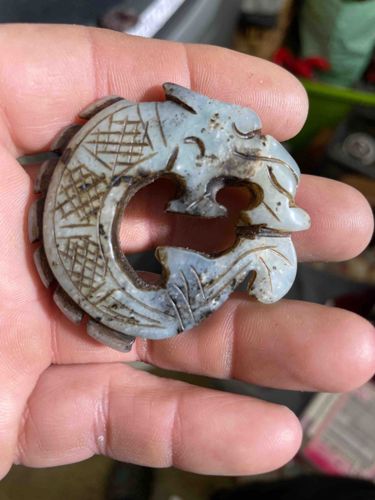
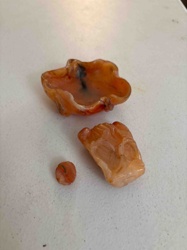
This item is a small, hand-carved pendant fashioned in the style of a Zhulong, or 'Pig Dragon', a significant motif in early Chinese culture. Measuring approximately 4-5 centimeters in diameter, the piece is likely crafted from nephrite jade or a similar hardstone. The stone displays a pale greenish-grey to celadon hue with significant dark brown and black inclusions, which may be natural mineral veins or intentionally applied 'calcification' to simulate age. The carving features a characteristic coiled 'C' shape with a heavy head, slit eyes, and a prominent snout. The outer body is decorated with incised cross-hatching and stylized ridges, though the craftsmanship appears somewhat coarse compared to authentic Hongshan Neolithic period artifacts, suggesting it is a late 20th-century or modern archaistic reproduction. Notable surface wear and grit are visible within the carved grooves, which are deep and show signs of manual tool work. There are no visible maker's marks or signatures, which is typical for such decorative objects. While mimicking an ancient style, the sharpness of the incisions and the overall surface patina suggest it was made for the decorative arts market rather than being an archaeological find.
AI-Generated Appraisal Disclaimer
Estimated Value
$40–$80
Basic Information
Category
Asian Antiques & Decorative Arts
Appraised On
December 23, 2025
Estimated Value
$40–$80
Item Description
This item is a small, hand-carved pendant fashioned in the style of a Zhulong, or 'Pig Dragon', a significant motif in early Chinese culture. Measuring approximately 4-5 centimeters in diameter, the piece is likely crafted from nephrite jade or a similar hardstone. The stone displays a pale greenish-grey to celadon hue with significant dark brown and black inclusions, which may be natural mineral veins or intentionally applied 'calcification' to simulate age. The carving features a characteristic coiled 'C' shape with a heavy head, slit eyes, and a prominent snout. The outer body is decorated with incised cross-hatching and stylized ridges, though the craftsmanship appears somewhat coarse compared to authentic Hongshan Neolithic period artifacts, suggesting it is a late 20th-century or modern archaistic reproduction. Notable surface wear and grit are visible within the carved grooves, which are deep and show signs of manual tool work. There are no visible maker's marks or signatures, which is typical for such decorative objects. While mimicking an ancient style, the sharpness of the incisions and the overall surface patina suggest it was made for the decorative arts market rather than being an archaeological find.
Related Tags
Get Your Items Appraised
Instant estimates of your treasures with AI-powered instant appraisals