Blue and White Chinoiserie Porcelain Vase
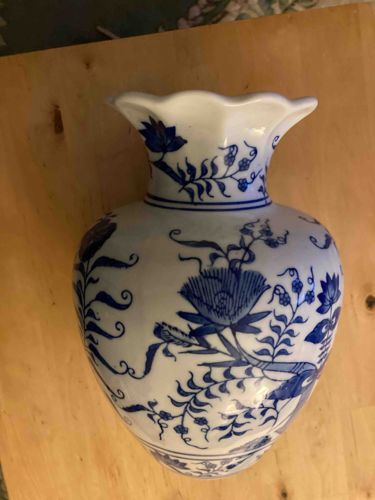
This item is a medium-sized baluster-form ceramic vase, likely made of high-fired porcelain or refined earthenware, featuring a classic blue and white underglaze decoration. The vase is characterized by a distinctive ruffled or scalloped rim that flares outward from a tapered neck. The body of the vessel is bulbous, tapering down to a narrow base. The decorative scheme consists of stylized floral and foliate motifs, reminiscent of mid-to-late 20th-century Chinoiserie styles. These motifs include scrolling vines, fern-like leaves, and large central blossoms rendered in a deep cobalt blue against a bright white background. Concentric blue rings define the transition between the neck and the shoulder, as well as the base. While the mark is not visible in this orientation, the clarity of the white glaze and the precision of the transfer or hand-painted patterns suggest a late 20th-century production, possibly a mass-market reproduction of traditional Ming-style export ware. The condition appears good with no visible chips, cracks, or significant crazing, though some light surface abrasions are consistent with age and display use.
AI-Generated Appraisal Disclaimer
Estimated Value
$45 - $85
Basic Information
Category
Antique & Vintage Ceramics
Appraised On
March 24, 2026
Estimated Value
$45 - $85
Item Description
This item is a medium-sized baluster-form ceramic vase, likely made of high-fired porcelain or refined earthenware, featuring a classic blue and white underglaze decoration. The vase is characterized by a distinctive ruffled or scalloped rim that flares outward from a tapered neck. The body of the vessel is bulbous, tapering down to a narrow base. The decorative scheme consists of stylized floral and foliate motifs, reminiscent of mid-to-late 20th-century Chinoiserie styles. These motifs include scrolling vines, fern-like leaves, and large central blossoms rendered in a deep cobalt blue against a bright white background. Concentric blue rings define the transition between the neck and the shoulder, as well as the base. While the mark is not visible in this orientation, the clarity of the white glaze and the precision of the transfer or hand-painted patterns suggest a late 20th-century production, possibly a mass-market reproduction of traditional Ming-style export ware. The condition appears good with no visible chips, cracks, or significant crazing, though some light surface abrasions are consistent with age and display use.
Get Your Items Appraised
Instant estimates of your treasures with AI-powered instant appraisals