Paleolithic Chert Scraper Multi-Tool
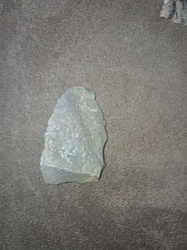
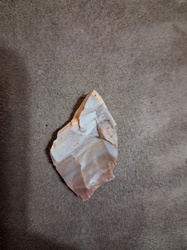
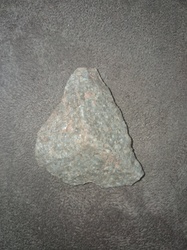
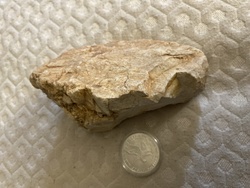
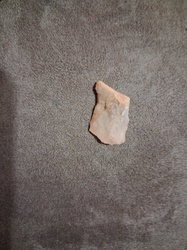
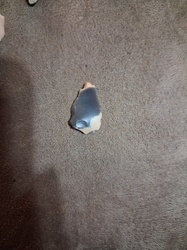
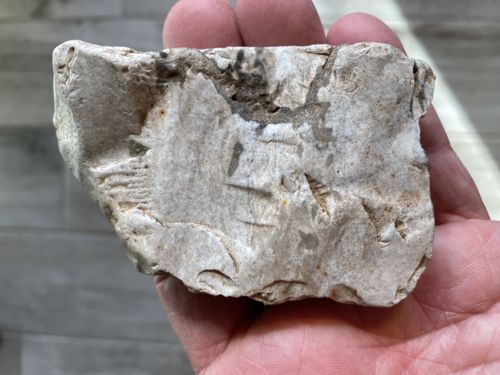
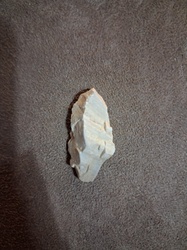
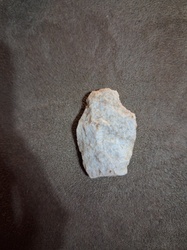
This artifact is a prehistoric lithium tool, identified as a chert multi-tool scraper, measuring approximately 3 inches by 2 inches. The object is composed of a light tan to off-white chert, a microcrystalline sedimentary rock valued by early humans for its predictable fracturing and durability. The physical construction shows evidence of intentional percussion flaking along the margins to create sharp, functional edges suitable for scraping hides, woodworking, or processing fibrous plant materials. The surface exhibits a heavy mineralized patina and significant calcification, consistent with long-term burial in the soil horizons of Guthrie, Oklahoma. Notable features include multiple worked faces indicating versatile use as both a side scraper and potentially a cutting implement. The condition is stable, showing some ancient stepped fracturing and weathering consistent with its estimated age from the Paleolithic or early Archaic period. The craftsmanship reflects an opportunistic yet skilled utility tool, where the natural shape of the stone was utilized and refined through flaking. No modern maker marks or signatures are present, as is characteristic of such ancient lithic artifacts. Small fossilized inclusions or mineral crystalline pockets are visible in the stone's matrix, adding to its unique geological character.
AI-Generated Appraisal Disclaimer
Estimated Value
$45 - $85
Basic Information
Category
Archaeological Artifacts
Appraised On
February 19, 2026
Estimated Value
$45 - $85
Additional Details Provided By Owner
User Provided Information
Paleolithic chert scraper multi tool found in Guthrie, OK measuring 3" x 2"
Item Description
This artifact is a prehistoric lithium tool, identified as a chert multi-tool scraper, measuring approximately 3 inches by 2 inches. The object is composed of a light tan to off-white chert, a microcrystalline sedimentary rock valued by early humans for its predictable fracturing and durability. The physical construction shows evidence of intentional percussion flaking along the margins to create sharp, functional edges suitable for scraping hides, woodworking, or processing fibrous plant materials. The surface exhibits a heavy mineralized patina and significant calcification, consistent with long-term burial in the soil horizons of Guthrie, Oklahoma. Notable features include multiple worked faces indicating versatile use as both a side scraper and potentially a cutting implement. The condition is stable, showing some ancient stepped fracturing and weathering consistent with its estimated age from the Paleolithic or early Archaic period. The craftsmanship reflects an opportunistic yet skilled utility tool, where the natural shape of the stone was utilized and refined through flaking. No modern maker marks or signatures are present, as is characteristic of such ancient lithic artifacts. Small fossilized inclusions or mineral crystalline pockets are visible in the stone's matrix, adding to its unique geological character.
Get Your Items Appraised
Instant estimates of your treasures with AI-powered instant appraisals