Spelter Chariot Group Figural Clock
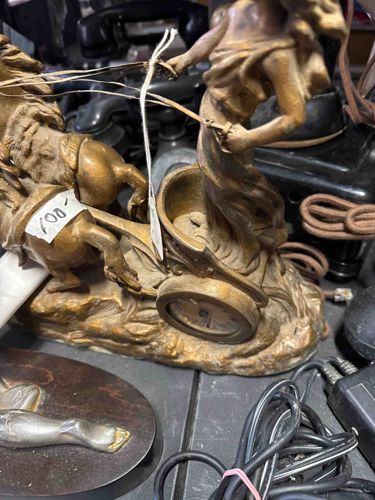
This is a tabletop figural clock depicting a classical scene of Aurora or a Roman charioteer driving a two-horse chariot. The sculpture is likely cast from spelter (zinc alloy) with a bronzed or gilt finish common in late 19th to early 20th-century decorative arts. The piece displays a dynamic Neoclassical style with flowing drapery on the female figure and powerful muscularity in the rearing horses. A notable feature is the integration of the clock face within the chariot's wheel, a common design for novelty mantel clocks of the period. The color is a weathered gold-bronze tone with significant surface dirt and oxidation. Visible condition issues include a missing clock hand on the face, frayed or replacement strings used as reins, and a white price tag adhered to the horse's flank which may leave residue. The casting shows moderate detail in the base's rocky texture and the figure's robes, though it lacks the fine chasing of solid bronze. The base is an irregular organic shape designed to look like earth or clouds. There are no visible maker's marks or signatures in the provided image view, though these were frequently located on the reverse or the clock movement itself.

AI-Generated Appraisal Disclaimer
Estimated Value
$150 - $350
Basic Information
Category
Antique Decorative Arts / Horology
Appraised On
January 17, 2026
Estimated Value
$150 - $350
Item Description
This is a tabletop figural clock depicting a classical scene of Aurora or a Roman charioteer driving a two-horse chariot. The sculpture is likely cast from spelter (zinc alloy) with a bronzed or gilt finish common in late 19th to early 20th-century decorative arts. The piece displays a dynamic Neoclassical style with flowing drapery on the female figure and powerful muscularity in the rearing horses. A notable feature is the integration of the clock face within the chariot's wheel, a common design for novelty mantel clocks of the period. The color is a weathered gold-bronze tone with significant surface dirt and oxidation. Visible condition issues include a missing clock hand on the face, frayed or replacement strings used as reins, and a white price tag adhered to the horse's flank which may leave residue. The casting shows moderate detail in the base's rocky texture and the figure's robes, though it lacks the fine chasing of solid bronze. The base is an irregular organic shape designed to look like earth or clouds. There are no visible maker's marks or signatures in the provided image view, though these were frequently located on the reverse or the clock movement itself.
Get Your Items Appraised
Instant estimates of your treasures with AI-powered instant appraisals