AI Appraisal Estimate

AI-generated estimates · not official valuations

From the user

What was submitted

Photo and notes provided by the user — not generated by AI

Submitted item photo
Submitted photo · June 6, 2026

User's notes

From Belgium

AI analysis below

AI appraisal

AI analysis & estimate

AI-Generated · Verify before acting

Everything below is generated by AI for informational purposes only. AI can make mistakes — the AI may misidentify items or misattribute them (artist, maker, brand, designer, origin, era). This is not an official valuation and should not be used for insurance, sale, tax, estate, legal, or lending purposes — or any decision requiring a certified appraisal. It is not an authoritative claim about any person, brand, or rights holder — do not share or rely on it as a factual statement about a third party. Always consult qualified professionals before making financial decisions.

Note

This analysis also relies on unverified notes provided by the user, which may be incomplete or inaccurate and could affect the result.

Read the full disclaimer

AI Identification

·Not independently authenticated·Verify before acting

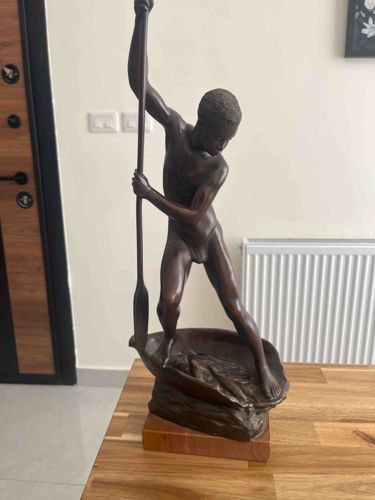
Bronze Sculpture of a Fisher Boy with Oar

Sculpture

AI Estimated Value

·Not an official valuation·Verify before acting

$1,200-1,800

As of June 6, 2026

AI Item Analysis

·AI can make mistakes·Verify before acting
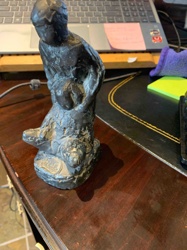
This is a bronze sculpture depicting a young, slender male figure, likely a boy or youth, in the act of preparing to row or fish. The figure is nude, except for what appears to be a loincloth or minimal covering. He holds a long oar or pole in both hands, with the upper portion extending vertically above his head and the lower part featuring a paddle blade that rests near his left foot. The figure stands within what appears to be a small boat or raft, rendered with textured ripples suggesting water. The entire bronze composition is mounted on a rectangular wooden base with a visible grain, likely stained to a medium reddish-brown hue. The bronze itself exhibits a rich, dark brown patina, characteristic of aged and well-maintained bronze pieces. The craftsmanship suggests a lost-wax casting method, given the detailed rendering of the figure's musculature, hair texture, and the fluid lines of the water. Visible condition issues appear minimal from the image; the patina seems consistent, and there are no obvious breaks, repairs, or significant abrasions. The sculpture conveys a sense of action and determination through the boy's pose and focused downward gaze. While no specific maker's marks or signatures are discernible from the provided images, the quality of the casting and the artistic execution indicate a professional piece. Based on the style and typical bronze production, this sculpture could be estimated to be from the early to mid-20th century, possibly adhering to a neoclassical or realist aesthetic popular during that period. The origin from Belgium provides an additional context.
AI Appraisal Report

·AI can make mistakes·Verify before acting
I have examined the provided image of the Bronze Sculpture of a Fisher Boy with Oar from Belgium. The piece presents as a well-executed bronze depicting a youthful figure poised with an oar, suggesting imminent action. The dark brown patina is consistent across the visible surfaces, indicating good care and age-appropriate development. The detailing of the musculature, hair, and the textured 'water' within the boat suggests a quality lost-wax casting method. Condition appears excellent from the image; I observe no obvious breaks, repairs, or significant abrasions. This visual assessment points to an item that has been well-preserved. Authenticity, based solely on visual examination, appears strong for a period piece. The style aligns with early to mid-20th-century neoclassical or realist bronze sculpture, which fits the 'Belgium' origin provided. Demand for well-crafted figurative bronzes remains consistent, particularly those with an engaging narrative or dynamic pose like this one. While not particularly rare, pieces of this quality from this period hold steady market interest. Factors impacting value positively include the excellent visual condition, detailed craftsmanship, and engaging subject matter. The solid wood base also adds to its presentation and stability. However, it is crucial to note the limitations of image-based appraisal. Without a physical inspection, I cannot confirm the exact metal composition, internal structural integrity, or the presence of any minute repairs not visible in the photographs. To fully authenticate the piece and determine its precise origin and maker, an in-person examination would be required to search for hidden foundry marks or artist signatures. Furthermore, provenance documentation detailing its history of ownership would significantly enhance its verifiable authenticity and value. Scientific testing, such as elemental analysis of the bronze, could also provide definitive dating and origin information, though this is typically reserved for higher-value or more contentious pieces.

Get your items appraised

Instant estimates of your treasures with AI-powered appraisals

Browse More Appraisals