Lower Paleolithic Biface Hand Axe Scraper
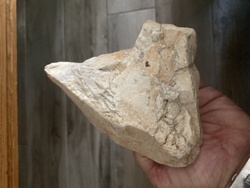
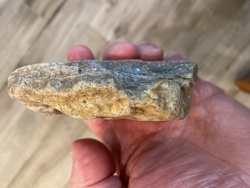
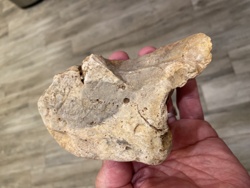
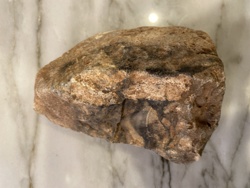
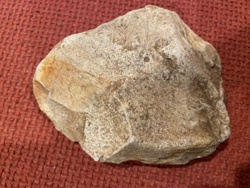
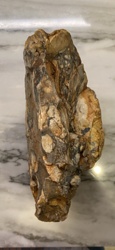
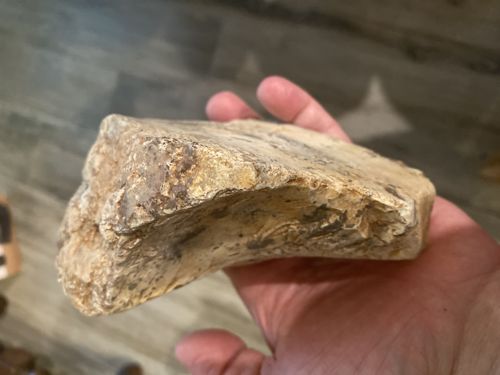
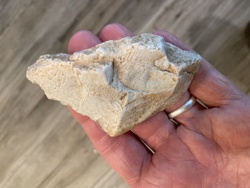
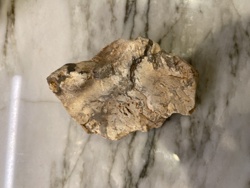
This artifact is a prehistoric stone tool measuring approximately 6 inches in length and 4 inches in width, crafted from petrified wood. The item exhibits bifacial flaking, a characteristic indicator of intentional human modification likely associated with the Acheulean industry or similar Lower Paleolithic traditions. The material presents a complex palette of earthy tones, including tans, creams, and dark ochre-browns, reflecting the mineral replacement process of the original organic wood fiber. The surface depicts significant lithic reduction with visible percussion bulbs and scalloped flake scars along the distal and lateral edges, which have been worked to create a sharp, functional scraping or cutting edge. The overall form is ergonomic, designed to fit within the palm for heavy-duty butchery or woodworking tasks. Its condition shows ancient weathering and a developed patina consistent with long-term environmental exposure. Notable is the preservation of the material's grain, which contrasts with the anthropogenic flake removals. While no modern maker's marks are present, the style is diagnostic of early hominid craftsmanship. Found in Guthrie, Oklahoma, this specimen serves as a significant example of early lithic technology and prehistoric resource utilization.
AI-Generated Appraisal Disclaimer
Estimated Value
$400 - $650
Basic Information
Category
Archaeological Artifacts / Prehistoric Stone Tools
Appraised On
March 6, 2026
Estimated Value
$400 - $650
Additional Details Provided By Owner
User Provided Information
Lower Paleolithic petrfied wood bi face hand axe scraper tool found in Guthrie OK measuring 6" x 4"
Item Description
This artifact is a prehistoric stone tool measuring approximately 6 inches in length and 4 inches in width, crafted from petrified wood. The item exhibits bifacial flaking, a characteristic indicator of intentional human modification likely associated with the Acheulean industry or similar Lower Paleolithic traditions. The material presents a complex palette of earthy tones, including tans, creams, and dark ochre-browns, reflecting the mineral replacement process of the original organic wood fiber. The surface depicts significant lithic reduction with visible percussion bulbs and scalloped flake scars along the distal and lateral edges, which have been worked to create a sharp, functional scraping or cutting edge. The overall form is ergonomic, designed to fit within the palm for heavy-duty butchery or woodworking tasks. Its condition shows ancient weathering and a developed patina consistent with long-term environmental exposure. Notable is the preservation of the material's grain, which contrasts with the anthropogenic flake removals. While no modern maker's marks are present, the style is diagnostic of early hominid craftsmanship. Found in Guthrie, Oklahoma, this specimen serves as a significant example of early lithic technology and prehistoric resource utilization.
Related Tags
Get Your Items Appraised
Instant estimates of your treasures with AI-powered instant appraisals