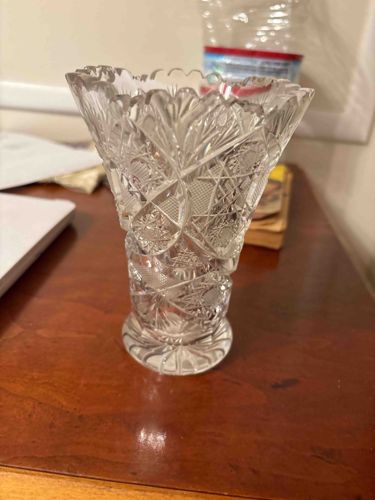
American Brilliant Period Cut Glass Trumpet Vase
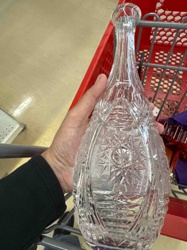
This is a small, clear lead glass vase, likely dating from the American Brilliant Period (approx. 1876–1917). The object is a trumpet-style vase featuring a flared, scalloped rim and a pedestal circular base decorated with radial sunburst cuts. The primary body displays complex hand-cut geometric patterns including stylized 'Hobstars,' deep miter cuts, and fine cross-hatching (diamonds) that create a high refractive index, typical of high-quality lead crystal from this era. The vase appears to be approximately 6 to 8 inches tall. The glass is clear with no immediate signs of clouding or 'glass sickness,' though minor flea bites (small chips) are common along the sharp edges of the deep cuts and the scalloped rim. The thick-walled construction and the precision of the miters suggest high-quality craftsmanship, possibly from a well-known maker such as Libbey, Dorflinger, or Hoare, although no specific acid-etched signature is visible in the photo. The condition appears fair to good, with the brilliance of the glass suggesting it has been well-maintained, though the base shows minor surface wear consistent with age and use on wooden surfaces.
AI-Generated Appraisal Disclaimer
Estimated Value
$125 - $225
Basic Information
Category
Antique Glassware / Collectibles
Appraised On
December 26, 2025
Estimated Value
$125 - $225
Item Description
This is a small, clear lead glass vase, likely dating from the American Brilliant Period (approx. 1876–1917). The object is a trumpet-style vase featuring a flared, scalloped rim and a pedestal circular base decorated with radial sunburst cuts. The primary body displays complex hand-cut geometric patterns including stylized 'Hobstars,' deep miter cuts, and fine cross-hatching (diamonds) that create a high refractive index, typical of high-quality lead crystal from this era. The vase appears to be approximately 6 to 8 inches tall. The glass is clear with no immediate signs of clouding or 'glass sickness,' though minor flea bites (small chips) are common along the sharp edges of the deep cuts and the scalloped rim. The thick-walled construction and the precision of the miters suggest high-quality craftsmanship, possibly from a well-known maker such as Libbey, Dorflinger, or Hoare, although no specific acid-etched signature is visible in the photo. The condition appears fair to good, with the brilliance of the glass suggesting it has been well-maintained, though the base shows minor surface wear consistent with age and use on wooden surfaces.
Related Tags
Get Your Items Appraised
Instant estimates of your treasures with AI-powered instant appraisals