Eucharistic Chalice and Host Lapel Pin
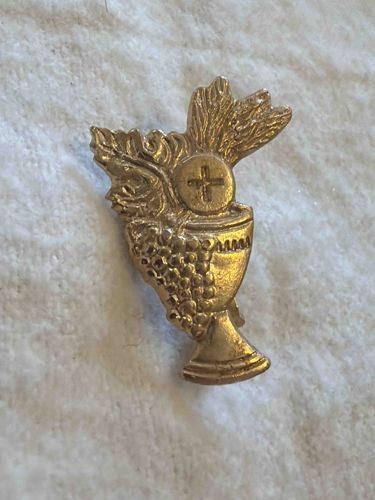
This is a symbolic religious lapel pin crafted from a gold-toned metal, likely brass or a gold-plated base metal. The design features a central liturgical chalice overflowing with a bunch of grapes on the left, symbolizing the wine of the Eucharist. Positioned above the chalice is a circular Host (Eucharistic bread) marked with an incised Greek cross. To the top and left, stylized wheat stalks or flames emerge, representing the bread of life or the Holy Spirit. The item exhibits a high-relief, die-struck construction with detailed textures on the grapes and wheat grains. The metal shows a warm, aged patina with minor surface scratches and slight wear to the gilt finish along the raised edges and the base of the chalice. There are no visible maker's marks on the front; the reverse likely contains a post and butterfly clutch attachment. Based on the casting style and religious iconography, this piece likely dates to the mid-to-late 20th century, frequently used as a commemorative gift for First Holy Communion or as a vestment accessory for lay ministers.
AI-Generated Appraisal Disclaimer
Estimated Value
$15.00 - $25.00
Basic Information
Category
Religious Jewelry and Accessories
Appraised On
February 10, 2026
Estimated Value
$15.00 - $25.00
Item Description
This is a symbolic religious lapel pin crafted from a gold-toned metal, likely brass or a gold-plated base metal. The design features a central liturgical chalice overflowing with a bunch of grapes on the left, symbolizing the wine of the Eucharist. Positioned above the chalice is a circular Host (Eucharistic bread) marked with an incised Greek cross. To the top and left, stylized wheat stalks or flames emerge, representing the bread of life or the Holy Spirit. The item exhibits a high-relief, die-struck construction with detailed textures on the grapes and wheat grains. The metal shows a warm, aged patina with minor surface scratches and slight wear to the gilt finish along the raised edges and the base of the chalice. There are no visible maker's marks on the front; the reverse likely contains a post and butterfly clutch attachment. Based on the casting style and religious iconography, this piece likely dates to the mid-to-late 20th century, frequently used as a commemorative gift for First Holy Communion or as a vestment accessory for lay ministers.
Get Your Items Appraised
Instant estimates of your treasures with AI-powered instant appraisals