Peru Chair Works Louis XVI Style Cane Bench
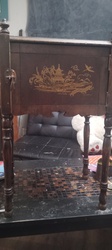
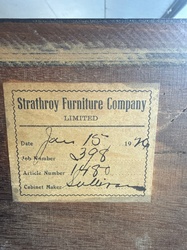
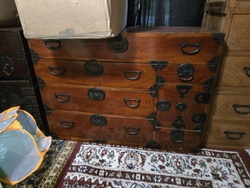
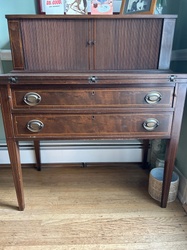
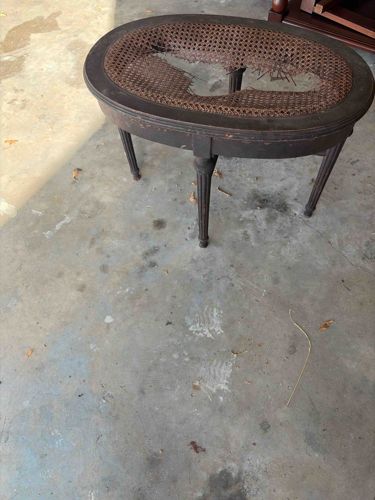
This is an antique or early 20th-century oval cane upholstered bench, attributed to Peru Chair Works based on historical context. The piece features a dark-stained wood frame with distinct Louis XVI revival stylistic elements, most notably the four tapered, fluted legs that terminate in small block feet. The apron is relatively simple but includes carved decorative blocks at the leg joinery. The top surface consists of an oval frame with an inset woven cane seat. Physically, the item shows significant wear and damage suitable for a restoration project. The cane seat is severely punctured and shredded in the center, rendering it non-functional in its current state. The wooden frame exhibits numerous scuffs, paint splatters, and finish loss along the edges of the oval rim. The dark finish has a heavy patina and suggests a mahogany or walnut construction. Given the fluted leg design and the use of cane, this piece likely dates to the early 1900s (circa 1910-1930). The craftsmanship is characteristic of American mass-produced fine furniture from that era, prioritizing elegant neoclassical lines.
AI-Generated Appraisal Disclaimer
Estimated Value
$100 - $225
Basic Information
Category
Antique Furniture
Appraised On
February 13, 2026
Estimated Value
$100 - $225
Additional Details Provided By Owner
User Provided Information
Peru chair works
Item Description
This is an antique or early 20th-century oval cane upholstered bench, attributed to Peru Chair Works based on historical context. The piece features a dark-stained wood frame with distinct Louis XVI revival stylistic elements, most notably the four tapered, fluted legs that terminate in small block feet. The apron is relatively simple but includes carved decorative blocks at the leg joinery. The top surface consists of an oval frame with an inset woven cane seat. Physically, the item shows significant wear and damage suitable for a restoration project. The cane seat is severely punctured and shredded in the center, rendering it non-functional in its current state. The wooden frame exhibits numerous scuffs, paint splatters, and finish loss along the edges of the oval rim. The dark finish has a heavy patina and suggests a mahogany or walnut construction. Given the fluted leg design and the use of cane, this piece likely dates to the early 1900s (circa 1910-1930). The craftsmanship is characteristic of American mass-produced fine furniture from that era, prioritizing elegant neoclassical lines.
Get Your Items Appraised
Instant estimates of your treasures with AI-powered instant appraisals